CAUGHT ON CAMERA: THE EXPLOSIVE PUBLIC BREAKDOWN THAT BROKE THE INTERNET AND FORCED POLICE TO INTERVENE

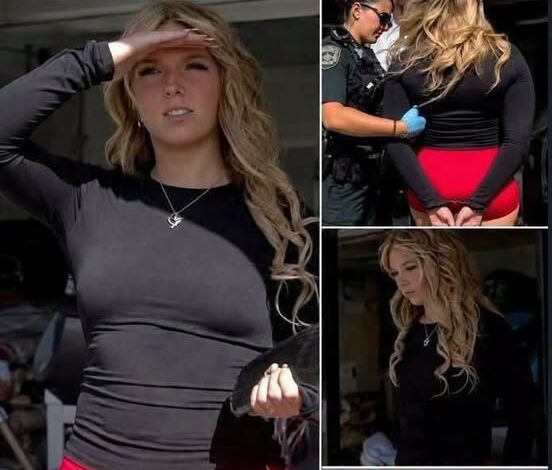
By the time the crowd dispersed and the flashing lights disappeared, the incident had already begun a second life online.
What happened in the square lasted only a matter of minutes. Yet within hours, short video clips had spread across social media, viewed and shared by thousands of people who had never been there. For many, the footage became entertainment. For others, it became evidence of something larger. But for the people at the center of it, the experience did not end when the cameras stopped recording.
It simply changed form.
In another era, a public confrontation might have remained a local story, remembered only by those who witnessed it firsthand. Today, nearly every unexpected moment has the potential to become permanent, preserved in countless uploads and viewed long after the original event has faded from public memory.
That permanence changes the experience for everyone involved.
The individual at the center of the incident may face consequences that extend far beyond the legal process or the events themselves. A single moment—whether caused by panic, poor judgment, illness, intoxication, or circumstances unknown to viewers—can become the defining image attached to a person’s name for years to come.
At the same time, the officers responding to the situation often find themselves performing one of the most difficult parts of their job beneath hundreds of raised phones. Every decision they make is recorded from multiple angles, examined frame by frame, and debated by people who may not have access to the full context of what unfolded before or after the clip began.
Around them stand ordinary people whose lives briefly intersected with an extraordinary moment.
Parents trying to comfort frightened children.
Shop owners watching events unfold outside their businesses.
Pedestrians who expected an uneventful afternoon but instead became background figures in a video viewed around the world without ever consenting to be part of it.
Their stories rarely appear in the headlines.
Yet they, too, carry memories of the event that no viral post can fully capture.
None of this diminishes the value of recording public incidents.
Videos captured by witnesses have helped expose wrongdoing, preserve important evidence, and increase transparency in situations where facts might otherwise remain disputed. Recording public events can serve an important public interest and, in many cases, has contributed meaningfully to accountability.
But recording is only the beginning.
What happens afterward also matters.
A short clip can illuminate the truth.
It can also oversimplify it.
Without context, viewers may draw conclusions that later prove incomplete or inaccurate. A few seconds of footage rarely explain what led to an encounter, what happened immediately afterward, or what investigators may eventually discover.
The internet, however, often rewards certainty more than patience.
Outrage spreads quickly.
Humor spreads even faster.
Nuance struggles to keep up.
That reality places a responsibility on everyone who watches, comments, and shares.
Before turning someone’s worst day into viral content, it’s worth asking whether sharing the footage informs the public, contributes to accountability, or simply amplifies humiliation. Those are not always easy distinctions, but they are important ones.
When the square finally returned to normal, the people who had lived through the incident began the difficult work of moving forward.
Online, however, the moment continued to circulate, replayed by strangers who knew only fragments of the story.
Perhaps that is one of the defining challenges of the digital age.
Technology has given us the power to document history as it happens, but it has also given us the power to preserve another person’s most vulnerable moments indefinitely.
The question is no longer whether we should record what happens in public.
It is whether we can learn to use that power with the same care, judgment, and humanity we hope others would show if the person on the screen one day happened to be us.