Days after losing his 39-year-old son, “Pawn Stars” icon Rick Harrison has broken his silence… and he’s confirmed what we all feared about Adam’s death Sit down before you Check Comments below.

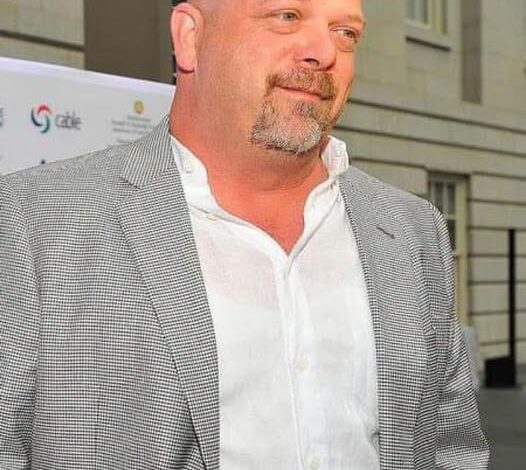
There are some losses that no amount of fame, success, or life experience can prepare a person to endure.
For Rick Harrison, the loss of his son Adam was one of them.
The world knows Rick as the confident and often unshakable face of Pawn Stars—a businessman, television personality, and father whose family became familiar to millions of viewers. For years, audiences watched him navigate challenges, negotiate deals, and celebrate milestones alongside those closest to him.
But nothing in the public eye could shield him from the heartbreak that arrived in January 2024.
Nothing could prepare him for the phone call every parent fears.
Adam Harrison was gone.
He was only 39 years old.
In the days that followed, Rick shared a brief tribute on social media. To many people scrolling through their feeds, it appeared simple—a photograph and a few words.
Yet behind that post was a depth of sorrow impossible to capture in any caption.
Because grief does not fit neatly into a photograph.
It cannot be summarized in a sentence.
And it certainly cannot measure the countless memories that disappear when a parent loses a child.
For Rick, Adam was not a headline.
Not a statistic.
Not a public story.
He was a son.
A child he had watched grow up.
A life connected to his own through decades of birthdays, conversations, laughter, mistakes, hopes, and dreams.
The photograph shared with the world represented far more than remembrance.
It represented the unbearable reality that every future memory they might have shared had suddenly vanished.
Parents often imagine themselves guiding their children through life’s challenges.
They expect to watch them grow older.
Build families.
Create careers.
Discover happiness.
Even when children become adults, that quiet hope remains.
The expectation is simple: parents are supposed to leave first.
When life reverses that order, the loss feels profoundly unnatural.
It leaves questions with no satisfying answers.
And it creates an emptiness that never fully closes.
As news of Adam’s death spread, condolences poured in from fans, friends, and fellow public figures. Many people who had followed the Harrison family for years expressed their heartbreak.
But as the details emerged, the tragedy expanded beyond one family’s grief.
Rick later confirmed what had taken Adam’s life.
Fentanyl.
One word.
One substance.
One devastating reality that has touched communities across the country.
Suddenly, the loss became part of a much larger story.
Not because Adam’s death was any less personal.
But because countless other families recognized their own pain within it.
Across the nation, parents, siblings, spouses, and friends have experienced similar heartbreak. Different names. Different faces. Different circumstances.
The same ending.
The same phone call.
The same disbelief.
The same empty chair at family gatherings.
The same unanswered questions.
And the same realization that a future has been stolen.
When Rick spoke publicly about the crisis, his words carried a different weight than political speeches, policy debates, or statistics ever could.
He was not speaking as a television personality.
He was speaking as a father.
A father who had lived through the nightmare others only fear.
His message was not about headlines or public attention.
It was about urgency.
About preventing other families from experiencing the pain that now accompanies every memory of his son.
Because behind every discussion about fentanyl are real people.
The numbers reported in news stories often feel distant.
Abstract.
Almost impossible to comprehend.
But every number represents a life.
A family.
A set of dreams that ended too soon.
An empty place at the dinner table.
A birthday that will never be celebrated again.
A future that will never arrive.
That is what makes tragedies like Adam’s so devastating.
They remind us that addiction and overdose do not exist in isolation.
The consequences ripple outward endlessly.
One life is lost.
Dozens more are changed forever.
Parents spend years wondering what they could have done differently.
Siblings replay conversations in their minds.
Friends revisit old memories searching for signs they may have missed.
Loved ones carry questions that may never receive answers.
Grief becomes a permanent companion.
And yet, even within that grief, many families choose to speak.
Not because it lessens the pain.
But because silence helps no one.
Rick’s willingness to discuss Adam’s death transformed an intensely private heartbreak into a warning others could hear.
There is courage in that.
Not the kind of courage celebrated in movies or headlines.
The quieter kind.
The kind required to speak openly about loss while still living through it.
The kind that turns personal suffering into an effort to help someone else.
For many people mourning Adam, that may become part of his legacy.
Not only the memories held by those who loved him.
But also the conversations his story continues to inspire.
Conversations about addiction.
About mental health.
About prevention.
About recognizing that behind every overdose statistic is a human being whose life mattered deeply to someone.
Because it is easy to become numb to numbers.
Much harder to become numb to a face.
A name.
A family.
A father mourning his son.
That is why Adam’s story resonates so strongly.
It forces people to look beyond the headlines and remember the human reality beneath them.
The reality that loss is never measured solely by the life that ends.
It is measured by the lives left behind.
By the people who continue waking up each morning carrying memories where a future used to be.
For Rick Harrison, the journey through grief is still unfolding.
There is no finish line.
No moment when loss suddenly disappears.
Only the gradual process of learning how to carry it.
Some days heavier than others.
Some memories comforting.
Others heartbreaking.
But all of them reminders of a son who remains deeply loved.
As friends, fans, and family continue honoring Adam’s memory, one truth stands above everything else.
His story is not just about how he died.
It is about the people who loved him.
The life he lived.
And the painful reminder that every overdose leaves behind far more than a statistic.
It leaves behind parents who never stop being parents.
Families who never stop loving.
And a grief that transforms ordinary moments into memories forever touched by absence.
In the end, Rick’s tribute was only a few words long.
But behind those words was an entire lifetime.
A father’s love.
A father’s heartbreak.
And a father’s hope that somehow, somewhere, another family might be spared the same unimaginable loss.
Because when tragedy strikes this close to home, grief often finds only one place left to go.
Into remembrance.
Into awareness.
And into the fight to ensure that someone else’s story ends differently.