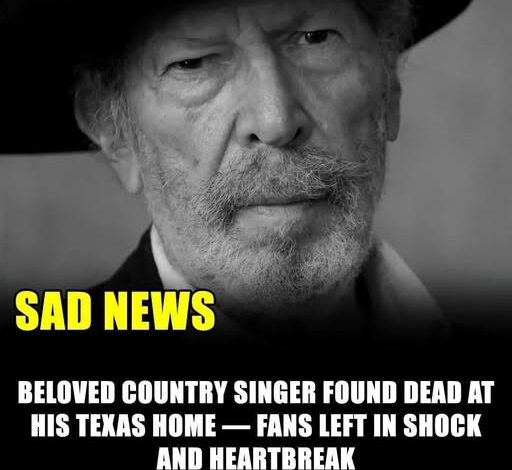
Richard “Kinky” Friedman never fit into a single box because he spent his life kicking holes in every box he was handed.
Singer. Novelist. Humorist. Political candidate. Social critic. Animal advocate. Storyteller.
None of those labels felt large enough on their own, and Friedman seemed to enjoy making sure they never would.
He built a career out of refusing expectations.
When audiences expected a country singer, he gave them satire wrapped in country music. When readers expected a conventional mystery writer, he delivered detective novels filled with absurdity, wit, and uncomfortable truths. When voters expected another polished politician speaking in rehearsed slogans, he showed up in a cowboy hat with a grin that suggested he was in on a joke everyone else had missed.
Yet beneath the humor was something far more serious.
That was always the trick with Kinky Friedman.
People arrived expecting laughter.
They often left thinking.
His songs could sound outrageous on first listen, full of irreverence and sharp edges. But hidden beneath the punchlines was loneliness, heartbreak, frustration, and a deep understanding of people living on the margins.
He understood outsiders because, in many ways, he was one.
Not isolated from society, but permanently unwilling to conform to it.
He seemed suspicious of anyone too eager to fit in.
That quality made him difficult to categorize and impossible to ignore.
Over the years, he became something larger than an entertainer.
For many admirers, he became a symbol of independent thinking.
A reminder that humor could be used as a weapon against hypocrisy.
That laughter could expose truths more effectively than outrage.
That a joke, delivered at exactly the right moment, could reveal more than a hundred serious speeches.
His political campaigns reflected that philosophy.
When Friedman ran for governor of Texas, plenty of people dismissed the effort as a publicity stunt.
But those who listened closely heard something else.
Beneath the one-liners and unconventional style was a genuine frustration with political theater.
He understood that humor could expose contradictions that traditional politics often ignored.
Whether voters agreed with him or not, they paid attention.
And in an age increasingly dominated by scripted messaging, attention itself was powerful.
Texas, perhaps more than any other place, seemed uniquely suited to produce someone like him.
The state prides itself on characters larger than life, individuals who refuse to blend into the background.
Even among that crowd, Friedman stood apart.
People argued with him.
Criticized him.
Rolled their eyes at him.
Quoted him.
Laughed at him.
Admired him.
Sometimes all in the same conversation.
But they listened.
That may be the clearest measure of his impact.
He made people listen.
His influence stretched far beyond music and politics.
Animal rescue became one of the causes closest to his heart.
At his ranch, he devoted years to caring for abandoned and neglected animals. The same compassion that appeared unexpectedly beneath his public persona revealed itself again and again in private acts of kindness.
Friends often described a man who could be outrageously funny one moment and deeply compassionate the next.
The contrast wasn’t a contradiction.
It was who he was.
The humor mattered because the compassion was real.
The irreverence mattered because it existed alongside conviction.
He understood something many public figures never learn: people are complicated.
The best stories are complicated.
And the most honest lives usually are too.
His books reflected that understanding.
Readers came for the mystery plots and stayed for the observations.
His writing wandered effortlessly between comedy and melancholy, absurdity and wisdom.
Like Friedman himself, it resisted easy classification.
The characters felt human because they were allowed to be flawed.
The jokes landed because they carried truth.
The stories endured because they were about more than solving crimes.
They were about understanding people.
Now, with his passing, countless tributes focus on different versions of the same man.
The musician.
The author.
The political outsider.
The animal advocate.
The cultural icon.
Each description captures part of the picture.
None captures all of it.
Perhaps that is fitting.
A life devoted to defying categories should not be reduced to one at the end.
His absence leaves a space that feels larger than a single career.
A space in honky-tonks where a sharp lyric once cut through the noise.
A space on bookshelves where readers discovered someone unafraid to mix humor with heartbreak.
A space in political conversations where honesty occasionally arrived disguised as a joke.
Most of all, it leaves a space for the kind of voice that seems increasingly rare.
A voice willing to offend, entertain, challenge, and provoke without asking permission.
A voice comfortable standing alone.
The jokes will survive.
The songs will survive.
The books will survive.
The stories people tell about him will survive.
Future generations will discover his work and wonder how one person managed to be so many things at once.
But for those who knew him, admired him, or simply enjoyed hearing what outrageous thing he might say next, the loss feels personal.
Because characters like Kinky Friedman don’t appear very often.
They remind us that individuality is worth protecting.
That humor can be honest.
That compassion can coexist with irreverence.
And that sometimes the people who make us laugh hardest are also the people trying hardest to tell us the truth.
The cowboy hat is gone now.
The voice has fallen silent.
Yet somewhere, in a crowded bar, on a dusty Texas highway, in a dog-eared mystery novel, or in the memory of someone who once heard him speak, Kinky Friedman is still doing what he always did best.
Making people laugh.
Making people think.
And refusing, even in memory, to fit neatly into anyone else’s box.