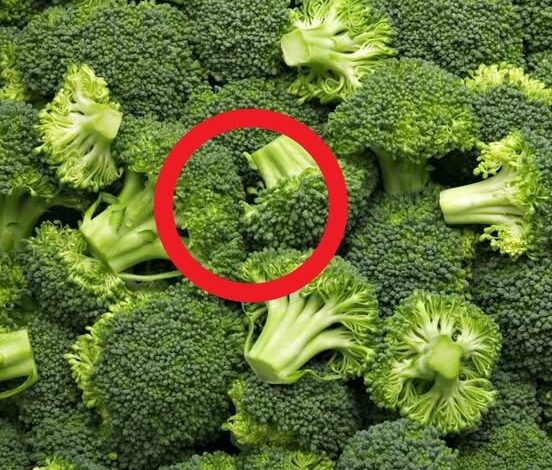
Broccoli has spent decades suffering from a terrible public relations problem.
Children push it around dinner plates.
Adults describe it as obligation rather than pleasure.
Health advice reduces it to a cliché: eat your vegetables.
Yet beneath its plain green appearance sits one of the most quietly powerful foods many people regularly overlook.
Because broccoli is not merely a side dish.
It functions almost like a compact protective system working inside the body long before visible changes ever appear in the mirror.
Its strength begins at the cellular level.
Broccoli contains exceptionally high levels of antioxidants, especially vitamin C and sulforaphane — compounds that help protect cells against oxidative stress caused by pollution, ultraviolet exposure, chronic inflammation, stress, poor sleep, and ordinary aging itself. Day after day, the body absorbs tiny forms of damage from modern life. Skin often reveals that accumulation first:
dullness,
loss of elasticity,
fine lines,
uneven texture.
Antioxidants do not stop aging completely — nothing does — but they help slow the process by reducing the cellular wear that gradually breaks down collagen and healthy tissue.
That is why people who consistently eat antioxidant-rich foods often appear healthier in ways difficult to isolate precisely. Skin looks calmer. Recovery improves. Energy stabilizes subtly.
Health radiates externally because the body is functioning more efficiently internally.
Broccoli supports that process quietly.
Vitamin C alone plays a crucial role in collagen production, helping maintain skin firmness and elasticity over time. Without adequate vitamin C, the body struggles repairing tissue effectively. Expensive creams often market collagen aggressively while ignoring the simpler reality that skin health begins partly through nutrition.
You cannot moisturize your way out of chronic nutritional imbalance entirely.
Then there is sulforaphane — one of broccoli’s most researched compounds and a major reason nutrition scientists continue studying cruciferous vegetables so intensely. Sulforaphane appears to support the body’s natural detoxification systems, particularly through liver function. That word “detox” gets abused heavily in modern wellness culture, often attached to pseudoscientific cleanses and miracle products.
But the body genuinely does detoxify constantly.
The liver filters compounds.
Cells process waste.
Hormonal byproducts get broken down and removed.
Certain nutrients simply help those systems function more effectively.
When detoxification pathways work efficiently, many people notice indirect external benefits:
less bloating,
clearer skin,
more stable digestion,
reduced inflammation,
a lighter physical feeling overall.
Not magic.
Biology.
For women especially, these effects can feel surprisingly significant because hormonal fluctuations often influence skin, water retention, inflammation, cravings, and energy simultaneously. Stress compounds everything further. Elevated cortisol levels affect sleep, appetite, blood sugar regulation, and inflammatory responses throughout the body.
Modern life places many women inside a near-constant cycle of overstimulation:
too little rest,
too much processed food,
too many demands competing for attention.
Under those conditions, small nutritional supports matter more than people realize.
Broccoli helps partly because it nourishes steadily rather than dramatically.
Its fiber content supports blood sugar regulation by slowing digestion and helping stabilize insulin responses. Stable blood sugar influences far more than weight alone:
energy,
mood,
hormonal balance,
skin clarity,
appetite control.
Sharp spikes and crashes often intensify inflammation and cravings simultaneously, creating cycles difficult to interrupt through willpower alone.
Fiber creates steadiness.
That steadiness shows externally over time.
People often chase beauty through expensive interventions while ignoring how profoundly ordinary food shapes appearance gradually. Chronic inflammation, dehydration, nutritional deficiencies, poor digestion, and unstable blood sugar eventually surface visibly in the face and body no matter how advanced skincare routines become.
Broccoli addresses several of those systems simultaneously:
hydration support,
fiber,
micronutrients,
anti-inflammatory compounds,
digestive assistance.
And importantly, it does so sustainably.
Not through restriction.
Not through punishment.
Through nourishment.
That distinction matters psychologically too.
Many women grow exhausted by wellness culture framing health as constant self-correction:
counting,
eliminating,
shrinking,
detoxing aggressively.
Broccoli represents a gentler philosophy instead.
Add support.
Feed the body well.
Create consistency rather than obsession.
Steamed broccoli paired with healthy fats and quality protein becomes more than “diet food.” Olive oil improves absorption of fat-soluble nutrients. Protein supports muscle maintenance, collagen production, and satiety. Together, those combinations help meals feel satisfying instead of restrictive.
That satisfaction matters because sustainable health routines survive only when they integrate naturally into ordinary life.
A few servings each week.
Simple preparation.
No elaborate rules.
Just repeated acts of care subtle enough to continue long term.
And perhaps that is the deeper beauty of foods like broccoli.
They work slowly.
Quietly.
Unlike beauty products promising transformation in seven days, nutritional support unfolds gradually through accumulation. Skin becomes calmer over months. Energy stabilizes subtly. Digestion improves. Inflammation decreases. Confidence grows not because someone suddenly looks unrecognizable, but because the body begins functioning with greater ease.
Real wellness often feels less dramatic than marketing suggests.
More grounded.
More repetitive.
More forgiving.
Broccoli will not erase every wrinkle or solve every hormonal struggle. No single food deserves that burden. But woven consistently into a balanced lifestyle, it becomes part of something larger:
a long-term investment in resilience.
And resilience is deeply beautiful.
Especially in a culture constantly encouraging women to chase impossible perfection externally while neglecting the systems underneath.
Perhaps that is why many nutritionists increasingly frame foods like broccoli not as punishment or obligation, but as protection.
A quiet beauty shield.
Not glamorous.
Not trendy.
Not photogenic compared to colorful superfood powders or expensive supplements.
Just dependable.
A green vegetable standing quietly at the intersection of health, energy, inflammation control, skin support, digestion, and long-term wellbeing.
Which may be exactly why it matters so much.
Because true self-care rarely arrives through miracles.
Usually, it looks far more ordinary:
a steaming plate,
a balanced meal,
a body cared for consistently enough that strength and beauty begin growing from the inside outward long before the mirror notices first.