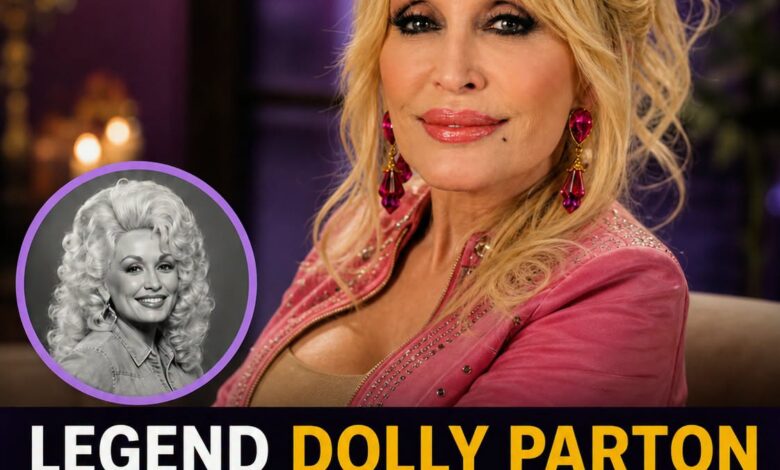
Dolly Parton spent most of her life teaching people how to survive heartbreak.
She wrote songs for the abandoned.
For the lonely.
For the overworked.
For the people who loved somebody enough to let them go.
For the people who stayed too long.
For the people who had nothing except a little dignity and the stubborn belief that tomorrow might still be worth reaching.
So when the final goodbye came, it felt almost impossible to separate the woman from the lessons she had spent decades singing.
Her nephew, Brin Seaver, had reportedly been given a responsibility no family member would ever want.
Years earlier, Dolly had asked him to be the one who would eventually speak for the family when she was no longer able to do it herself.
That request said something about her even before the words were spoken.
Dolly had spent a lifetime understanding the machinery of fame.
She knew what happened when tragedy entered a famous family.
Cameras gathered.
Rumors spread.
Private grief became public property.
People demanded statements before loved ones had even learned how to breathe inside the loss.
So, in typical Dolly fashion, she tried to prepare.
Not because preparation could make grief easier.
Because she wanted to protect the people she loved from having to improvise under the brightest possible spotlight.
When Brin finally spoke, the message was simple and devastating.
The pain belonged to those who remained.
Dolly, he said in essence, had gone toward the light she had spent her life singing about.
It was exactly the kind of language that made sense for her.
Faith had always been woven through Dolly’s work, sometimes quietly, sometimes directly.
She had grown up surrounded by church music in the Tennessee mountains.
Gospel harmony lived alongside country storytelling in the foundation of her voice.
Even when she became a global superstar, faith remained part of how she understood suffering, gratitude, mortality, and hope.
For Dolly, death was not simply an ending.
It belonged to a larger spiritual story.
That belief did not erase grief.
It gave grief somewhere to stand.
And perhaps that is why the announcement carried such a strange mixture of devastation and peace.
The world had lost Dolly Parton.
But the people closest to her were being asked to imagine that she had not disappeared into darkness.
She had gone somewhere she had spent a lifetime believing in.
For fans, the loss felt deeply personal.
That is the peculiar intimacy of music.
Most people who loved Dolly never met her.
They never sat across from her at breakfast.
Never heard her complain about ordinary annoyances.
Never saw the private woman beneath the wigs, makeup, rhinestones, and perfectly timed jokes.
Yet they knew her voice.
And voices enter places strangers normally cannot.
Cars.
Bedrooms.
Hospital rooms.
Kitchens.
Funerals.
Weddings.
Long drives after terrible news.
A person can become part of your life without ever knowing your name.
Dolly became that person for millions.
Her story had begun about as far from global fame as one could imagine.
A crowded one-room cabin in rural Tennessee.
Twelve children.
Very little money.
A childhood in which necessity demanded ingenuity.
Those circumstances would eventually become part of her mythology, but Dolly never treated poverty as something picturesque.
She understood what it meant to go without.
What it meant to wear clothes other people might mock.
What it meant for a family to stretch what little they had.
She also understood the power of imagination.
That may have been the first wealth she ever possessed.
Stories cost nothing.
Songs could be created before there was money to record them.
Dreams could be enormous even inside a very small house.
Dolly learned early that pain could be transformed.
A humiliating memory could become “Coat of Many Colors.”
Jealousy could become “Jolene.”
A professional goodbye could become “I Will Always Love You.”
Workplace frustration could become “9 to 5.”
This was more than songwriting ability.
It was emotional alchemy.
She took experiences that might have remained private wounds and turned them into something other people could use.
That is why her music traveled so far beyond country radio.
You did not need to grow up in Appalachia to understand embarrassment.
You did not need to work in Nashville to understand being underestimated.
You did not need to know the woman named Jolene to understand fear of losing someone.
Dolly could make one very specific story feel universal.
That gift never left her.
Even as age, illness, and grief began changing the shape of her life, she kept returning to work.
Creating.
Planning.
Writing.
Imagining.
For someone who had spent decades working at an almost unbelievable pace, stopping was not simply a scheduling change.
Work was part of her identity.
But in her later years, the private burdens became heavier.
Carl Dean’s death tore through a relationship that had lasted for most of Dolly’s adult life.
He had been the great private constant beside one of the world’s most public women.
While Dolly became increasingly famous, Carl had mostly remained outside the spectacle.
That arrangement was not evidence of distance.
It was part of how they protected their marriage.
Dolly belonged to the public in carefully chosen ways.
Carl belonged to the part of her life cameras could not have.
When he died, she did not merely lose a husband.
She lost the person connected to almost every chapter of her adulthood.
There is no simple recovery from that kind of absence.
You do not “move on” from nearly sixty years with someone.
You learn how to move differently.
The routines change.
The silence changes.
Even rooms change.
Objects acquire weight.
Memories appear without warning.
And for Dolly, grief reportedly arrived alongside her own declining health.
That combination could have given her every reason to retreat.
Instead, she kept thinking forward.
That detail may reveal more about her character than any award.
Dolly had always possessed a stubborn relationship with possibility.
Maybe it came from poverty.
Maybe when you grow up with so little, imagination becomes a survival skill.
Whatever its origin, she seemed almost constitutionally incapable of treating the present as the final limit.
There was always another song.
Another project.
Another book.
Another idea.
Another child somewhere waiting for a book from the Imagination Library.
Another audience.
Another joke.
Another reason to get dressed and keep going.
That perseverance should not be romanticized into the idea that she never hurt.
She did.
No amount of success protects a person from grief.
No faith erases the body.
No work ethic grants immortality.
And no glitter makes illness less frightening.
The more meaningful lesson is that Dolly did not require pain to disappear before she participated in life.
She carried it with her.
Sometimes into songs.
Sometimes into work.
Sometimes quietly.
That is very different from pretending suffering does not exist.
In fact, her entire career was built on acknowledging it.
Dolly rarely wrote from the position of someone untouched by hardship.
She wrote from inside it.
Then she added melody.
That may be the permission people felt in her work.
You can be heartbroken and still laugh.
You can come from poverty and still be proud.
You can be glamorous without apologizing for ambition.
You can grieve someone and continue creating.
You can believe in heaven while admitting goodbye still hurts.
You can keep going without pretending going is easy.
That is an unusually compassionate message.
And it extends far beyond music.
Consider what she did with the fame those songs created.
The Imagination Library became one of the clearest examples.
Dolly’s father had struggled with literacy.
His daughter responded by helping create a system that put books into the hands of children.
That is a remarkable form of transformation.
A private family pain became infrastructure for strangers.
Millions of children eventually received books because Dolly remembered something her father had lacked.
That may be one of the purest examples of how she lived.
Take the thing that hurt.
Then build something useful from it.
The same spirit shaped her connection to East Tennessee.
Dolly became famous enough to live anywhere.
She never emotionally abandoned home.
Dollywood created entertainment, certainly, but it also created jobs and brought people into the region that had formed her identity.
She understood the difference between escaping poverty and becoming ashamed of the poor.
She never seemed ashamed.
If anything, she turned her origins into one of the strongest parts of her public identity.
The accent stayed.
The jokes stayed.
The mountain stories stayed.
The rhinestones got brighter.
That combination made her difficult to categorize.
She was simultaneously exaggerated and sincere.
Commercial and deeply personal.
Funny and emotionally devastating.
Traditional and surprisingly independent.
People who disagreed on almost everything else could still find something to love in Dolly Parton.
That may be one of the rarest achievements of her era.
She was not apolitical in the sense of having no values.
Her values were visible everywhere.
Literacy.
Generosity.
Dignity.
Faith.
Work.
Family.
Compassion.
But she had an unusual ability to communicate those values without making cruelty the delivery mechanism.
She could disagree without seeming addicted to humiliation.
In an era built increasingly around division, that quality became precious.
Maybe that’s why the idea of her absence feels so strange.
The world is not merely losing songs.
It is losing a certain kind of tone.
Warmth without weakness.
Humor without contempt.
Ambition without shame.
Generosity without constant self-congratulation.
She had spent decades turning herself into one of the most recognizable people on Earth and somehow still managed to make ordinary people feel seen.
That is not easy.
By the time the final announcement came, perhaps Dolly had already done the most important part.
She had prepared the people closest to her.
She had put her wishes into words.
She had designated someone she trusted.
She had made sure that when the world came asking for a statement, her family would not need to invent one through shock.
That, too, was care.
Even at the end, she was thinking about what other people would have to carry.
And the message Brin delivered reflected the same worldview Dolly had offered throughout her life.
Do not imagine her trapped inside the suffering that defined the final chapter.
Remember the larger story.
The girl in Tennessee.
The songwriter in Nashville.
The woman who fought for ownership of her work.
The entertainer who crossed genres.
The businesswoman people underestimated.
The wife who protected a private marriage inside a spectacularly public life.
The philanthropist who sent books to children she would never meet.
The believer who kept looking toward something beyond the immediate pain.
That is the scale on which Dolly Parton has to be remembered.
Not one illness.
Not one loss.
Not one final statement.
A life.
A very large one.
And even then, perhaps the most important pieces are small.
A child opening a book.
A woman hearing “Jolene” after heartbreak.
A worker singing “9 to 5” on a terrible Monday.
Someone grieving while “I Will Always Love You” says what they cannot.
A family member remembering a private joke the public will never know.
Those are the places Dolly remains.
The spotlight always makes death look enormous.
Headlines announce the end.
Tributes arrive.
Photographs fill screens.
Awards are replayed.
Career summaries compress eighty years into a few minutes.
But legacy moves differently.
It travels quietly.
Through repetition.
A song played again.
A book mailed again.
A story retold.
A child learning the lyrics decades after the singer is gone.
That is how someone outlives the body.
Not literally.
Through usefulness.
Through memory.
Through the things they made that other people still need.
Dolly Parton spent her life making useful beauty.
That may be the simplest way to describe it.
She took pain and gave people songs.
She took success and gave people opportunity.
She took a poor childhood and gave children books.
She took grief and gave it language.
She took fear and often wrapped it in humor so everyone could breathe.
And when the end came, even that was framed not as darkness, but as passage.
The sorrow belonged here.
She, according to the faith that shaped her, had gone toward light.
For those left behind, that belief will not erase the empty places.
Carl’s absence did not disappear because Dolly kept working.
Dolly’s absence will not disappear because her songs remain.
Grief does not negotiate that way.
But memory can coexist with it.
So can gratitude.
And perhaps that is the final lesson her life offers.
You do not have to wait until the pain is gone before making something beautiful.
Sometimes the pain comes with you.
Sometimes you sing anyway.
Sometimes you work anyway.
Sometimes you love anyway.
Sometimes you give anyway.
That is not denial.
It is endurance.
Dolly understood endurance better than almost anyone.
She had been practicing it since childhood.
The one-room cabin did not stop her.
The industry did not stop her.
Heartbreak did not stop her.
Loss did not stop her.
Even when the body began setting limits she hated, she kept imagining what might still be possible.
That is the legacy.
Not merely that Dolly Parton became famous.
That would have been impressive enough.
It is that she kept converting whatever life handed her into something larger than herself.
Songs.
Laughter.
Books.
Jobs.
Comfort.
Hope.
And now, after the final goodbye, those things remain.
The woman is gone.
The giving is not.
Somewhere, a child is still opening a book because of her.
Somewhere, a brokenhearted person is still pressing play.
Somewhere, someone is still discovering that a girl from the Tennessee mountains once believed she had something worth saying.
She did.
And the world kept listening.
That is not a bad way to leave.
Not because the ending is painless.
But because the life before it was so full of evidence that pain never had the final word.