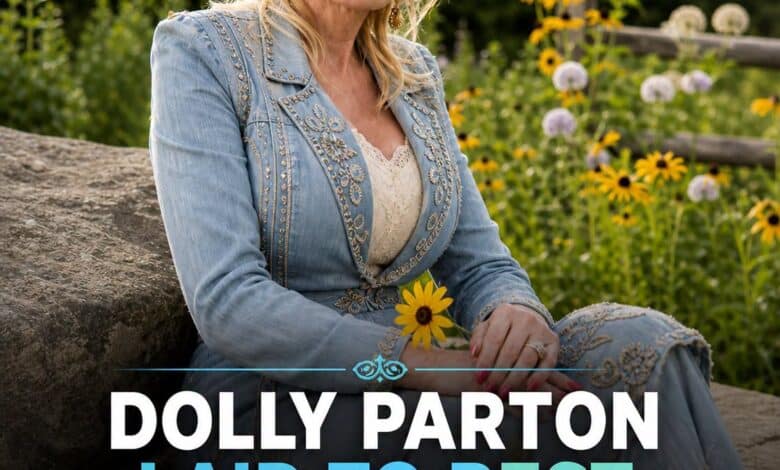
Dolly Parton spent a lifetime making enormous things look effortless.
The voice.
The rhinestones.
The businesses.
The songs that somehow sounded simple even when they carried heartbreak inside them.
But in her final days, the spectacle reportedly fell away.
What remained was the woman underneath it all: determined, hopeful, deeply attached to the people she loved, and still talking about tomorrow even as tomorrow was becoming uncertain.
Her time at Vanderbilt-Ingram Cancer Center was brief.
There was no grand public countdown.
No attempt to turn illness into one final performance.
Instead, Dolly continued speaking in the language she had always understood best.
Plans.
Projects.
Ideas.
Things she still wanted to accomplish.
She reportedly talked about bucket lists and unfinished work, insisting there were “so many things” left to do.
That feels almost painfully appropriate.
Dolly had never seemed comfortable with the concept of being finished.
One song led to another.
One successful project created the possibility of helping someone else.
One dream became permission to dream bigger.
Even illness apparently could not persuade her to start speaking as though her life had already moved into the past tense.
That did not necessarily mean she misunderstood what was happening.
Hope and awareness can exist together.
A person can recognize that the body is struggling and still make plans.
Still imagine another morning.
Still care about unfinished work.
Sometimes planning is not denial.
It is a way of remaining yourself.
And Dolly had spent decades defining herself through motion.
She worked.
She wrote.
She called people.
She encouraged them.
She found something funny even when the situation was not.
She looked outward.
So when the end approached, she reportedly asked for something remarkably simple.
Loved ones nearby.
Privacy afterward.
No giant public farewell.
No final transformation of grief into spectacle.
For a woman whose image had been magnified around the world, there was something fitting about reserving the final moments for the people who knew her without an introduction.
The public had received plenty.
The family could have this.
And it was family who revealed the Dolly that celebrity could never completely explain.
Her great-niece Lainey’s tribute did not center the global icon.
She remembered “Granny.”
That single word shrinks an extraordinary public life back to human scale.
To millions, Dolly was a legend.
To the younger people in her family, she could be the person they called when they were scared.
The woman who helped pay for beauty school.
The relative who believed an uncertain dream deserved investment.
The reassuring voice when stage fright threatened to overwhelm everything.
The person who answered—or called—at an hour when the rest of the world was asleep.
Four in the morning.
That detail says more about love than almost any award ever could.
Anyone can offer encouragement when it is convenient.
Love often reveals itself when the phone rings at the wrong hour.
When someone is frightened.
When they need reassurance again even though you already gave it yesterday.
When there is nothing glamorous to do except stay on the line.
That was the woman Lainey remembered.
Not the hair.
Not the costumes.
Not the carefully constructed Dolly Parton silhouette recognized instantly from across an arena.
Granny.
The woman who made fear smaller.
That private role complicates one of the most discussed facts about Dolly’s life: she never had children of her own.
For years, strangers treated that decision and circumstance as a mystery requiring explanation.
Did she regret it?
Was career the reason?
Did something feel missing?
But motherhood is not the only place maternal love can go.
Dolly seemed to prove that repeatedly.
She poured it sideways and outward.
Into nieces.
Nephews.
Great-nieces and great-nephews.
Into younger performers who needed someone established to tell them they belonged.
Into children she would never meet.
That last group may ultimately number among the largest parts of her legacy.
Through the Imagination Library, Dolly turned affection for children into something practical.
Books.
Not a vague statement about caring.
Something a child could hold.
Something that could arrive at a home month after month and quietly tell a family that reading mattered.
There is something revealing about that choice.
Dolly understood what it meant to grow up with limited resources but unlimited imagination.
A book can become a doorway when the physical world around a child feels small.
She knew that.
So she built millions of doorways.
Her generosity extended into medical causes and other forms of philanthropy as well.
Again, the pattern was consistent.
Dolly’s compassion rarely remained abstract for long.
If something mattered to her, she looked for a way to make that concern useful.
Money could become research.
Fame could become attention for a cause.
A childhood memory could become a literacy program.
Success could circulate.
Perhaps that is why describing her as childless never captured the whole truth.
She did not have children in the conventional sense.
But she spent much of her life nurturing.
Encouraging.
Funding.
Protecting.
Opening doors.
Telling people that the circumstances of their beginning did not have to dictate the size of their future.
Those are deeply maternal acts, even when they happen outside motherhood.
And within the family, that instinct was apparently even more personal.
A niece or nephew did not need to impress Dolly Parton.
They needed Aunt Dolly.
Granny.
Someone who remembered their fears and took their ambitions seriously.
That may be one of the strangest experiences of loving a famous person.
The world thinks it knows them through their greatest achievements.
You know them through details nobody else would think to ask about.
The tone of their voice on the telephone.
What makes them laugh when nobody is recording.
The way they respond when you are nervous.
The promise they made years ago and somehow remembered.
Those details become priceless after death.
Awards belong to history.
Habits belong to grief.
And then there was Carl Dean.
For decades, he remained the great private constant inside Dolly’s spectacular public life.
Their marriage fascinated people partly because he refused to become part of the show.
Dolly could walk onto stages before thousands.
Carl could remain elsewhere, largely uninterested in celebrity ceremony.
She told stories about him.
Protected him.
Laughed about their differences.
Returned home.
Their marriage survived not by making Carl part of Dolly’s fame, but by allowing him not to be.
His death changed the private landscape of her life.
And now, the possibility that Dolly rests beside him carries a tenderness no elaborate memorial could improve.
Two names together in stone.
Two lives that spent decades intertwined while appearing publicly separate.
The imagery of their rings makes that symbolism even stronger.
Rings are small objects asked to carry enormous promises.
They circle a finger quietly.
No applause required.
No audience necessary.
For two people whose marriage survived one partner becoming an international icon, perhaps that simplicity was always the point.
The world knew Dolly.
Carl knew the person who came home.
If their resting places now sit together, there is something almost inevitable about it.
After the touring.
After the studios.
After Nashville.
Hollywood.
Dollywood.
Awards ceremonies.
Hotel rooms.
Interviews.
Stages.
After millions of miles traveled outward, the final movement would be toward him.
Stillness beside the person who represented home.
That does not make death romantic.
Grief is not improved by beautiful imagery.
The people who loved Dolly still lost her.
Lainey still has to live in a world where a 4 a.m. call cannot produce the same familiar voice.
Family gatherings will contain an absence.
Someone will tell a story and instinctively look toward the place where Dolly should have laughed.
That is what death does.
It turns ordinary expectations into reminders.
But it cannot erase what happened before.
The beauty school was funded.
The frightened performer was reassured.
The phone calls were answered.
The books were mailed.
The medical causes were supported.
The nieces and nephews were loved.
The songs were written.
Carl was loved for decades.
Those things cannot be undone simply because the person who did them is no longer here.
Perhaps that is the more meaningful way to understand Dolly’s final days.
Not as a dramatic last chapter in which every moment secretly foreshadowed death.
But as a continuation.
She still had ideas.
Still wanted projects.
Still believed there was more to do.
Still cared about other people.
Still behaved like someone participating in life rather than rehearsing her exit from it.
Then, when participation was no longer possible, she wanted privacy.
Family.
No spectacle.
The glitter had served its purpose.
It helped create Dolly Parton, the unforgettable public figure.
But the people beside her at the end did not need rhinestones to recognize her.
They knew the woman underneath.
The aunt who invested in a young person’s future.
The granny who calmed fear.
The philanthropist who transformed affection into infrastructure.
The wife whose heart remained connected to a famously private man long after the world had turned their marriage into legend.
That is the Dolly grief reveals.
Not smaller than the icon.
Larger.
Because fame explains why millions mourn someone.
Love explains why a handful of people will never experience the world quite the same way again.
Dolly spent decades giving the public reasons to remember her.
Songs will do that.
Films will do that.
Dollywood will do that.
The Imagination Library will do that every time another child opens another book.
But for Lainey and the family, remembrance will probably be much less polished.
A late-night memory.
A phrase.
A laugh.
A moment of panic when they almost reach for the phone.
“Granny would know what to say.”
That may be where Dolly’s deepest legacy lives.
Not in proving she could defeat death.
Nobody can.
But in leaving so much love in motion that death cannot easily gather it all back.
The woman is gone.
The things she set moving are not.
Children will keep reading.
Songs will keep playing.
People she encouraged will encourage somebody else.
And family members who once called her frightened at impossible hours will hear her reassurance in their own voices when someone younger eventually calls them.
That is how love survives.
Not untouched.
Not unbroken.
Passed forward.
And if Dolly now rests beside Carl, their names joined once more after a lifetime spent balancing public spectacle with private devotion, perhaps the image needs no embellishment.
No stage.
No spotlight.
No final costume.
Just Tennessee earth.
Two names.
Two rings.
And the quiet conclusion to a love story that never needed the world watching in order to be real.
The glitter belonged to Dolly Parton.
But the gentleness belonged to Granny.
And in the end, that may be the part of her that lasts longest in the people who knew her best.