Dolly Parton Looked Happy and Very Dolly at One of Her Final Outings But Witnesses Noticed Something Different..

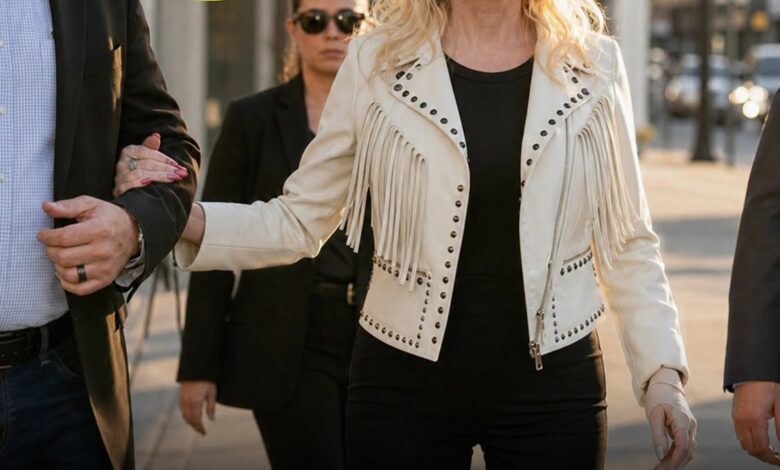
Only afterward did the scattered moments begin to look like clues.
At the time, each one had seemed small enough to explain away.
A canceled appearance.
A joke about having her “wings clipped.”
An award speech delivered virtually instead of from a stage.
A few references to healing.
More talk about dreams, unfinished projects, and the future than about whatever was happening inside her own body.
Individually, none of it sounded like goodbye.
Together, in hindsight, they formed a story no one had wanted to imagine.
Dolly Parton had spent her entire career understanding the difference between being seen and being known.
She gave the world an enormous amount of herself.
The towering blonde hair.
The rhinestones.
The exaggerated glamour.
The unmistakable laugh.
The stories about growing up poor in the Smoky Mountains.
The jokes about her appearance.
The songs that exposed heartbreak, jealousy, ambition, tenderness, and regret with astonishing honesty.
She could make an interview feel like a conversation across a kitchen table.
Yet for all that openness, Dolly remained fiercely skilled at deciding where the boundary stood.
The public could have the stories she chose.
The private pain remained hers.
That distinction became easier to recognize in the weeks after her final June appearance.
When health problems disrupted plans, Dolly rarely described them in frightening terms.
She softened them.
She joked.
She reassured.
She talked about recovery.
Even the phrase “clipped wings” carried her familiar instinct to turn limitation into something playful.
The metaphor acknowledged that she had been slowed down without asking anyone to picture how difficult being slowed down might actually have been.
That was Dolly’s language.
Take something heavy.
Put a little light around it.
Hand it back to the audience in a form they can carry.
Her virtual appearances followed the same pattern.
She could have focused on illness.
Instead, she talked about ideas.
Dreams.
Music.
Projects.
Things still waiting to be created.
There was no dramatic announcement asking the world to prepare itself.
No public countdown.
No invitation to watch every stage of decline.
If she understood how serious things had become, she chose not to make that knowledge the center of her relationship with fans.
And that choice was consistent with the woman she had always been.
Dolly understood spectacle better than almost anyone.
She had deliberately created one of the most recognizable images in entertainment.
She once joked about her wigs, her clothes, her makeup, and the artificial pieces of the Dolly Parton persona before anyone else could make those things weapons against her.
But beneath the humor was extraordinary control.
The image wasn’t accidental.
She built it.
She decided what the audience would see.
That same instinct appears differently when viewed through the final months.
The sequins could remain visible.
The suffering did not have to be.
That doesn’t necessarily make the final appearances evidence of deception.
Privacy is not dishonesty.
A person can tell the truth without telling all of it.
And someone who has spent decades giving millions of strangers access to her voice, her work, and pieces of her history does not automatically owe them access to every hospital room.
That is why the memory of that June afternoon now carries such emotional weight.
Dolly could have stayed home.
No reasonable person would have blamed her.
She had already given enough performances for several lifetimes.
There was nothing left to prove.
Yet she went.
She stepped outside.
Into the summer heat.
Into the noise.
Into the familiar role she had written for herself decades earlier.
Dolly.
Not a patient.
Not a diagnosis.
Not a woman being measured by what her body could no longer do.
Dolly.
She smiled.
She waved.
She joked.
She gave the crowd what they had come hoping to receive.
Looking back, people naturally search the footage for evidence of what they missed.
Was she moving more carefully?
Did the smile require more effort?
Was there exhaustion behind her eyes?
Did someone remain unusually close to her?
Did she already know?
Grief turns ordinary footage into evidence.
It makes people freeze frames.
Replay sentences.
Study gestures.
Listen differently to jokes that once seemed harmless.
We want the past to warn us because the alternative is accepting that sometimes it doesn’t.
Sometimes the last time looks ordinary.
Sometimes goodbye arrives disguised as another afternoon.
And perhaps that is what makes Dolly’s final public appearance so difficult to watch now.
The audience did not know it was supposed to remember everything.
They weren’t watching history.
They were simply watching Dolly.
That may have been exactly what she wanted.
Because imagine the alternative.
Imagine if every person in that crowd had known.
Every smile would have been grief.
Every cheer would have sounded like farewell.
Every photograph would have become a memorial before the moment had even ended.
Dolly would no longer have been standing among fans as an entertainer celebrating something she loved.
She would have been a dying woman being watched.
Perhaps she refused that transformation.
Perhaps, for one more afternoon, she wanted to remain the person who brought the joy rather than the person everyone was afraid to lose.
There is something deeply consistent in that choice.
Her entire life had been an exercise in transformation.
Poverty became songs.
Heartbreak became melodies.
Humiliation became humor.
Success became philanthropy.
Her father’s struggles with literacy helped inspire a program that put books into children’s hands.
The hardships of her childhood became stories that made other people feel less ashamed of their own beginnings.
Again and again, Dolly took what hurt and asked what useful thing might be made from it.
So when her own body became another source of difficulty, perhaps she instinctively did what she had always done.
She transformed the experience before giving it away.
Fans received laughter.
They did not receive the pain required to produce it.
That does not mean the pain wasn’t there.
It means pain wasn’t the gift.
Joy was.
There is an important difference.
Celebrity culture often teaches us to believe that authenticity requires complete exposure.
Tell us the diagnosis.
Show us the hospital room.
Explain the medication.
Document the decline.
Let everyone witness the vulnerability so they can call it courage.
But courage can also look like a boundary.
It can mean saying, in effect:
This part belongs to me.
Dolly had spent a lifetime making herself accessible without making herself entirely available.
The public knew Carl Dean existed, but she protected their marriage from becoming entertainment.
People knew where she came from, but not every family memory became public property.
She could laugh about her appearance without surrendering ownership of the woman underneath it.
Her final chapter appears to have followed the same rule.
Give them what you choose.
Keep what you need.
That makes the June appearance feel less like evidence in a mystery and more like an expression of agency.
She went because she wanted to be there.
She smiled because that was how she wanted to meet the people who had loved her.
And whatever physical effort existed beneath that moment, she chose not to make it the headline.
Fans remember the sparkle.
Perhaps they should.
They remember the jokes.
Perhaps that was the point.
They remember Dolly looking outward rather than inward.
Giving rather than asking.
Making the moment easier for everyone around her.
Years from now, most people will not remember the precise sequence of canceled events or virtual speeches.
They will remember the larger shape.
A woman who spent decades walking onto stages and leaving people happier than she found them.
A songwriter who could turn private wounds into universal comfort.
A celebrity who understood that glamour could be both theater and armor.
A philanthropist who repeatedly turned personal history into opportunities for strangers.
And, near the end, a performer who apparently decided that illness would not be allowed to rewrite her entire public identity.
That June afternoon was not powerful because everyone secretly witnessed a farewell.
It was powerful because they didn’t.
They were allowed one more ordinary Dolly moment.
One more smile.
One more wave.
One more laugh.
Only later did its weight become visible.
That is how final moments often work.
We recognize them only after they are gone.
Then we return to them searching for something we failed to notice.
But perhaps there is nothing we need to uncover.
Maybe Dolly’s final public appearance should not be treated as a puzzle whose solution is hidden in her face.
Maybe it should be accepted exactly as she presented it.
A gift.
She could have stayed behind closed doors.
Instead, she stepped into the heat.
She stepped into whatever discomfort she was carrying.
She stepped once more into the character that was never really a character at all, but an amplified version of the qualities she valued most: humor, resilience, beauty, generosity, and hope.
Then she gave the audience joy.
They did not know they needed to hold onto it.
She did.
And if that really was Dolly Parton’s final quiet decision about how the world would see her, it was entirely in character.
Not the strain.
The smile.
Not the pain.
The sparkle.
Not a woman asking millions of strangers to watch her disappear.
A woman giving them one last reason to remember how brightly she had lived.