Few moments in modern American politics generate more immediate controversy than a high-profile congressional hearing involving one of the most recognizable public health officials in the country.
When Dr. Anthony Fauci appeared before lawmakers amid continued debate over the government’s response to COVID-19, the proceedings quickly became more than a discussion of science or public policy. Every exchange, every objection, and every legal argument was viewed through deeply entrenched political lenses, reflecting the broader divisions that have shaped public opinion since the pandemic began.
For some Americans, the hearings represented a long-awaited opportunity to press for answers about difficult decisions made during an unprecedented global emergency. Others saw them as another chapter in a years-long campaign to scrutinize, and at times personally target, a figure who had become both a symbol of the nation’s pandemic response and a lightning rod for political frustration.
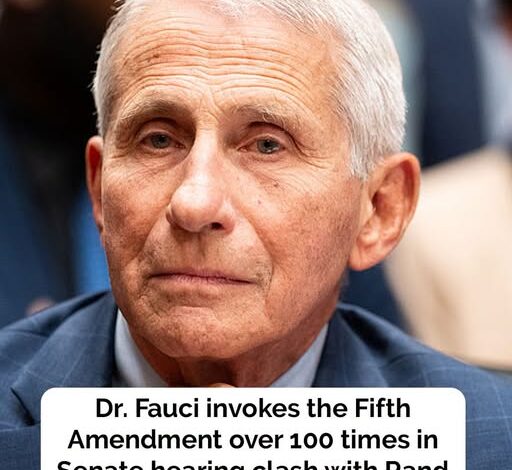
That divide was on full display in the exchanges involving Senator Rand Paul and Dr. Fauci.
Throughout the pandemic and the years that followed, Paul repeatedly questioned aspects of the federal response, including issues related to research funding, transparency, and the origins of the virus. Fauci consistently defended his actions and the decisions made by the agencies he served, arguing that policies evolved as scientific understanding changed and that many accusations directed at him mischaracterized both the available evidence and his role in federal decision-making.
As a result, their public confrontations became emblematic of a much larger national debate.
Supporters of greater congressional oversight argue that officials involved in major public health decisions should face rigorous questioning, particularly when those decisions affected millions of lives, businesses, schools, and healthcare systems. From that perspective, aggressive oversight is not merely political theater but an essential mechanism for accountability in a democratic system.
Others contend that many hearings have become increasingly partisan, with political narratives sometimes overshadowing careful examination of complex scientific issues. They argue that the intense public scrutiny surrounding figures like Fauci—including documented threats against him and his family—has created an unusually charged environment in which legal advice and personal security concerns inevitably influence how testimony is given.
Those competing interpretations extend well beyond any single hearing.
To critics of the government’s pandemic response, unanswered questions about early policies, changing public guidance, research oversight, and institutional decision-making continue to fuel calls for additional investigation. They believe the public deserves a thorough accounting of what happened, what mistakes were made, and whether reforms are needed to improve future emergency responses.
To Fauci’s supporters, however, the pandemic largely reflects the challenges of managing a rapidly evolving global health crisis with incomplete information. They point to the unprecedented pace of scientific discovery, changing evidence, and the difficult judgments required during an emergency, arguing that evolving recommendations should not automatically be interpreted as evidence of misconduct.
These contrasting perspectives help explain why discussions about COVID-19 remain so polarized years after the initial outbreak.
The broader question is no longer limited to the virus itself.
It has become a debate about transparency.
About institutional trust.
About the balance between scientific expertise and political accountability.
And about how democratic societies should evaluate decisions made under extraordinary pressure, when information is incomplete and consequences are measured in lives as well as livelihoods.
Congressional investigations, committee hearings, and public testimony all play a role in that process. Their purpose is to examine evidence, question witnesses, and develop a public record that can inform both policymakers and citizens. Whether those proceedings ultimately resolve long-standing disagreements often depends less on dramatic exchanges than on the strength of the evidence presented and the conclusions supported by the record.
Years after COVID-19 reshaped daily life around the world, Americans continue to wrestle with difficult questions about preparedness, communication, public confidence, and institutional accountability. Those debates are unlikely to end with a single hearing or a single witness. Instead, they will continue through ongoing research, official reviews, congressional oversight, and public discussion.
In the end, the lasting legacy of the pandemic will not be determined solely by political confrontation or headline-grabbing moments. It will also be shaped by whether governments, scientists, lawmakers, and the public are willing to examine what worked, acknowledge what did not, and apply those lessons before the next public health emergency arrives. Regardless of where people stand politically, that shared goal remains one of the most important outcomes any investigation can pursue.