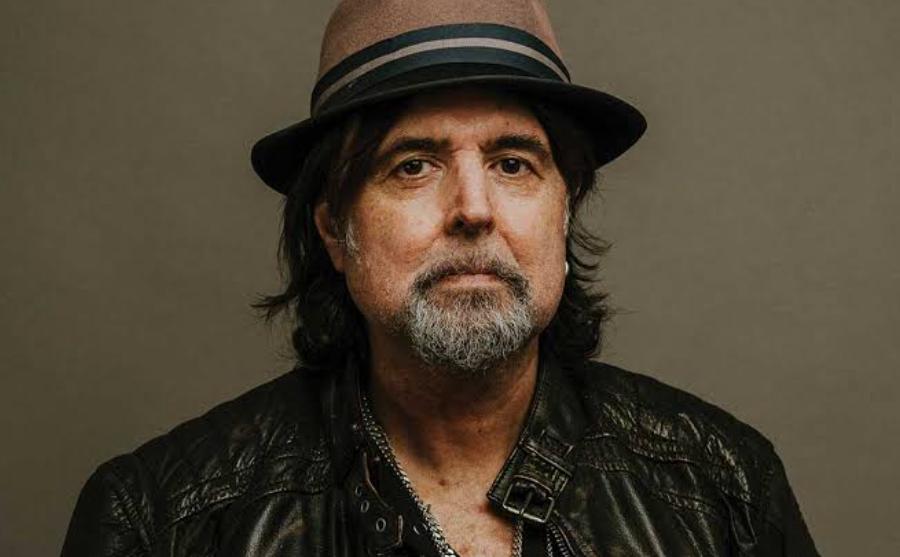
For more than three decades, Phil Campbell stood beneath deafening amplifiers and blazing stage lights, helping drive one of rock music’s most unmistakable sounds.
Then, in March 2026, that long journey came to an end.
Campbell died at the age of 64 after what his family described as a prolonged and difficult period in intensive care following a major operation. The news sent a wave of grief through the rock and metal world, where his name had been tied to Motörhead for generations.
For many fans, Campbell was more than a guitarist.
He was part of the machinery that made Motörhead sound like Motörhead.
The riffs.
The volume.
The attitude.
The controlled chaos.
And behind all of it was a musician who spent most of his life doing the same thing he had loved since childhood:
Playing guitar.
Born in Pontypridd, Wales, Campbell developed his musical instincts early.
Long before international tours and packed arenas, there were smaller stages, local scenes, rehearsals, and the slow process of learning how to make a guitar speak with authority.
His early work with the Welsh band Persian Risk gave him crucial experience.
Those years were not glamorous compared with what would come later.
But they mattered.
They taught him how to perform.
How to work inside a band.
How to survive the grind of rehearsals, recording sessions, travel, and audiences that might not yet know your name.
Then came 1984.
The year that changed everything.
Campbell joined Motörhead.
By then, the band already had a fierce identity built around Lemmy Kilmister’s unmistakable voice, distorted bass, and refusal to fit comfortably into any single category.
Motörhead was too heavy for conventional rock.
Too fast and raw for much of mainstream metal.
Too loud to be ignored.
Campbell did not arrive to soften any of that.
He helped push it forward.
His guitar playing fit naturally beside Lemmy’s bass and vocals.
Direct.
Aggressive.
Muscular.
But never careless.
There was precision beneath the noise.
Campbell could lock into the band’s brutal rhythm and then step forward with solos that added bite without sacrificing momentum.
That balance became one of his greatest strengths.
He didn’t need to dominate every song.
He understood the larger machine.
And for more than thirty years, he became an essential part of it.
Albums came.
Tours followed.
Then more albums.
More countries.
More stages.
Thousands of performances turned Campbell into one of the most familiar figures in the band’s later history.
Fans saw him night after night standing beside Lemmy, delivering the same intensity whether the room held a few thousand people or an enormous festival crowd.
Consistency is an underrated talent.
Rock mythology often celebrates chaos.
The wild stories.
The breakdowns.
The destruction.
But bands survive because somebody keeps showing up.
Campbell did.
Through lineup changes.
Long tours.
Exhaustion.
Changing musical trends.
The rise and fall of entire genres.
Motörhead remained Motörhead.
And Campbell remained there.
Until 2015.
That year, Lemmy Kilmister died.
With him went the center of the band.
Motörhead ended.
For Campbell, it could have been a natural point to stop.
He had already lived several musical lifetimes.
He had played on major records.
Travelled the world.
Shared stages with countless artists.
Built a legacy most guitarists would envy.
But retirement was not what came next.
Instead, Campbell turned toward family.
He formed Phil Campbell and the Bastard Sons with his sons Todd, Dane, and Tyla.
The name carried humor.
The project carried something deeper.
Music became a bridge between generations.
A father who had spent decades touring now found himself creating and performing with his own children.
For longtime Motörhead fans, the project offered familiarity.
Campbell’s guitar still had that unmistakable weight.
But this wasn’t simply a nostalgia act.
The band developed its own identity.
Its own songs.
Its own energy.
And Campbell seemed energized by the opportunity to share the stage with his sons.
There was something beautifully circular about it.
The boy from Wales who once chased a life in music had become the father guiding another generation through that same world.
Touring continued.
Recording continued.
The stage remained home.
That may be why news of his death felt especially difficult for fans.
Campbell never seemed like someone who had emotionally stepped away from music.
Even after Motörhead ended, he kept moving.
Kept creating.
Kept playing.
His career did not collapse into memory.
It continued evolving.
Tributes after his passing reflected that.
People remembered the guitar playing, of course.
How could they not?
But many also talked about the man away from the amplifiers.
Funny.
Warm.
Approachable.
Humble.
The contrast mattered.
On stage, Campbell could look completely at home inside a wall of noise.
Off stage, those who knew him often described someone far gentler than the music suggested.
Wacken Open Air, where Campbell appeared multiple times over the years, remembered him not only as an important rock musician but as a friendly and grounded presence.
That is often what survives after the technical details fade.
Fans remember solos.
Friends remember laughter.
Musicians remember conversations backstage.
Family remembers everything the audience never saw.
And perhaps Campbell’s greatest legacy sits somewhere between all of those things.
He helped preserve Motörhead’s identity through decades of change.
He contributed to a sound that influenced generations of rock, punk, and metal musicians.
Then, when that chapter closed, he refused to let his creativity close with it.
He brought his sons onto the next stage.
That matters.
Because musical legacy is not only about recordings.
It is about transmission.
One musician inspiring another.
A riff learned in a bedroom.
A song discovered decades after its release.
A teenager hearing Motörhead for the first time and deciding to pick up a guitar.
Campbell became part of that chain.
And that chain continues.
His recordings remain.
The performances survive in video.
The albums still explode from speakers with the same force they always had.
A new listener can discover Motörhead tomorrow and hear Campbell without knowing anything about the years behind the music.
That is one of the strange gifts of recorded sound.
A musician can be gone.
The performance is not.
Press play, and the guitar returns.
Loud.
Immediate.
Alive.
Phil Campbell’s life was shaped by persistence.
From Wales to international stages.
From Persian Risk to Motörhead.
From Motörhead to performing alongside his sons.
He kept choosing music.
Again and again.
That consistency may be the clearest description of his career.
Not one lucky break.
Not one famous album.
A lifetime of showing up with a guitar and making the room louder.
His death closes a remarkable chapter in rock history.
But it does not silence it.
Every time a Motörhead record plays, part of that chapter opens again.
Every time a younger guitarist studies one of his riffs, the influence moves forward.
Every time his sons step onto a stage carrying their own instruments, the story continues in another form.
Phil Campbell may no longer be standing beneath the lights.
But the sound he helped build remains.
And for a guitarist who spent his life making sure nobody could ignore the noise, that feels like a fitting kind of immortality.