Global Powers On High Alert As Targeted Strikes Threaten To Ignite A Catastrophic Middle East Conflict

After the Strikes: The World Confronts the Consequences of a New Middle East Crisis
The images spread across the world faster than any official statement.
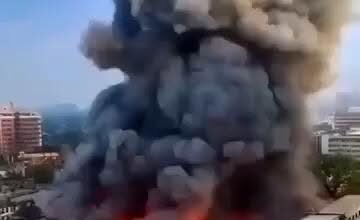
Flames rising above industrial complexes.
Columns of smoke stretching into the sky.
Emergency sirens cutting through the night.
Families rushing into shelters.
Roads clogged with vehicles fleeing uncertain danger.
Military installations placed on high alert.
Markets reacting before governments could fully explain what had happened.
For millions of people watching from living rooms, offices, airports, and city streets across the globe, the scenes felt both shocking and strangely familiar.
Another Middle Eastern crisis.
Another escalation.
Another moment when decades of tension suddenly erupted into something visible and immediate.
Yet beneath the familiar imagery lies a growing realization among policymakers, military leaders, and diplomats.
This moment may be different.
Not because conflict in the region is new.
Because many of the assumptions that once governed such conflicts appear increasingly fragile.
For years, the international community operated under a complicated system of pressure, deterrence, diplomacy, intelligence operations, economic sanctions, and strategic ambiguity.
The framework was imperfect.
Often frustrating.
Frequently criticized.
But it served a purpose.
It prevented certain red lines from being crossed.
Or at least delayed them.
Now many observers fear those mechanisms may be losing their effectiveness.
The strikes have forced governments around the world to confront an uncomfortable question:
What happens when the old rules no longer seem capable of containing the crisis?
A Long-Building Confrontation Reaches a New Phase
The current tensions did not emerge overnight.
They are the product of years—arguably decades—of competing ambitions, regional rivalries, security concerns, intelligence operations, proxy conflicts, and diplomatic failures.
Throughout that period, Iran’s nuclear program remained one of the most contentious issues in international politics.
Supporters within Iran frequently described it as a matter of sovereignty, technological advancement, and national development.
Critics viewed it through an entirely different lens.
For neighboring countries, regional rivals, and many Western governments, the concern was not merely technological progress.
It was strategic balance.
Power.
Deterrence.
Security.
The fear that nuclear capability could fundamentally alter the geopolitical landscape of the Middle East.
As negotiations repeatedly stalled and restarted, sanctions were imposed and adjusted, agreements were reached and later challenged, and intelligence agencies across multiple countries monitored developments closely.
At various moments, diplomacy appeared capable of stabilizing the situation.
At others, military confrontation seemed dangerously close.
For years, the world lived in the space between those possibilities.
A fragile equilibrium.
An uneasy waiting period.
A belief that somehow the crisis could continue being managed without fully exploding.
The recent strikes shattered that assumption.
In one dramatic moment, the debate shifted.
No longer centered on whether nuclear ambitions could be slowed or redirected.
No longer focused primarily on future possibilities.
Instead, attention turned immediately toward consequences.
And consequences are far more difficult to control.
The Collapse of Predictability
One of the most dangerous aspects of modern geopolitical crises is not necessarily violence itself.
It is uncertainty.
Military planners often speak about escalation ladders—sequences through which conflicts gradually intensify.
The theory assumes rational actors understand risks and communicate boundaries.
The theory assumes each side can anticipate likely responses.
The theory assumes escalation remains manageable.
Reality rarely behaves so neatly.
History is filled with conflicts that began with limited objectives and evolved into something much larger.
Not because leaders intended broader wars.
Because events acquired momentum.
Because retaliation triggered counter-retaliation.
Because miscalculations multiplied.
Because political pressures narrowed options.
Today, many analysts worry that the predictability once associated with Middle Eastern tensions has weakened considerably.
The old playbook depended upon certain assumptions.
That sanctions would influence behavior.
That diplomatic channels would remain open.
That proxy conflicts would remain contained.
That strategic deterrence would continue functioning.
The strikes have raised doubts about each of those assumptions.
Suddenly, policymakers are confronting scenarios they hoped never to face.
Energy Markets Enter the Crisis
Long before missiles, military bases, or political speeches become the dominant concern, another issue immediately captures global attention.
Energy.
The modern world remains deeply dependent on stable energy flows.
Factories require fuel.
Transportation networks require fuel.
Electrical grids require fuel.
Entire economies depend upon predictable supply chains.
When instability threatens major energy-producing regions, financial markets respond almost instantly.
Investors react.
Governments assess vulnerabilities.
Businesses prepare contingency plans.
Consumers begin worrying about prices.
The Strait of Hormuz occupies a central role in these concerns.
This narrow waterway serves as one of the world’s most critical energy corridors.
A substantial portion of global oil and natural gas shipments pass through it.
Any disruption carries consequences extending far beyond the Middle East.
Countries thousands of miles away suddenly find themselves affected by developments occurring in a relatively small geographic area.
Energy-importing nations understand this reality well.
Many are already evaluating alternative supply arrangements.
Emergency reserves.
Strategic stockpiles.
Potential economic impacts.
The concern is not merely current disruption.
It is the possibility of future disruption.
Markets dislike uncertainty.
Energy markets especially.
And uncertainty has suddenly become one of the region’s most abundant resources.
Military Calculations in an Uncertain Environment
Inside military headquarters around the world, a different conversation is unfolding.
Not about markets.
Not about diplomacy.
About scenarios.
Contingencies.
Probabilities.
Potential responses.
Military planners are trained to anticipate possibilities long before they occur.
Every crisis triggers extensive simulations.
What if retaliation occurs?
What if it expands?
What if multiple actors become involved?
What if cyber operations accompany conventional military action?
What if critical infrastructure becomes a target?
Modern conflict rarely follows a single path.
The battlefield now extends far beyond physical geography.
Cyberattacks can disrupt financial systems.
Communication networks can be targeted remotely.
Critical infrastructure can face threats without a single soldier crossing a border.
Information warfare shapes public perception.
Artificial intelligence accelerates decision-making and misinformation alike.
As a result, escalation today can occur at extraordinary speed.
A missile strike may trigger a cyber response.
A cyber response may provoke additional military action.
Political leaders may find themselves confronting rapidly evolving situations before traditional diplomacy has time to intervene.
This possibility deeply concerns security experts.
Not because escalation is inevitable.
Because it can become difficult to interrupt once momentum develops.
The Human Cost Often Comes Last in the Headlines
Geopolitical discussions frequently focus on strategy.
Military capability.
Diplomatic leverage.
Economic consequences.
Yet behind every crisis exist ordinary people.
Families.
Workers.
Students.
Children.
Communities.
People whose lives are transformed by decisions made far beyond their control.
Images of evacuations offer a reminder of that reality.
For civilians living near conflict zones, geopolitical analysis means little when sirens sound.
Strategic objectives provide limited comfort when families are separated or homes become unsafe.
Every escalation carries human consequences.
Some immediate.
Some lasting generations.
Entire regions bear scars long after headlines move elsewhere.
Infrastructure can be rebuilt.
Trust is far more difficult.
The challenge facing political leaders is remembering this reality while navigating complex security concerns.
Military victories rarely erase humanitarian costs.
And humanitarian costs often influence future conflicts in ways policymakers fail to anticipate.
Is There Still a Diplomatic Off-Ramp?
Amid the anxiety, uncertainty, and escalating rhetoric, many diplomats continue searching for one crucial possibility.
A way out.
History contains numerous examples of crises that appeared destined for war before eventually stabilizing.
Sometimes through negotiations.
Sometimes through back-channel communication.
Sometimes through mutual recognition of unacceptable risks.
The existence of military confrontation does not automatically eliminate diplomatic opportunities.
In some cases, it creates urgency that previously did not exist.
The challenge lies in timing.
Diplomacy requires communication.
Trust is helpful but not always necessary.
Communication is essential.
If channels remain open, opportunities remain possible.
If channels close entirely, options narrow dramatically.
This is why many international leaders are now emphasizing restraint.
Not because they underestimate the seriousness of the situation.
Because they understand how quickly serious situations can become catastrophic ones.
Every public statement matters.
Every military movement sends signals.
Every escalation influences calculations on multiple sides.
The goal for many governments is preventing a crisis from acquiring irreversible momentum.
A World Growing Tired of Living on the Edge
Perhaps the most revealing aspect of the current moment is not the strikes themselves.
It is how familiar the pattern feels.
For years, global politics has increasingly operated in a state of perpetual crisis management.
Conflicts approach dangerous thresholds.
Diplomats intervene.
Temporary stability returns.
Underlying issues remain unresolved.
Then the cycle repeats.
Again.
And again.
And again.
Many observers argue that this approach has become unsustainable.
Problems postponed eventually return.
Sometimes larger than before.
Sometimes more dangerous.
Sometimes after key institutions have weakened.
The current crisis reflects that reality.
Years of unresolved tensions accumulated beneath the surface.
The appearance of stability concealed deeper vulnerabilities.
Now those vulnerabilities have become visible.
The question is whether governments will address them—or merely postpone them once more.
The Decision Ahead
As military leaders monitor developments, diplomats pursue communication, and governments assess risks, the world faces a stark choice.
Not a choice controlled by any single nation.
Not a choice determined by any single leader.
A collective choice shaped by decisions across multiple capitals.
One path leads toward escalation.
Retaliation followed by counter-retaliation.
Expanding conflict.
Greater instability.
Potential regional war.
Consequences measured not in days or weeks but in decades.
The other path is more difficult.
It requires restraint under pressure.
Diplomacy amid distrust.
Compromise where none appears politically convenient.
It demands acknowledging uncomfortable realities before events force acknowledgment through catastrophe.
Neither path guarantees success.
Neither path eliminates risk.
But one clearly carries greater danger.
That reality is becoming increasingly difficult to ignore.
A Turning Point or a Trigger?
The strikes may ultimately be remembered in one of two ways.
As the beginning of something larger.
Or as the moment the international community finally recognized how dangerous continued drift had become.
History often looks obvious in retrospect.
Rarely does it feel obvious while unfolding.
Today, policymakers, military officials, and citizens alike are living inside uncertainty.
No one knows precisely how events will develop.
No one can predict every consequence.
No one possesses complete control.
Yet one truth has become impossible to deny.
The systems that once managed these tensions appear increasingly strained.
The old assumptions no longer inspire confidence.
And the cost of miscalculation continues rising.
Whether this moment becomes a turning point toward renewed diplomacy or a trigger for wider confrontation will depend on decisions made in the days and weeks ahead.
For now, the world watches.
Markets watch.
Governments watch.
Military planners watch.
Families watch.
Everyone waiting to learn whether this latest crisis becomes another chapter in a long history of instability—or the moment when leaders finally decide that living permanently on the edge is no longer an acceptable strategy.
The stakes could hardly be higher.
And the clock is already ticking.