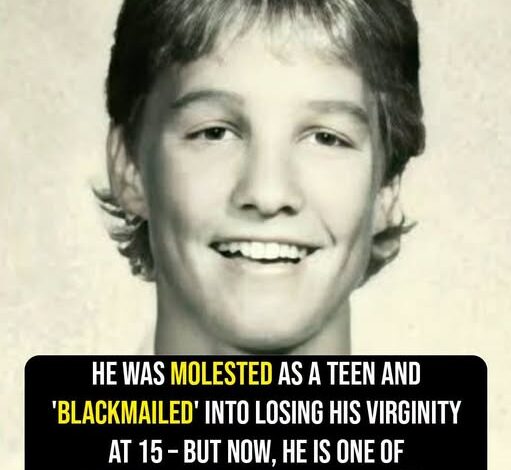
Long before Matthew McConaughey became one of Hollywood’s most recognizable actors, before the Academy Award, the bestselling memoir, or the memorable film roles, he carried experiences that few people around him knew existed. In Greenlights, he chose to reveal those painful chapters not for shock value, but to explain how they shaped his understanding of resilience, identity, and the difficult process of moving forward.
In the memoir, McConaughey recounts being subjected to sexual abuse as a child and describes the confusion, fear, and shame that followed. Like many survivors, he struggled to make sense of what had happened, growing up in an environment where trauma was often misunderstood and conversations about abuse were rare. For years, he wrestled with feelings of guilt and questions that no child should ever have to ask.
Rather than dwelling on graphic details, Greenlights focuses on what came afterward.
McConaughey writes about how those experiences influenced his outlook without allowing them to become the sole definition of who he was. He acknowledges the lasting impact of childhood trauma while rejecting the idea that the worst moments of a person’s life must dictate everything that follows.
That perspective became one of the central themes of the book.
The title itself reflects a philosophy he developed over time: life presents setbacks, heartbreak, and seemingly impossible obstacles, but it also offers unexpected opportunities to heal, grow, and move forward. He describes those opportunities as “green lights”—moments that appear even after long stretches filled with obstacles and disappointment.
For McConaughey, that philosophy was never about pretending painful experiences didn’t matter.
It was about refusing to surrender his future to them.
He has repeatedly said that he does not define himself solely by what happened during his childhood. That statement is not an attempt to minimize abuse or suggest it caused little harm. Instead, it reflects a deeply personal decision to focus on the choices he could still make after surviving circumstances he never chose.
His life would eventually become a remarkable example of that determination.
After early appearances in film and television, McConaughey captured widespread attention with his breakout performance in Dazed and Confused. His easy charisma quickly made him one of Hollywood’s rising stars, leading to a string of successful films that established him as a leading man.
Yet he refused to remain confined to a single type of role.
Years later, he deliberately stepped away from familiar romantic comedies, choosing more demanding dramatic performances that challenged both audiences and critics. That career shift culminated in his acclaimed portrayal of Ron Woodroof in Dallas Buyers Club, a performance that earned him the Academy Award for Best Actor and demonstrated the extraordinary depth of his talent.
Soon afterward, his performance in HBO’s True Detective further cemented his reputation as one of the industry’s most compelling dramatic actors.
To many observers, those achievements represented a remarkable professional transformation.
To McConaughey, they also reflected something more personal.
They were reminders that painful beginnings do not determine inevitable endings.
Away from film sets and awards ceremonies, he has also used his public platform to encourage conversations about resilience, personal responsibility, and healing. Through interviews, charitable work, and public appearances, he has expressed support for initiatives focused on helping young people, strengthening communities, and creating environments where difficult experiences can be discussed without shame.
His willingness to speak openly about his own past has resonated with many readers who recognized parts of their own stories within his.
For survivors of abuse, hearing someone with such a visible public profile acknowledge childhood trauma can help reduce the isolation that so often accompanies those experiences. Mental health professionals frequently emphasize that survivors benefit from knowing they are not alone, and public disclosures by well-known figures can encourage others to seek support or begin conversations they have postponed for years.
McConaughey does not present himself as someone who found easy answers.
He recognizes that healing is rarely straightforward and that painful memories cannot simply be erased. Instead, he describes life as a continual process of learning, adapting, and finding meaning even after profound hardship.
That honesty is part of what has made Greenlights resonate with so many readers.
It is not a story built around celebrity.
It is a story about choice.
The choice to keep moving.
The choice to refuse bitterness.
The choice to believe that identity is shaped not only by what happens to us, but also by how we respond when the opportunity to rebuild finally arrives.
In the end, McConaughey’s message is neither simplistic nor sentimental.
He does not suggest that trauma disappears with success or that achievement erases pain. Instead, he argues that a person’s darkest experiences need not become the final chapter of their life.
What happened to him was beyond his control.
What he chose to become afterward was not.
And in sharing that journey, he offers a reminder that while no one can rewrite the past, it is still possible to write a future that reaches far beyond it.