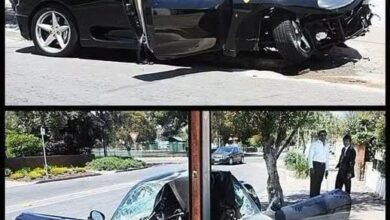
We live in a world that rewards speed.
Every day, millions of people wake up and immediately begin consuming information. They scroll through social media feeds, skim news headlines, watch short videos, glance at photographs, react to notifications, and move on to the next piece of content within seconds. Information arrives faster than ever before, competing relentlessly for attention in an environment where every platform is designed to keep people moving.
One headline replaces another.
One image disappears beneath the next.
One opinion is instantly followed by ten more.
The pace never seems to slow down.
And because of that, people have adapted.
Most of us have learned to look quickly, judge quickly, and move on quickly.
In many ways, that habit is understandable. The amount of information available today far exceeds what any individual could possibly process in detail. If people stopped to carefully examine every article, photograph, video, or post they encountered, they would never make it through a single day online.
Speed has become a survival skill.
But it comes with a hidden cost.
When we move too fast, we often stop noticing.
And sometimes, the things we fail to notice are the things that matter most.
A photograph that appears ordinary at first glance may contain a small detail that completely changes its meaning. A headline may omit crucial context. A video that seems straightforward may reveal something entirely different when viewed a second time. A brief interaction may communicate far more than the words being spoken.
Yet most people never see those details.
Not because they are hidden.
But because they are moving too quickly to notice them.
This tendency is deeply connected to the way the human brain works.
Our brains are remarkably efficient pattern-recognition systems. Every second, they process enormous amounts of information and make rapid judgments about what deserves attention and what can safely be ignored.
This ability is incredibly useful.
It helps us recognize familiar faces in a crowd.
Navigate busy environments.
Respond to potential danger.
Make quick decisions when time is limited.
Without it, everyday life would be overwhelming.
However, the same mental shortcuts that help us function efficiently can also lead us astray.
When something looks familiar, the brain often assumes it already understands it.
When a situation resembles something we’ve seen before, we stop looking closely.
When an image appears ordinary, we glance and move on.
When a story seems predictable, we stop questioning.
Our minds naturally fill in missing information using assumptions based on past experiences.
Most of the time, this works well.
Sometimes, it doesn’t.
Because familiarity can create the illusion of understanding.
And the illusion of understanding often prevents deeper observation.
This effect becomes especially powerful in digital environments.
Social media platforms are designed to encourage speed. Endless scrolling creates a constant flow of content. Notifications pull attention in multiple directions at once. Algorithms reward immediate reactions. Short-form videos, quick captions, and eye-catching headlines are optimized to capture attention instantly rather than encourage reflection.
The result is a culture of rapid consumption.
People absorb information quickly but often superficially.
They focus on the most obvious elements.
The main subject.
The bold claim.
The emotional reaction.
Meanwhile, smaller details fade into the background.
Context gets lost.
Nuance disappears.
Important clues go unnoticed.
And often, those overlooked details are what truly matter.
Consider how people typically view a photograph.
Most attention immediately goes to the central subject.
The face.
The object.
The action taking place.
The background often receives little consideration.
Yet sometimes the most revealing part of an image isn’t the subject at all.
It’s the expression of someone standing behind them.
The reflection in a window.
An object sitting quietly in the corner.
A small detail that changes everything once it is noticed.
The same principle applies far beyond photographs.
Expectations shape perception.
People tend to see what they expect to see.
If they believe something will be ordinary, they rarely search for anything unusual.
If they expect controversy, they often interpret neutral information through a controversial lens.
If they expect humor, they may overlook seriousness.
If they expect danger, they may miss reassurance.
In many cases, people are not simply observing reality.
They are observing reality through the filter of their expectations.
That is why a simple phrase can completely transform how someone experiences a piece of content.
Look again.
Those two words change everything.
The moment someone is encouraged to take a second look, their attention shifts.
Passive viewing becomes active observation.
Suddenly, details that seemed invisible moments earlier become obvious.
The shadow is no longer just a shadow.
The background object becomes significant.
The expression on someone’s face tells a different story.
The hidden clue emerges.
The image changes.
Or perhaps more accurately, the viewer changes.
Because the image was always the same.
The difference lies in how carefully it was observed.
That distinction reveals something important.
Looking is not the same as seeing.
People can stare directly at something and still fail to understand it.
Observation requires more than eyesight.
It requires attention.
Patience.
Curiosity.
A willingness to question first impressions.
Curiosity, in particular, plays a powerful role.
Curious people rarely stop at the surface.
They ask questions.
They examine context.
They wonder what might be missing.
They consider alternative explanations.
They remain open to the possibility that their initial understanding may be incomplete.
This mindset often leads to richer understanding—not only online but throughout life.
Because the lesson extends far beyond photographs, videos, and social media posts.
The same pattern appears in everyday human interactions.
People frequently form opinions about others within seconds.
Someone may seem unfriendly when they are actually shy.
Someone may appear confident while struggling internally.
A situation may seem simple until additional context reveals hidden complexity.
A mistake may appear careless until circumstances are understood.
A person may be judged entirely by a single moment that fails to represent who they truly are.
First impressions are powerful.
But they are not always accurate.
When people rely exclusively on immediate judgments, they risk misunderstanding both situations and people.
Slowing down does not mean analyzing every detail endlessly.
It does not require treating every conversation as a puzzle or every photograph as a mystery.
It simply means leaving room for uncertainty.
Leaving room for additional information.
Leaving room for the possibility that the first glance does not tell the entire story.
This habit strengthens critical thinking.
It encourages people to examine evidence before drawing conclusions.
To notice context rather than focusing only on headlines.
To ask questions instead of accepting assumptions.
To think rather than simply react.
Perhaps even more importantly, it encourages empathy.
Because when people recognize that appearances can be misleading, they become less likely to judge others too quickly.
They become more willing to listen.
More willing to understand.
More willing to consider perspectives beyond their own.
In a world overflowing with information, attention has become one of the most valuable skills a person can possess.
The ability to pause.
To observe.
To look again.
To think carefully.
These habits are increasingly rare.
Yet they are precisely what help people separate truth from assumption, substance from noise, and understanding from illusion.
Sometimes greater insight does not require more information.
It simply requires paying closer attention to the information already in front of us.
Because often, the detail that changes everything is not hidden at all.
It has been there the entire time.
Waiting patiently.
Overlooked not because it was invisible—
but because we were moving too fast to truly see it.