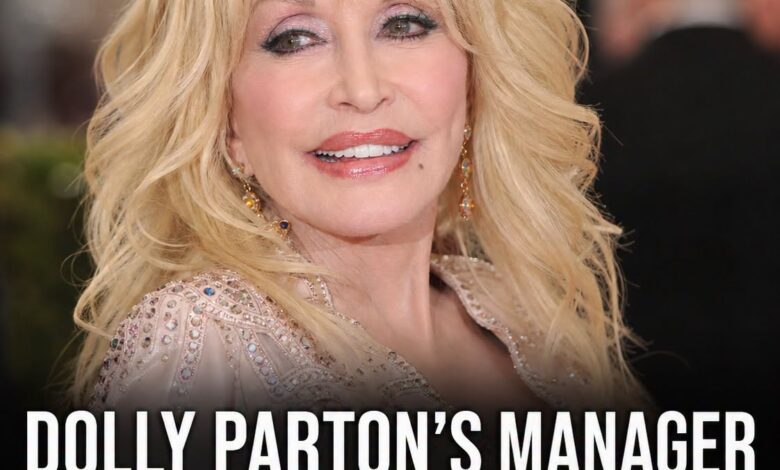
Dolly Parton spent a lifetime turning pain into light.
So perhaps it should surprise no one that, in the end, she reportedly tried to do the same thing with her own mortality.
Rather than allowing cancer to become the final headline attached to her name, Dolly chose privacy. The illness remained behind closed doors while the public continued seeing the woman it had known for decades: working, joking, dreaming, planning and finding new ways to send music into the world.
That choice was not necessarily denial.
It was control.
For someone whose appearance, marriage, childhood, body, faith, money and career had been discussed publicly for most of her adult life, deciding what not to share may have been one of the few forms of privacy still entirely hers.
She apparently did not want to become a patient in the public imagination.
She wanted to remain Dolly.
The songwriter.
The storyteller.
The woman with the enormous hair and unmistakable laugh.
The dreamer from the Tennessee mountains who somehow built an empire without losing the ability to make people feel as though she were speaking directly to them.
Cancer might have been happening to her body.
She did not have to let it consume her identity.
And while the public saw only fragments of what was happening, another story was apparently unfolding behind the scenes.
Dolly was preparing.
Not merely for death.
For continuation.
Projects were being discussed, developed and mapped out far beyond the amount of time she could reasonably expect to personally oversee them.
Biographical films.
Documentary projects.
Stage productions.
New ways of presenting her music.
An avatar performance capable of extending the theatrical experience beyond the limits of a traditional concert.
Even ideas for a festival with an international reach.
Individually, these could sound like ordinary entertainment projects surrounding one of the world’s most recognizable performers.
Together, they suggest something more deliberate.
A roadmap.
Dolly understood something that many artists do not confront until late in their careers: eventually, the work must learn to travel without its creator.
So she appears to have prepared it.
She could approve concepts.
Shape stories.
Establish boundaries.
Decide what felt authentic and what did not.
She could leave instructions while she was still present to give them.
That distinction matters enormously.
There is a difference between an estate searching through someone’s archives after death and a creator consciously participating in how her legacy will unfold.
One is reconstruction.
The other is succession.
Dolly seems to have been building succession.
That may explain why members of her team speak in language that stretches far beyond a single album or memorial project.
“Roadmaps.”
“Decades.”
Those words sound almost corporate until you consider what they really mean.
They mean Dolly planned beyond herself.
She knew there could come a day when someone else would have to finish the sentence.
So she left enough of the sentence written that they would know where it was supposed to go.
There is something profoundly Dolly about that.
She had always thought beyond the immediate moment.
Dollywood was never merely an amusement park.
The Imagination Library was never merely a charity campaign.
Her songs were rarely confined to whatever heartbreak or joy originally inspired them.
She built things designed to travel.
Across generations.
Across borders.
Across circumstances she could never personally witness.
Why should her final creative plans have been any different?
This also changes how future releases may feel to fans.
Posthumous entertainment can be uncomfortable.
When an artist dies, every unreleased recording, documentary and digital recreation raises difficult questions.
Would the artist have wanted this?
Is the project honoring the person or monetizing the absence?
Where does celebration end and exploitation begin?
Those questions should not disappear simply because Dolly was involved in planning parts of her legacy.
But her participation changes the emotional equation.
If a future stage production carries decisions she personally approved, audiences are not simply watching strangers recreate Dolly.
They are encountering something she helped prepare.
If a documentary follows a framework she supported, her influence remains inside the storytelling.
If music emerges from work she intentionally left behind, listening may feel less like opening a vault and more like receiving something she knew would arrive late.
That is a remarkable form of artistic foresight.
Dolly spent decades writing songs about separation, memory, faith and the strange persistence of love after people leave.
She understood that absence does not necessarily end a relationship.
Sometimes it changes its form.
A voice survives on a recording.
A joke survives in someone’s memory.
A book reaches a child its author will never meet.
A song written decades ago finds someone experiencing the same heartbreak today.
That is how artists defeat time—not literally, but emotionally.
Their bodies stop.
Their work keeps arriving.
Perhaps that is why Dolly’s reported determination to keep her illness private feels connected to all the planning happening behind the curtain.
She was protecting the final chapter from swallowing the entire book.
Cancer was part of what happened to her.
It did not deserve to become the meaning of her life.
The meaning was already everywhere.
In songs people played at weddings and funerals.
In children receiving books through the mail.
In performers who learned from her.
In Dollywood.
In Nashville.
In the Smoky Mountains.
In countless people who never met her but somehow felt encouraged by the way she moved through the world.
And now, apparently, in projects waiting for their moment.
There is something heartbreaking about imagining a person planning experiences she knows other people may enjoy after she is gone.
She will not stand backstage on opening night.
She will not hear every audience reaction.
She will not see how future generations respond.
Yet she planned anyway.
That is not merely ambition.
It is generosity mixed with acceptance.
The future would continue.
So she gave it something.
Her team now carries the difficult responsibility of deciding how faithfully those plans can be completed. The best tribute will not necessarily be producing everything possible.
It will be protecting the judgment Dolly exercised while she was here.
Because legacy is not simply about keeping someone’s name visible.
It is about preserving the values behind the name.
Joy without pretending pain does not exist.
Faith without demanding everyone share it.
Ambition without forgetting generosity.
Glamour with humor.
Business with heart.
And above all, creation.
Keep making something.
That may ultimately be Dolly’s most enduring instruction.
The irony is that a woman famous for saying so much through songs may have designed her final message without needing a conventional farewell.
She did not have to stand before the world and announce that time was running out.
She could leave plans instead.
A film.
A stage.
A recording.
A story.
A festival.
Another dream waiting for someone else to carry it forward.
Fans may experience those projects differently now.
Every premiere will contain absence.
Every unheard vocal will carry additional weight.
Every new piece of Dolly’s creative world will remind people that the woman who imagined it is no longer physically there to watch it arrive.
But perhaps that sadness will exist alongside something warmer.
Recognition.
She thought ahead.
She knew people would miss her.
And instead of leaving only silence, Dolly apparently filled the road beyond her lifetime with things still waiting to bloom.
That may be the most Dolly Parton goodbye imaginable.
Not a goodbye at all.
Just another project.
Another song.
Another light switched on somewhere ahead.
She protected her final darkness from becoming the story.
Then she quietly prepared enough brightness to keep traveling without her.
And for years—perhaps decades—fans may continue discovering what she left along the way.
Not simply posthumous products.
Pieces of intention.
Plans made by her own hand.
Love letters scheduled for a future she knew she would never see.
Dolly Parton spent her life refusing to let darkness have the last word.
In the end, she appears to have made arrangements for the light to keep talking.