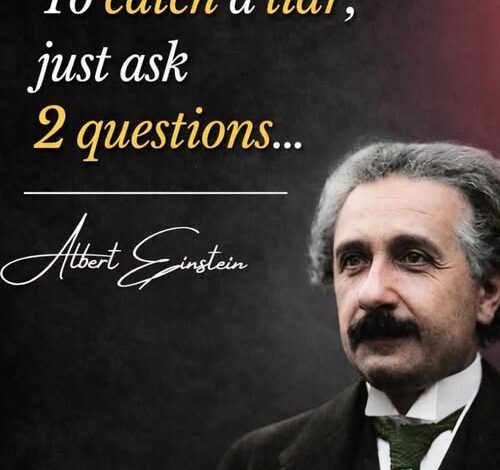
There comes a moment in life when many people discover that wisdom isn’t something they suddenly possess—it is something they practice. Clear thinking doesn’t appear overnight, nor is it reserved for the exceptionally intelligent. It is built quietly, day after day, through habits that strengthen judgment, encourage curiosity, and make it easier to navigate an increasingly complicated world.
The greatest protection against confusion isn’t suspicion.
It’s understanding.
Many people believe the safest way to avoid disappointment is to become guarded, cynical, or emotionally distant. Yet building walls around the heart often closes us off from meaningful relationships and valuable opportunities just as effectively as it blocks genuine threats.
A far more powerful approach is to build structure around the mind.
That structure begins with simple habits.
Ask one more question before accepting an answer.
Pause for one more moment before making an important decision.
Seek one more perspective before drawing a conclusion.
These actions may seem insignificant, but over time they reshape the way we process information and respond to the world around us.
Curiosity becomes one of the strongest forms of protection.
When we remain genuinely interested in learning rather than proving ourselves right, we become less vulnerable to manipulation, misinformation, and impulsive decisions. Curious people naturally look beyond headlines, investigate claims, and recognize that most complex issues rarely have simple explanations.
Instead of asking, “Is this true?”
They often ask, “How do we know this is true?”
That single shift in thinking can change everything.
Equally important is humility.
Many people mistake humility for insecurity or a lack of confidence, but in reality it is one of the clearest signs of intellectual strength. Humility allows us to recognize that our understanding is always incomplete and that every person we meet may know something we do not.
Rather than weakening confidence, that mindset strengthens it.
A person who is willing to revise an opinion after encountering better evidence isn’t demonstrating failure.
They’re demonstrating growth.
Humility becomes a compass because it keeps us oriented toward truth instead of ego.
Imagination also has an important role to play.
Far from being limited to artists and storytellers, imagination helps us anticipate possibilities before they unfold. It allows us to think through potential consequences, explore different solutions, and recognize risks that might otherwise remain hidden.
Used wisely, imagination becomes a map.
It lets us mentally travel roads we never have to walk in reality because we’ve already considered where they might lead.
Together, curiosity, humility, and imagination create a remarkably resilient way of thinking.
They don’t eliminate uncertainty.
They help us navigate it.
Life, of course, will never become completely predictable.
There will always be unexpected setbacks, difficult choices, misunderstandings, and moments when people fail to act with honesty or kindness. No amount of preparation can remove every disappointment or prevent every mistake.
But thoughtful habits can change how we respond.
People who continue learning throughout their lives tend to notice patterns that others overlook.
They recognize inconsistencies instead of accepting every claim at face value.
They become comfortable saying, “I don’t know,” because they understand that admitting uncertainty is often the first step toward genuine understanding.
Perhaps most importantly, they begin measuring success differently.
Rather than chasing titles, recognition, or social status, they focus on making meaningful contributions. They understand that lasting fulfillment comes less from appearing impressive than from being useful, dependable, and continually improving.
That quiet shift changes the way they move through the world.
Flattery loses much of its influence because self-worth no longer depends on constant praise.
Pressure becomes easier to resist because decisions are guided by principles instead of urgency.
Manipulation becomes easier to recognize because emotions are balanced by thoughtful reflection.
This doesn’t mean becoming suspicious of everyone.
It means learning to trust with discernment rather than blind optimism.
Healthy trust is built gradually.
It grows through experience, consistency, and evidence.
It leaves room for kindness while also respecting healthy boundaries.
Over time, these habits begin to simplify life in unexpected ways.
The constant need to prove oneself fades.
Comparison becomes less important.
The endless chase for approval gradually loses its appeal.
In its place comes something quieter but far more satisfying.
Clarity.
Purpose.
Confidence rooted not in certainty, but in the willingness to keep learning.
That mindset creates a unique kind of freedom.
You remain open to new ideas without being easily misled.
You stay compassionate without becoming naïve.
You can appreciate differing opinions without abandoning your own values.
Instead of reacting to every headline, rumor, or emotional appeal, you develop the patience to think before responding.
Perhaps that is the greatest reward of all.
Clear thinking isn’t simply about making better decisions.
It’s about building a life that reflects your own values rather than the expectations, pressures, or opinions of everyone around you.
The world will always contain uncertainty.
There will always be people eager to rush your judgment, exploit your emotions, or persuade you to follow their path instead of your own.
Yet the steady practice of asking thoughtful questions, remaining humble enough to learn, and staying curious enough to explore new perspectives creates a foundation that grows stronger with time.
In the end, the most valuable form of resilience isn’t found in becoming harder or more distrustful.
It’s found in becoming wiser.
And that quiet discipline—practiced one question, one lesson, and one thoughtful decision at a time—doesn’t simply protect you from manipulation.
It helps you create a life that is genuinely your own, guided not by fear or impulse, but by awareness, integrity, and the confidence that comes from never stopping the pursuit of understanding.