The feeling arrives before you even realize it.
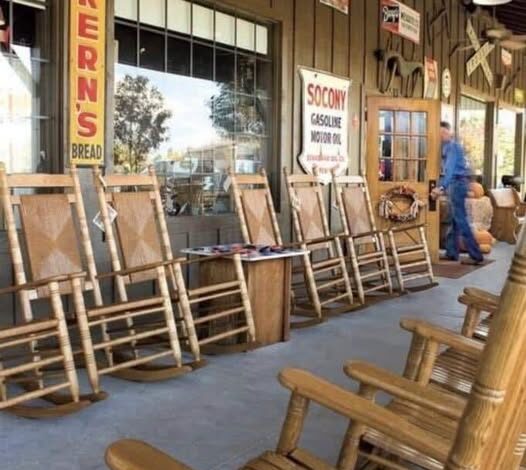
The lights are warm instead of harsh. The music drifts softly through the room, familiar enough to soothe but quiet enough to disappear into the background. Wooden tables carry the marks of imagined decades, vintage signs hang comfortably on the walls, and every worn edge seems to promise that this place has always been here, patiently waiting for you to return.
Within minutes, your shoulders loosen.
Your breathing slows.
The world outside feels farther away than it really is.
It doesn’t happen by accident.
Every detail has been carefully arranged to create an emotional response. The colors, the textures, the furniture, the music—even the typography on the menu—work together to evoke a particular feeling. You’re not simply entering a restaurant, café, or store. You’re stepping into a story that has been meticulously designed to feel older, gentler, and more familiar than the present.
What feels like nostalgia is often careful craftsmanship.
The goal isn’t necessarily to recreate history.
It’s to recreate the emotional memory of history.
That distinction matters.
Very few people are longing for every reality of the past. They aren’t wishing for its hardships, inequalities, or uncertainties. What they seek is something more selective: slower conversations, recognizable traditions, neighborhood familiarity, and the comforting belief that life once moved at a pace human beings could actually keep.
Design knows this.
Marketing knows this.
Architecture knows this.
Entire industries have learned that people don’t simply buy products.
They buy feelings.
A weathered wooden counter suggests permanence.
Old photographs imply continuity.
Classic songs invite memory.
Even artificial signs of age—a carefully chipped paint finish or intentionally distressed furniture—can create the impression that a place has earned its history rather than manufactured it.
Yet every one of those choices is still a choice.
Someone decided which era would be celebrated.
Someone selected which symbols would define the atmosphere.
Someone determined which stories belonged on the walls and which remained invisible.
Every environment tells a story through inclusion.
It tells another through omission.
The smiling families in framed photographs.
The newspaper clippings preserved behind glass.
The local legends repeated in décor and conversation.
Each contributes to a narrative that feels complete precisely because its rough edges have been softened.
No single room can capture the complexity of an entire nation’s past.
Instead, it offers an edited version.
Not necessarily dishonest.
Simply curated.
Like any well-told story, it emphasizes certain moments while leaving countless others outside the frame.
That doesn’t diminish the comfort people experience there.
It helps explain why the comfort feels so convincing.
The final step doesn’t happen in the room itself.
It happens inside the visitor.
When you sit down, you bring your own memories with you.
Perhaps the music reminds you of your grandparents’ kitchen.
Maybe the scent of fresh coffee recalls childhood mornings.
Maybe you’ve never experienced the era being referenced at all, yet years of films, books, family stories, and shared cultural images have taught you what it was supposed to feel like.
Your imagination quietly fills every gap.
Your own longings complete the picture.
That is why two people can enter the same space and leave with entirely different experiences.
One sees home.
Another sees performance.
One finds peace.
Another notices the staging.
Both reactions are real.
Both reveal as much about the observer as the place itself.
There is nothing wrong with wanting comfort.
There is nothing naive about seeking beauty, familiarity, or a sense of belonging in a world that often feels hurried and fragmented.
Shared rituals matter.
Welcoming spaces matter.
Traditions matter.
The danger isn’t in embracing them.
The danger is forgetting that every tradition has an author, every atmosphere has a designer, and every nostalgic vision is shaped by choices about what to preserve, what to celebrate, and what to leave unspoken.
Recognizing those choices doesn’t destroy the experience.
If anything, it deepens it.
You can appreciate the craftsmanship without mistaking it for unfiltered history.
You can enjoy the feeling without believing it arrived untouched by intention.
You can love the story while remembering it is still, in part, a story.
The next time that quiet sense of familiarity settles over you, pause for a moment.
Look a little closer.
Notice the carefully chosen photographs.
Listen to the music.
Observe the objects arranged to feel inevitable.
Then ask yourself not only what memories the room is inviting you to revisit, but also what hopes and experiences you’re bringing with you.
Because the space is never complete on its own.
It needs your imagination.
Your nostalgia.
Your willingness to believe.
In the end, the most convincing environments are collaborations between design and desire. The walls provide the setting, the details provide the script, but the final scene belongs to the person who walks through the door. Without realizing it, you become the last element that makes the illusion feel real—not because you’ve been deceived, but because you’ve chosen, if only for an hour, to let the story become yours.