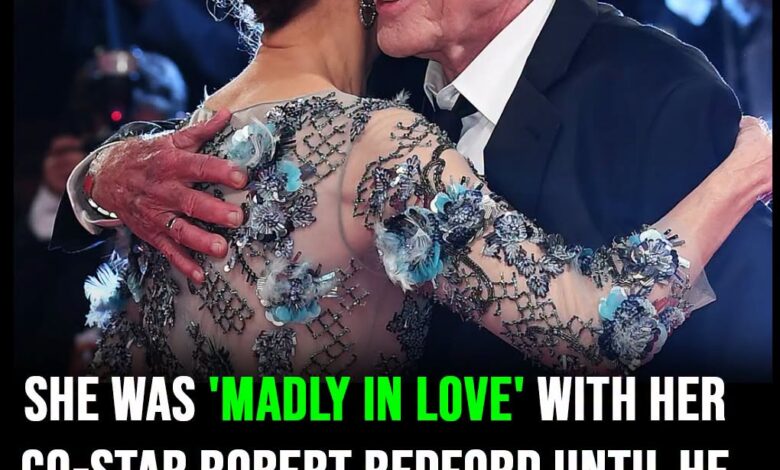
For more than half a century, Jane Fonda and Robert Redford kept finding their way back to each other.
Sometimes it happened on a movie set.
Sometimes at a premiere.
Sometimes decades passed between chapters.
But whenever they appeared together, something familiar returned—the easy chemistry, the affection, the sense that beneath the performances lived a connection neither time nor separate lives had completely erased.
Then Redford was gone.
At 89, his death did more than close one of Hollywood’s most remarkable careers. For Fonda, it turned decades of memories into something suddenly finite.
There would be no next conversation.
No future reunion.
No chance to make good on the visit she had been meaning to make.
And that may be the detail that hurts most.
Fonda had planned to see him.
She wanted to check in, reconnect and make sure, as she put it, that “they were all right.”
She believed there would be time.
Then there wasn’t.
It is an almost unbearably ordinary regret attached to two extraordinary lives.
Their story on screen began when both were still young enough for Hollywood to package romance as possibility.
In Barefoot in the Park, they became Paul and Corie Bratter, newlyweds trying to survive love, marriage and each other. Their chemistry was playful and combustible. Audiences saw two beautiful movie stars sparring, flirting and falling toward one another.
Fonda later acknowledged something audiences had probably sensed all along.
She fell for Redford.
Working opposite him could blur the emotional boundary between performance and reality. His reserve drew her in. His beauty certainly didn’t hurt. And whenever they reunited professionally, some version of that old attraction seemed capable of resurfacing.
But their connection endured because it became larger than attraction.
They grew older.
Their careers changed.
Their lives accumulated marriages, children, losses, political commitments, triumphs and private grief.
Hollywood changed around them too.
Still, Redford remained “Bob” to Fonda.
That familiarity mattered.
By the time they made Our Souls at Night together, the chemistry carried a completely different weight.
They were no longer playing young people discovering desire.
They were playing older people confronting loneliness and the terrifying vulnerability of needing companionship when much of life already seemed to be behind them.
The tenderness worked partly because audiences knew the history standing behind the characters.
Every glance contained decades.
The youthful electricity of Barefoot in the Park had become something gentler.
Not smaller.
Deeper.
That is what long relationships sometimes become, even when they do not fit neatly into categories.
Friendship can contain old attraction.
Professional admiration can become affection.
Shared history can create an intimacy that survives long stretches of silence.
You do not have to speak every day for someone to occupy permanent territory in your life.
Perhaps that is also why we postpone certain visits.
The people who feel permanent are the easiest to assume will still be there.
We call the friend whose crisis feels immediate.
We answer the urgent email.
We handle appointments.
We finish work.
We promise ourselves that when life calms down, we will drive over, make the call, book the flight or finally have the conversation.
With someone who has been in your life for fifty years, another month can feel insignificant.
Until it becomes everything.
Fonda’s regret cuts so deeply because there is nothing uniquely Hollywood about it.
Strip away the famous names, the movie sets and the red carpets, and what remains is painfully familiar.
She meant to visit someone she loved.
She waited.
He died.
There is no villain in that story.
Only time.
And time rarely announces when an ordinary goodbye is becoming the last one.
We like to imagine final conversations arriving with some warning.
That we will somehow know to stay five minutes longer.
Ask the important question.
Say the thing we have been withholding.
Apologize.
Forgive.
Tell someone what they meant to us.
Real life is rarely that considerate.
The last conversation may be about groceries.
The final text might be mundane.
A planned visit can remain penciled somewhere in the mind until suddenly there is nobody left to visit.
That does not erase everything that came before.
Fonda and Redford had decades.
They made films together that will continue introducing them to people who were not alive when those movies were released.
They shared affection, history and memories that no missed final visit can cancel.
Grief, however, is rarely interested in arithmetic.
Fifty years of connection do not necessarily overpower one unfinished intention.
Sometimes the mind goes straight to the thing that did not happen.
I should have gone.
I should have called.
I thought there was more time.
Those sentences appear in countless forms after loss.
They are grief attempting to negotiate with a past that cannot be edited.
Fonda cannot make the visit now.
She cannot sit across from “dearest Bob” and ask whether they are all right.
She cannot manufacture one final scene simply because both of them spent their lives making scenes for everyone else.
There is no retake.
That may be the cruelest contrast of all.
Movies allow another take.
Life doesn’t.
Yet regret can become more than punishment.
It can become instruction.
Not a demand that we live terrified of losing everyone we love. That would make ordinary life unbearable.
Rather, a reminder to stop treating affection as something that can always be expressed later.
If someone matters, call.
If you have been thinking about visiting an aging parent, mentor or friend, consider what is actually preventing you.
If an apology has been waiting because pride keeps insisting there will be a better moment, remember that better moments are not guaranteed.
If you love someone, do not assume they already know everything you would say at their funeral.
Tell them while they can answer.
That does not mean every relationship must be repaired.
Some distances exist for good reasons. Some boundaries protect us. Death does not magically erase harm, and nobody owes reconciliation simply because another person is growing older.
But where love remains and only postponement stands between two people, postponement deserves to be questioned.
Because “someday” is not a date.
Fonda’s grief carries that warning now.
For decades, audiences watched her and Redford create endings on screen.
Sometimes romantic.
Sometimes bittersweet.
Sometimes hopeful.
Their real ending was far less polished.
A visit intended.
A little more time assumed.
Then absence.
Perhaps that is why her regret feels more intimate than any tribute listing awards or famous performances.
It reminds us that even extraordinary people lose one another in painfully ordinary ways.
Robert Redford leaves behind films, performances and an enormous cultural legacy.
Jane Fonda carries something more private:
the memory of Bob.
The young man she fell for.
The colleague she returned to.
The friend who remained part of her emotional landscape across more than fifty years.
And the person she intended to see one more time.
She cannot make that visit now.
But the rest of us can hear what remains inside that unfinished goodbye.
Call while there is someone to answer.
Go while there is still a door to knock on.
Say what needs saying while the person you love can hear it.
Because one day, without asking whether we are ready, “I’ll see you soon” becomes something else.
And unlike the movies, life does not give us another take.