The latest release of documents connected to Jeffrey Epstein was expected to answer lingering questions. Instead, it reignited old controversies, fueled fresh speculation, and reminded the public how quickly incomplete information can outpace established facts.
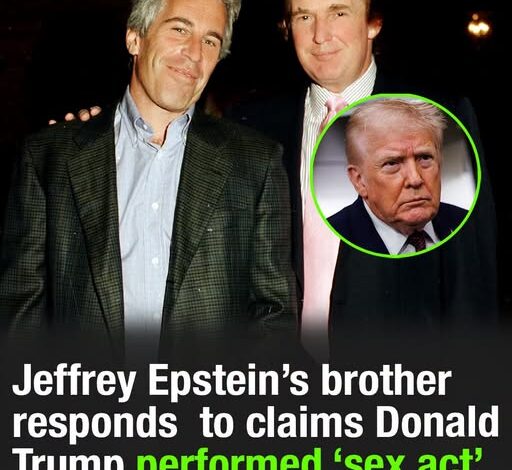
Almost as soon as the records became public, attention shifted to a decades-old photograph showing Jeffrey Epstein with Donald Trump and Ghislaine Maxwell. The image circulated widely online, prompting renewed discussion about past associations that have long been examined in connection with Epstein’s social circle. As has happened repeatedly in previous document releases, the photograph became a focal point for debate, despite offering little context on its own.
Then another detail seized the spotlight.
Among the released materials was a 2018 email containing an offhand reference to “photos of Trump blowing Bubba.” The brief phrase, stripped of surrounding context, quickly spread across social media, where countless users began speculating about the identity of “Bubba” and what, if anything, the remark was intended to convey.
Many online commentators immediately linked the nickname to former President Bill Clinton, who has sometimes been referred to by that nickname in public life.
However, the email itself does not identify who—or what—the term “Bubba” refers to, and the released documents do not establish that the reference was about Clinton or verify the existence of any such photographs.
That distinction did little to slow the online reaction.
Within hours, theories multiplied across social media platforms, podcasts, and online forums. A single ambiguous sentence became the foundation for competing narratives, with users filling gaps in the available information according to their own assumptions and suspicions.
Mark Epstein, Jeffrey Epstein’s brother, publicly rejected the interpretation that the email referred to Bill Clinton.
He said the phrase reflected a private joke rather than a reference to the former president, pushing back against the growing speculation. His explanation, however, did little to quiet the online conversation, where many people remained skeptical or continued to draw their own conclusions despite the lack of supporting evidence.
The episode underscored a familiar pattern in the digital age.
When high-profile figures, sealed court records, and decades-old controversies intersect, even vague or incomplete language can become the center of enormous public attention. Ambiguity often leaves room for speculation, and speculation can spread far more rapidly than verified information.
The rollout of the documents generated additional criticism when Vice President JD Vance acknowledged that the Trump administration had mishandled aspects of its public communication surrounding the release, saying officials had “screwed up the comms.” His comments were widely interpreted as an admission that expectations surrounding the disclosures had not been managed effectively, adding to public confusion about what the records did—and did not—show.
For many observers, the controversy became less about any single document than about the broader atmosphere surrounding the release.
People hoping for definitive answers instead encountered fragmented records, isolated excerpts, and documents that often required careful legal and historical context. In that environment, rumors and interpretations frequently traveled faster than verified conclusions.
The result was another chapter in the long-running public fascination with the Epstein case.
Years after Epstein’s death, every newly released record continues to attract intense scrutiny, not only because of the people whose names appear in the files, but because many believe important questions remain unanswered. At the same time, legal experts have repeatedly cautioned that appearing in Epstein-related documents, photographs, or contact records does not, by itself, establish wrongdoing or criminal conduct.
Ultimately, the controversy surrounding the email illustrates how easily a single ambiguous phrase can dominate public discussion.
What may have begun as an unexplained remark between two individuals evolved into a nationwide debate, driven as much by uncertainty as by the documents themselves. Rather than settling long-standing questions, the release highlighted the challenge of separating verified facts from assumptions in an era where every fragment of information is examined, shared, and interpreted in real time.
In the end, the episode revealed something larger than the meaning of one disputed sentence.
It exposed the depth of public skepticism toward powerful institutions and public figures—and how, in an environment where trust has eroded, even a few unexplained words can become the center of a story that extends far beyond the documents in which they appear.