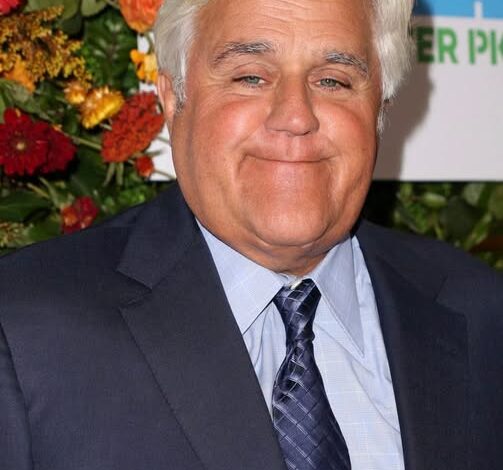
For most people, life is measured by birthdays, anniversaries, and milestones. For Jay Leno, it has always been measured in engines started, roads traveled, and countless hours spent beneath the hood of a classic automobile. Long after television cameras stopped rolling and audiences went home, he could often be found exactly where he felt most at peace—in a quiet garage surrounded by chrome, polished steel, and the unmistakable scent of gasoline and machine oil.
Cars were never simply a hobby.
They became the thread connecting every chapter of his life.
From the earliest days of his comedy career to his decades behind the desk of The Tonight Show, automobiles remained the one passion that never changed. Fame came and went. Television evolved. New opportunities appeared. Yet whenever he had a free moment, Leno inevitably found his way back to the workshop, sleeves rolled up, hands covered in grease, happily restoring another piece of automotive history.
For him, every vehicle carried a story.
Some represented engineering breakthroughs.
Others reflected forgotten moments in American history.
Many reminded him of the dreamers and craftsmen whose creativity transformed simple transportation into rolling works of art.
Collecting them was never about prestige alone.
It was about preservation.
That passion only seemed to deepen after life confronted him with challenges few people expected him to overcome.
In recent years, Leno endured serious injuries, including devastating burns that required extensive medical treatment and multiple surgeries. Not long afterward, another accident left him with broken bones and yet another difficult recovery.
For many people, experiences like those might have been enough to slow down permanently.
They might have convinced someone to step away from dangerous projects, retire from public life, or abandon physically demanding hobbies.
Leno responded differently.
As soon as he was able, he returned to the garage.
Friends often remarked that working on cars wasn’t simply something he enjoyed—it was where he felt most like himself. The hours spent repairing engines, solving mechanical problems, and bringing historic vehicles back to life offered a sense of purpose that remained untouched by fame or fortune.
Those difficult recoveries seemed to reinforce rather than diminish what mattered most to him.
When illness, injury, and uncertainty strip away the distractions of everyday life, people often discover which passions truly endure.
For Leno, that answer was never difficult.
It was waiting in the garage.
That lifelong devotion has also shaped the way he has thought about his legacy.
Rather than focusing solely on wealth, celebrity, or public recognition, he has expressed a deep commitment to preserving the extraordinary collection of automobiles and motorcycles he spent decades assembling. Many of the vehicles in his care are irreplaceable examples of automotive history, representing generations of innovation, craftsmanship, and design that might otherwise have disappeared.
To Leno, they are more than collector’s items.
They are living pieces of history.
Machines built by brilliant engineers.
Works of art forged from metal, imagination, and persistence.
Each one tells a story that deserves to survive long after its original creators are gone.
That perspective makes his plans for the future feel less like a celebrity gesture and more like the natural conclusion to a lifetime of dedication.
Rather than seeking one final spotlight or a dramatic farewell, he has focused on ensuring that the collection he spent decades building can continue educating, inspiring, and delighting future generations of enthusiasts.
It is a legacy rooted not in applause but in preservation.
Not in headlines but in stewardship.
Visitors who walk among those vehicles in years to come may admire the gleaming paint, the handcrafted interiors, and the remarkable engineering beneath every hood.
Yet they will also encounter something less tangible.
They will see the reflection of one man’s lifelong curiosity.
His fascination with how things work.
His respect for history.
His belief that beautiful machines deserve to be maintained rather than forgotten.
In many ways, those automobiles tell his story just as clearly as any television archive ever could.
They reflect patience.
Craftsmanship.
Dedication.
And an enduring sense of wonder.
The laughter that made Jay Leno famous will always remain part of his legacy.
So will the countless interviews, monologues, and years spent entertaining millions of viewers.
But beyond the television lights exists another legacy—one built quietly, one restored bolt by bolt, engine by engine, over decades of careful work.
Long after the final curtain falls, those remarkable machines will still be there.
Their engines will continue to roar.
Their polished chrome will continue catching the light.
New generations will continue discovering the ingenuity of the people who built them and the man who devoted so much of his life to keeping their stories alive.
Perhaps that is the most fitting tribute imaginable.
Because while every human life eventually reaches its final chapter, the passions we preserve for others have a way of continuing long after we are gone.
For Jay Leno, forever was never about fame.
It was about ensuring that the machines he loved would keep moving, keep teaching, and keep inspiring.
And somewhere, in the steady rhythm of an engine coming back to life after years of silence, a part of his own story will continue to echo for generations yet to come.