The most dangerous moment in a geopolitical crisis is not always when the first missile is fired.
Sometimes it comes later—when everyone realizes how difficult it will be to stop.
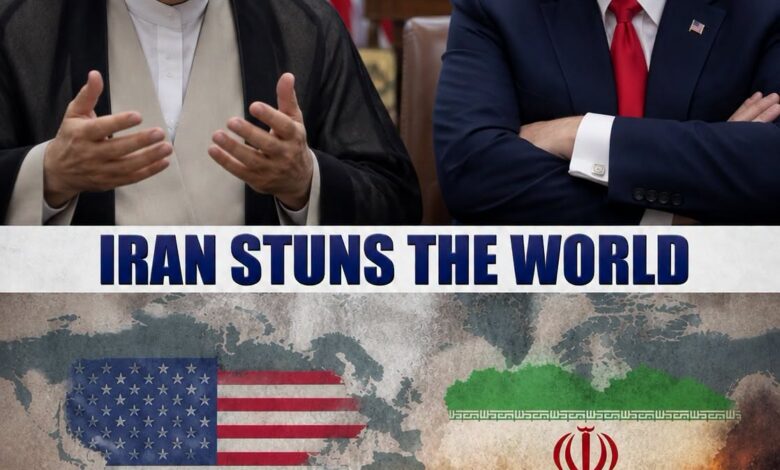
Behind closed doors, Donald Trump’s advisers are confronting a problem far more complicated than the language of victory suggests. Publicly, strength can be expressed in simple terms: hold the line, refuse concessions, reopen the strait, make the other side back down.
Privately, every option carries a price.
A prolonged confrontation around one of the world’s most strategically important waterways would not remain a regional problem for long. Energy markets would react. Shipping costs could rise. Insurance rates could climb. Allies would face pressure. Governments far from the fighting could suddenly find themselves explaining higher fuel prices and economic uncertainty to their own voters.
The battlefield, in other words, would extend far beyond the water.
That is why reports of disagreements inside Trump’s orbit matter.
JD Vance has often represented the more restraint-oriented wing of the administration’s foreign-policy coalition, skeptical of allowing military commitments to expand into long, expensive conflicts without a clearly defined exit.
In a crisis like this, that instinct creates an uncomfortable question:
What does success actually look like?
It is easy to demand that an adversary surrender.
It is harder to construct an outcome the adversary can accept without believing surrender guarantees political humiliation at home.
Marco Rubio has traditionally approached American power from a different direction, emphasizing deterrence and credibility. Language suggesting that a strategically vital strait will reopen “one way or the other” carries an unmistakable implication.
Diplomacy is preferred.
But coercion remains behind it.
That ambiguity is deliberate.
If Washington publicly removes military pressure, Tehran has less incentive to compromise.
If Washington makes military action sound inevitable, Tehran may conclude there is no reason to compromise.
Diplomacy therefore operates inside an extraordinarily narrow corridor.
Threaten enough to create leverage.
Not so much that you make retreat impossible.
Across the region, diplomats are trying to find that corridor.
Qatar is a natural place for such efforts because it has repeatedly served as an intermediary in disputes where direct communication is politically difficult or impossible. The purpose of mediation in moments like this isn’t necessarily to make enemies trust each other.
Sometimes the goal is much smaller.
Create a message both sides can answer.
Clarify what each side actually needs.
Separate public demands from private minimums.
Find the sentence that allows everyone to stop shooting.
That last part is more important than it sounds.
Wars are fought with weapons.
Ceasefires are often built with language.
One government may need to say it forced concessions.
Another may need to say it resisted aggression.
One side may describe an agreement as restoration of navigation.
The other may call it recognition of sovereignty.
Both statements can refer to essentially the same arrangement.
To outsiders, that can look like political theater.
Sometimes it is.
But political theater can save lives when the alternative is requiring one government to announce publicly that it has been defeated.
Dignity becomes a strategic resource.
Iran’s leadership has its own domestic audience.
So does Trump.
Neither operates in a vacuum.
Any agreement must survive the inevitable accusation that someone “caved.”
That is why the final obstacle to peace may not be military capability.
It may be political vocabulary.
How do you compromise without calling it compromise?
How do you withdraw without calling it retreat?
How do you accept inspections, guarantees, shipping arrangements, sanctions changes, or security commitments while presenting the outcome as proof that your original position succeeded?
These questions can sound cynical.
They are also how diplomacy frequently works.
A face-saving exit is not necessarily weakness.
Sometimes it is the engineering required to prevent leaders from becoming prisoners of their own rhetoric.
Markets understand the danger even when political speeches pretend otherwise.
Oil prices can react sharply to rumors because traders aren’t merely evaluating today’s supply.
They’re pricing tomorrow’s uncertainty.
Will tankers move safely?
Will insurers cover them?
Will shipping companies reroute vessels?
Will infrastructure be attacked?
Will production be interrupted?
Will another country enter the confrontation?
Every unanswered question acquires a price.
And consumers eventually encounter that price far from the crisis itself.
At a gas station.
On an electricity bill.
In airline fares.
In transportation costs embedded inside groceries and manufactured goods.
That is what makes strategically important waterways different from isolated battlefields.
Geography becomes economics.
A narrow stretch of sea can influence households thousands of miles away.
Allied governments understand this.
Even leaders who support American deterrence may have little appetite for an open-ended escalation whose economic consequences they cannot control.
Behind public statements of solidarity, private conversations are often more anxious.
How long will this last?
What is the objective?
What happens after the first strike?
What happens after retaliation?
And perhaps the most important question:
Where is the off-ramp?
Military planners think in contingencies because they have to.
Political leaders sometimes speak as though force produces predictable results.
History repeatedly demonstrates otherwise.
The first operation can be planned in extraordinary detail.
The tenth consequence cannot.
A strike intended to restore deterrence may invite retaliation.
Retaliation may require another response.
That response may expand the target set.
Civilian casualties can transform political pressure.
An allied government can fall under domestic strain.
A militia can act independently.
A ship can be misidentified.
A commander can misunderstand an order.
A missile can land somewhere nobody intended.
Escalation doesn’t always occur because leaders want a larger war.
Sometimes it occurs because each side believes the next action is necessary to prove it will not be intimidated by the previous one.
That is the trap negotiators are trying to prevent.
The challenge is especially severe when leaders have spent weeks making absolute declarations.
Absolute rhetoric creates emotional clarity.
It also destroys maneuvering room.
If you promise total victory, anything less can be portrayed as defeat.
If you tell your population that the adversary understands only force, negotiations begin looking suspicious.
If you insist there will be no concessions, every practical adjustment becomes politically dangerous.
Eventually, leaders may discover that they are no longer negotiating only with each other.
They are negotiating with their own words.
This is where Vance’s apparent preference for an exit and Rubio’s emphasis on resolve can be understood not merely as a personality clash, but as two enduring theories of American power.
One asks:
How do we avoid being dragged into something larger than the original objective?
The other asks:
What happens if adversaries conclude that American threats are negotiable?
Both questions are legitimate.
Neither has an easy answer.
Restraint without deterrence can invite testing.
Deterrence without restraint can become escalation.
Effective statecraft requires knowing when credibility is strengthened by action—and when it is strengthened by refusing to turn every challenge into a war.
Meanwhile, negotiators keep working.
Messages move between capitals.
Conditions are proposed.
Language is rejected.
New language replaces it.
Someone demands guarantees.
Someone demands sequencing.
Who acts first?
Who verifies?
What happens if one side violates the arrangement?
What sanctions change?
What military assets move?
How quickly does shipping resume?
The public sees a headline saying “talks continue.”
Inside that phrase can be hundreds of hours of argument over individual words.
And somewhere outside those rooms, sailors wait.
Families wait.
Markets wait.
Soldiers wait.
People living near possible targets wait.
They don’t need a perfect diplomatic document.
They need leaders to discover that an imperfect peace can be preferable to a perfectly articulated war.
The darkest possibility is easy to imagine.
Talks collapse.
Each side blames the other.
Markets plunge or spike.
Military forces reposition.
Warnings become deadlines.
Deadlines become operations.
Operations produce retaliation.
And the crisis that everyone insisted could be controlled begins controlling them.
But that outcome is not inevitable.
There is another possibility.
Both sides find language they can live with.
Tehran tells its public that it defended its sovereignty.
Washington says freedom of navigation was restored.
Allies praise diplomacy.
Ships begin moving.
Oil markets calm.
Nobody receives everything they demanded.
Everybody claims enough.
Critics call it theater.
Let them.
There are worse things than political theater.
Burning ships, grieving families, shattered infrastructure, and a regional war nobody knows how to end come immediately to mind.
The measure of diplomacy is not whether every participant admits compromise.
It is whether compromise prevents the next funeral.
In the end, the crisis may turn on something surprisingly human.
Not missiles.
Not aircraft carriers.
Not who can inflict the greatest damage.
Pride.
Fear.
Reputation.
Political survival.
The need for every leader to return home and say:
We did not lose.
If diplomats can construct an agreement spacious enough for everyone to say those words, the world may barely notice how close the situation came to disaster.
If they cannot, the next chapter will not be written in the careful language of a communiqué.
It will be written in oil prices, emergency alerts, casualty reports, and smoke rising above the sea.
And by then, everyone may discover that starting the next chapter was much easier than finding a way to end it.