Man brought home a strange creature from the forest. A year later, he was sh0cked by what had grown out of it

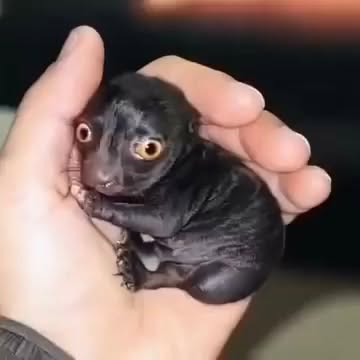
At first glance, it didn’t even look real.
Curled tightly into a tiny ball of pale pink skin covered by the softest layer of white fuzz, the fragile little creature looked more like a forgotten stuffed toy than a living animal. Its eyes were still tightly closed, its ears lay flat against its head, and its body was so small it could fit comfortably in the palm of a hand.
When rescuers first saw it, many couldn’t immediately identify what they were looking at.
Some guessed it might be an unusual wild animal.
Others wondered whether it was an abandoned newborn from an unfamiliar species.
The mystery only deepened because of the way it had been discovered.
It hadn’t been found by a wildlife expert or an experienced rescuer.
It had been carried to safety by a family dog.
Even more remarkable was how the dog handled its tiny passenger.
Anyone expecting bite marks or crushing injuries was surprised to find almost none. The dog had carried the newborn with astonishing gentleness, carefully holding it in its mouth without causing the devastating injuries that such a fragile animal might normally suffer.
It was as though the dog instinctively understood just how delicate the tiny life truly was.
By the time the baby reached rescuers, however, it was clear that it had already endured something dangerous before being found.
Small wounds covered parts of its body.
Though not life-threatening, they suggested the newborn had been exposed to conditions no animal only a few days old should ever experience.
Despite everything, it was still alive.
Barely.
Veterinary staff immediately placed the tiny patient on warming blankets while carefully checking for dehydration, injuries, and signs of shock.
Its heartbeat was weak but steady.
Every minute mattered.
The first priority was simple.
Keep it warm.
Newborn mammals this young are unable to regulate their own body temperature effectively. Even brief exposure to cold can quickly become life-threatening. Gentle heat, specialized formula, and constant monitoring became essential during those first critical hours.
As specialists examined the tiny animal more closely, the mystery finally began to unravel.
It wasn’t a strange wild species after all.
It was a domestic rabbit.
Based on its size and physical development, veterinarians estimated the baby was only three or four days old.
That discovery raised an even bigger question.
How had a domestic rabbit, far too young to survive on its own, ended up alone in the middle of a forest?
Unlike wild rabbits, domestic rabbits depend almost entirely on human care. They are not naturally equipped to survive in wilderness environments, especially at only a few days old. A newborn rabbit this young cannot search for food, escape predators, or regulate its own temperature without help.
Yet somehow, this tiny kit had survived long enough to be found.
Rescuers searched the surrounding area hoping another explanation might emerge.
Perhaps a nearby rabbit breeder had experienced an escape.
Maybe someone had accidentally released domestic rabbits into the wild.
Perhaps an abandoned litter had been hidden nearby.
But no obvious answers appeared.
No rabbit breeders operated in the immediate area.
No additional domestic rabbits were discovered.
No one reported missing newborn kits.
The tiny rabbit’s earliest moments remain a mystery that may never be fully solved.
Fortunately, one thing was no longer uncertain.
Its future.
The newborn was transferred to the Heart of the Forest wildlife rehabilitation center, where experienced staff continued providing around-the-clock care.
Feedings occurred every few hours.
Weight was monitored carefully.
Body temperature remained under constant observation.
Every gram gained became a small victory.
As photographs of the unusual rescue spread online, thousands of people asked the same question rescuers had initially wondered themselves.
“What kind of animal is it?”
Recognizing an important educational opportunity, staff at the rehabilitation center decided to use the tiny rabbit’s story to help the public better understand the differences between domestic and wild baby rabbits.
They shared comparison photographs showing how similar young rabbits can appear during their earliest days of life while explaining several important differences that help trained rehabilitators distinguish between them.
The lesson proved valuable.
Every year, wildlife centers receive countless calls from concerned people who mistakenly assume healthy wild rabbit kits have been abandoned when, in reality, their mothers are simply away from the nest temporarily. Well-intentioned rescues sometimes separate healthy babies from parents who fully intended to return.
At the same time, genuinely abandoned domestic rabbits require immediate human assistance because they lack the instincts and survival skills of their wild relatives.
Learning the difference can literally save lives.
The tiny rabbit quickly became one of the center’s most memorable patients.
Visitors followed its progress through regular updates.
Many commented that they were amazed such a fragile creature had survived at all.
Others couldn’t stop talking about the remarkable gentleness shown by the dog that had carried it to safety.
Animal behavior experts often note that dogs possess surprisingly sophisticated instincts. While prey drive certainly exists in many breeds, dogs are also capable of extraordinary nurturing behavior, particularly toward vulnerable animals. Stories of dogs protecting kittens, orphaned wildlife, or injured birds occasionally emerge from around the world, reminding us that compassion can sometimes appear in the most unexpected places.
This rescue became another example of that remarkable possibility.
Without the dog’s careful intervention, the newborn rabbit’s chances of survival would almost certainly have been far lower.
Weeks passed.
The tiny pink body gradually became covered with thicker white fur.
Its eyes finally opened.
Curiosity slowly replaced weakness.
Each feeding became easier.
Each day brought new strength.
Although questions about its past may never receive definitive answers, the future now looked much brighter.
The rabbit no longer faced cold nights alone.
No longer struggled without warmth or nourishment.
No longer depended solely on luck for survival.
Instead, it found itself surrounded by experienced caregivers committed to giving it every possible chance.
Sometimes, the most meaningful rescue stories are not the ones with every mystery neatly explained.
Sometimes they are simply about what happens after hope arrives.
No one may ever know exactly how such a tiny domestic rabbit ended up alone in the wilderness.
But perhaps that unanswered question matters less than something far more important.
Because one compassionate dog stopped.
One group of rescuers cared enough to help.
And one life that easily could have been lost was instead given the opportunity to grow, recover, and begin again.
In the end, that may be the only answer that truly matters.