Simon Marks thought he knew every inch of the property he had called home for years. The driveway, the garden, the flowerbeds—nothing seemed out of the ordinary. Then, in the middle of an ordinary day, a strange cracking sound beneath his car led him to a discovery that had been hidden in plain sight for decades.
What he uncovered wasn’t just an old object buried underground.
It was a forgotten piece of World War II history.
The unexpected discovery began while the 37-year-old was attempting to park his car. As he drove onto what appeared to be an ordinary flowerbed beside the driveway, one of the wheels suddenly sank. A series of loud cracking noises echoed beneath the vehicle, leaving him convinced something had gone seriously wrong.
His first reaction was frustration.
“Well, this day couldn’t get much worse,” he thought as he climbed out to inspect the damage.
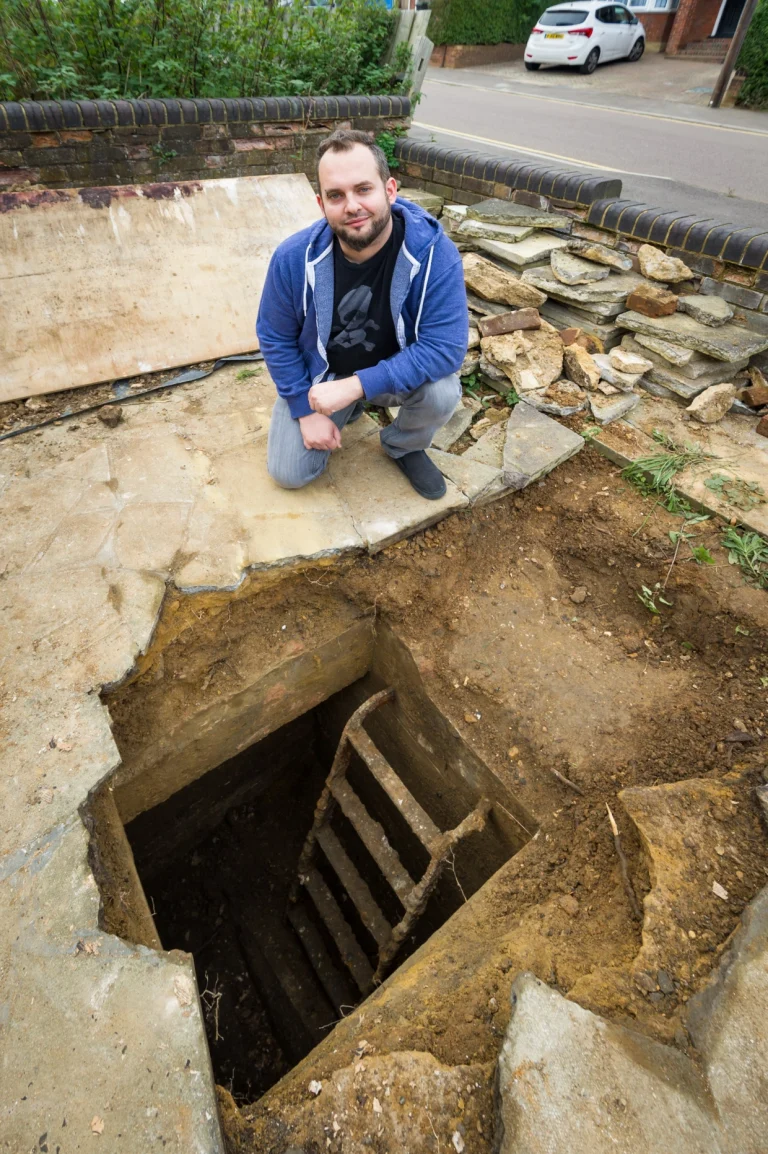
Kneeling beside the car, Simon noticed that several paving stones had collapsed beneath the weight of the vehicle. As he carefully brushed away loose dirt and broken pieces of concrete, something unusual caught his attention.
There was metal underneath.
At first, it looked like nothing more than an old sheet buried beneath the driveway. Curious, Simon grabbed hold of the exposed edge and tried to pull it free, but it refused to budge. Whatever it was, it was firmly embedded below the surface.
Instead of giving up, his curiosity only grew stronger.
Unsure what he had found, Simon decided he needed another pair of hands.
He called his father.
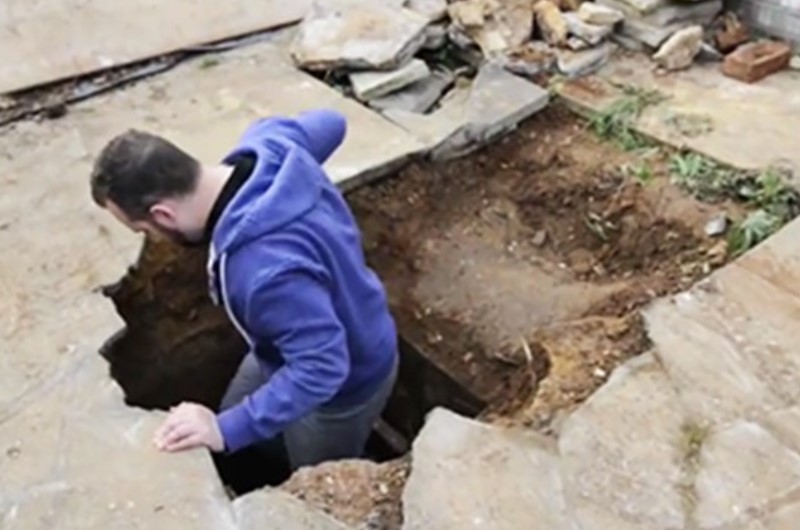
Together, the two men began clearing away years of packed earth and debris surrounding the mysterious metal object. As they dug deeper, the outline became clearer until they finally exposed what looked unmistakably like a concealed entrance.
Then they noticed something even more surprising.
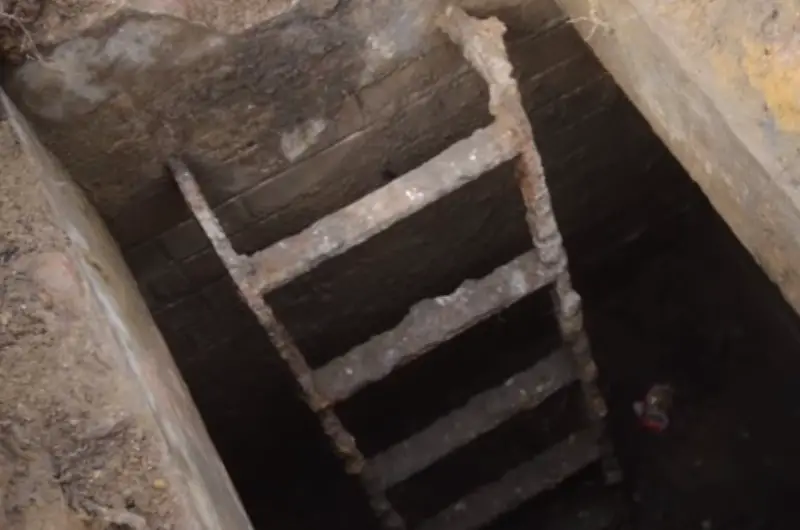
A rusty metal ladder disappeared into darkness below.
Standing at the opening, father and son exchanged puzzled looks before deciding to investigate further. Carefully climbing down the aging ladder, they entered an underground chamber unlike anything they had expected to find beneath an ordinary suburban garden.
It didn’t take Simon’s father long to recognize what they were looking at.
“My dad saw it and knew straight away it was an air raid shelter,” Simon later recalled.
After returning to the surface, the pair searched online to learn more and quickly discovered they weren’t alone. Their neighborhood contained several similar shelters, many of which had been forgotten or buried over the decades as new homes and gardens were built above them.
The hidden structure beneath Simon’s property appeared to date back to the Second World War.
During the war, thousands of families across Britain relied on small backyard air raid shelters to protect themselves during bombing raids. These shelters gave civilians somewhere to take cover when air raid sirens sounded, offering at least some protection from falling debris and explosions.
Many were based on the famous Anderson shelter, named after Sir John Anderson, the government official who introduced the design in 1938. Constructed from corrugated steel and partially buried underground, these shelters became a familiar sight in gardens across the country throughout the war years.
After peace returned, however, many of them gradually disappeared.
Some were dismantled entirely.
Others were simply buried, filled with rubble, or built over as neighborhoods expanded and properties changed hands.
Simon believes the previous owner almost certainly knew the shelter existed.
“The previous owner had to know it was there,” he explained. “It looks like it was filled in when the house and garden were developed.”
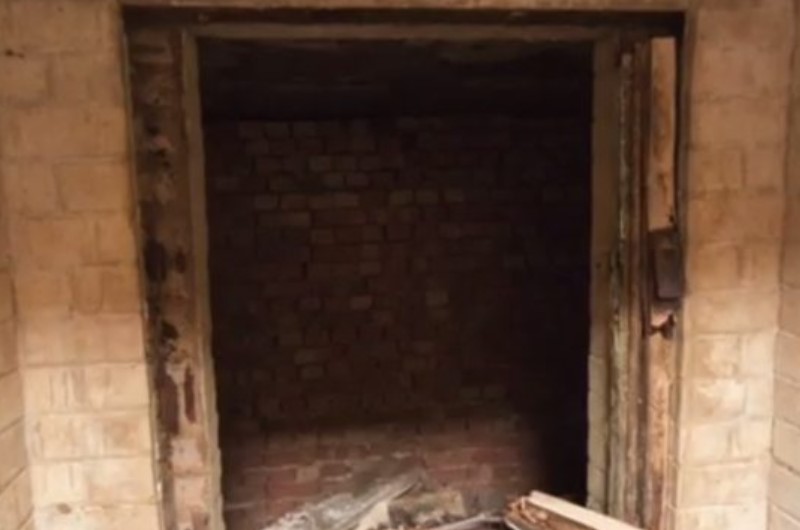
As the two men continued exploring the underground space, they noticed that one section had been sealed off with brickwork.
That raised another mystery.
Had there once been additional chambers extending beyond the wall?
Simon suspects it’s possible.
“The wall has clearly been bricked up,” he said. “We’re about 99 percent sure there aren’t any more rooms, but it’s possible they sealed part of it when the house foundations were built.”
If that’s the case, he accepts that some questions may never be answered.
“We’ll probably just have to leave it alone,” he admitted.
Even without solving every mystery, the discovery was remarkable enough to capture widespread attention.
Simon documented the excavation as it unfolded, recording the surprising moments as layers of dirt gave way to a forgotten wartime shelter. After the footage was shared online, it quickly spread across social media and news outlets, fascinating viewers around the world.
People were amazed that such an important piece of history had remained hidden beneath an ordinary driveway for so many years without anyone realizing it.
Rather than sealing the entrance again or ignoring what they had found, Simon and his father reached a different conclusion.
They want to preserve it.
For them, the shelter represents far more than an unusual feature beneath the garden. It is a tangible reminder of a generation that lived through extraordinary hardship, when families sought refuge underground as bombs fell overhead and uncertainty became part of daily life.
Although those terrifying years have long passed, Simon believes preserving the shelter honors the people who once depended on places like it for survival.
History, he says, shouldn’t disappear simply because it’s hidden beneath our feet.
Sometimes the most meaningful discoveries aren’t found in museums or archaeological excavations.
Sometimes they’re waiting beneath an ordinary driveway, uncovered by nothing more than a cracked paving stone, a little curiosity, and the determination to find out what lies below.
What began as an annoying parking mishap ultimately revealed a forgotten chapter of the past—one that had quietly remained hidden beneath Simon Marks’ home for generations, waiting for the right moment to be discovered once again.