Melania Trump Breaking News Public In Outpouring Of Support As Family Faces Intense Private Battle

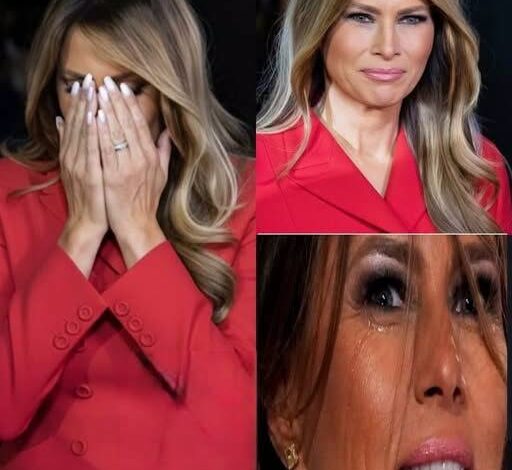
In an age when every public appearance is dissected within minutes and every absence inspires endless speculation, Melania Trump’s decision to remain largely out of the spotlight has taken on a meaning of its own. Rather than inviting only the usual cycle of headlines and political commentary, it has also prompted something less common: a measure of restraint. For many observers, the conversation has shifted beyond politics, reminding them that even the most recognizable public figures have private lives that remain, and should remain, their own.
Her relative silence has encouraged reflection as much as curiosity. People who once viewed her primarily through the lens of public office or political symbolism have, in some cases, begun to speak about her in more personal terms—as an individual whose experiences, challenges, and choices are not fully visible to anyone outside her immediate circle. Whatever reasons may lie behind her lower public profile, much of it remains known only to her and those closest to her.
That uncertainty has created an unusual moment.
Instead of insisting that every unanswered question deserves an immediate explanation, many people have chosen to accept that not every aspect of a public figure’s life belongs in the public domain. In a culture accustomed to constant updates, speculation, and instant opinions, simply allowing unanswered questions to remain unanswered can feel surprisingly rare.
It is a quiet reminder that privacy still has value.
Public life often creates the illusion that familiar faces are fully knowable, yet the opposite is usually true. Cameras capture appearances, speeches, and carefully planned events, but they reveal only fragments of a person’s everyday reality. Like anyone else, public figures experience moments that never become headlines—family milestones, personal struggles, private conversations, and ordinary days that unfold far from public attention.
Recognizing that difference can foster a greater sense of perspective.
For some people, that perspective has been expressed through simple gestures of goodwill. Whether motivated by faith, compassion, or basic human decency, some have chosen to offer prayers, kind thoughts, or quiet hopes for her well-being without expecting access to the details of her personal life. Others simply refrain from adding to speculation, recognizing that silence can sometimes be more respectful than certainty built on assumptions.
Those gestures are less about politics than about empathy.
They reflect the understanding that every person, regardless of public status or political affiliation, deserves room for private moments beyond the reach of public commentary. Respecting that boundary does not require knowing every fact. It requires acknowledging that there are parts of every human life that are neither ours to investigate nor ours to judge.
In a time when public curiosity often competes with personal privacy, that willingness to step back carries its own quiet significance.
Choosing compassion over speculation does not answer unanswered questions.
It simply recognizes that not every mystery needs to be solved in real time.
Sometimes the most thoughtful response is not to demand more information, but to allow space for someone else’s privacy while wishing them well from a respectful distance.
In that sense, the conversation becomes less about one individual and more about the values we bring to public life. It asks whether it is possible to extend patience instead of pressure, understanding instead of assumption, and kindness instead of constant scrutiny.
Perhaps that is the most meaningful lesson of all.
Even in an era driven by nonstop commentary, there is still room to remember that behind every public image is a private person—one whose full story belongs, first and foremost, to them.