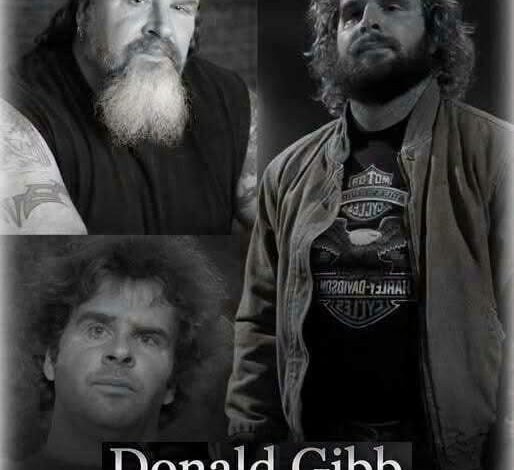
Before millions of moviegoers knew Donald Gibb as the enormous, beer-swilling Ogre from Revenge of the Nerds, he was chasing an entirely different dream.
Football.
With his towering frame and imposing physical presence, Gibb looked like someone built for violent collisions on the field. He played college football and eventually pursued the professional game, reaching the San Diego Chargers.
For a young athlete, it was the culmination of years of work.
Then an injury changed everything.
The future he had imagined for himself suddenly disappeared.
There would be no long NFL career.
No Sundays spent charging across packed stadiums.
No gradual transition away from the sport on his own terms.
For many athletes, that moment can create an identity crisis almost as painful as the physical injury itself.
When you’ve spent years defining yourself by what your body can do, what happens when your body abruptly tells you that chapter is finished?
Gibb needed another answer.
Eventually, he found one in Hollywood.
At first glance, acting might have seemed like an unlikely second career.
But Hollywood immediately understood something about Donald Gibb that audiences would later recognize too:
The man was impossible to ignore.
At roughly 6-foot-4, with broad shoulders, a rugged face, and the physical presence of someone who looked capable of walking through a wall rather than bothering with the door, Gibb didn’t need much screen time to make an impression.
Casting directors could see possibilities.
Bikers.
Bodyguards.
Athletes.
Brawlers.
Tough guys.
Villains.
Hollywood had plenty of roles requiring someone who could enter a room and instantly change its atmosphere.
Gibb had exactly that quality.
Small television appearances began accumulating.
He appeared in popular productions and gradually learned how to transform his natural physical presence into a screen persona.
Then came the character that changed everything.
Frederick Aloysius “Ogre” Palowakski.
When Revenge of the Nerds arrived in 1984, Ogre wasn’t exactly designed for subtlety.
He was enormous.
Aggressive.
Crude.
Intimidating.
He represented everything the film’s socially awkward heroes feared about the dominant college jocks surrounding them.
And Gibb committed completely.
His booming voice, wild expressions, physical comedy, and sheer size made Ogre feel larger than the movie itself.
He didn’t simply play a bully.
He created a character audiences could recognize almost instantly.
One shout could do it.
“NERDS!”
That became enough.
The role followed him into sequels and helped turn Ogre into one of the franchise’s defining characters.
But something interesting happened along the way.
The character developed.
Ogre eventually became more than the one-dimensional monster introduced in the first movie. Later installments allowed him to interact differently with the people he’d once tormented.
That evolution gave Gibb opportunities to reveal something beneath the intimidating exterior.
Comedy.
Warmth.
Even vulnerability.
It was a pattern that would follow him throughout his career.
Hollywood looked at Donald Gibb and saw a man who could frighten people.
Audiences gradually discovered he could make them laugh too.
Then, a few years after Revenge of the Nerds, another role cemented his cult-film status.
In 1988’s Bloodsport, starring Jean-Claude Van Damme, Gibb played American fighter Ray Jackson.
If Ogre was loud, Jackson somehow seemed even louder.
He swaggered into the underground fighting tournament like a walking demolition crew.
He smashed opponents.
He celebrated wildly.
He delivered lines with unapologetic bravado.
And he became the kind of supporting character audiences remember decades after forgetting half the plot.
Ray Jackson could have been merely another oversized fighter standing beside the movie’s hero.
Gibb made him memorable.
Part of the reason was physical.
He looked believable.
When Jackson entered the ring, viewers didn’t need elaborate exposition explaining why other fighters should be concerned.
But physical credibility alone wasn’t enough.
Gibb gave Jackson personality.
There was humor beneath the aggression.
Loyalty beneath the swagger.
He wasn’t simply there to break things.
He became Frank Dux’s friend.
That relationship gave the movie some of its heart.
And when Jackson’s confidence finally collided with an opponent he couldn’t overpower, the consequences suddenly felt personal.
The audience cared because Gibb had made this enormous, outrageous fighter strangely lovable.
That became his specialty.
He looked like the last person you’d want to meet in a dark alley.
Yet there was often something disarmingly likable underneath.
The contrast wasn’t entirely invented for the camera.
People who encountered Gibb away from his toughest roles frequently described a personality very different from the intimidating men he portrayed.
The growling screen giant could be humorous.
Approachable.
Quick to laugh.
That difference between actor and character is easy to overlook.
We become accustomed to seeing performers through the identities they repeatedly play.
An actor spends enough movies throwing people through windows, and audiences begin unconsciously attaching some of that personality to the person himself.
But acting is transformation.
Gibb understood what Hollywood wanted from his appearance and gave it to them.
Then he found ways to slip personality through the cracks.
That’s why his characters survived.
Plenty of physically imposing actors appeared in 1980s comedies and action movies.
Most disappeared into the background.
Donald Gibb didn’t.
Ogre became recognizable.
Ray Jackson became beloved among Bloodsport fans.
Television appearances added another layer to his career, including his recurring role as Leslie “Dr. Death” Krunchner on 1st & Ten.
Bit by bit, the football player whose original career had been interrupted built an entirely different professional identity.
And that’s where Gibb’s story becomes more interesting than a collection of cult-movie credits.
His first dream ended.
That’s important.
We often tell stories about reinvention as though people cheerfully abandon one ambition after discovering something better.
Real life is rarely that tidy.
When an injury ends an athletic career, the next opportunity doesn’t automatically erase the disappointment.
A person still has to confront the uncomfortable question:
Who am I if I can no longer be the person I planned to become?
Gibb’s answer wasn’t philosophical.
He simply kept moving.
The same body that had been prepared for football became an advantage in Hollywood.
The physical presence built for stadiums worked just as effectively beneath movie lights.
Even the qualities that might have limited him in conventional leading-man roles became his signature.
He didn’t need to look like everyone else.
He needed to look like Donald Gibb.
And nobody else did.
There is a useful lesson hidden inside that transformation.
Sometimes losing one path doesn’t mean the years spent pursuing it were wasted.
The discipline carries forward.
The confidence carries forward.
The relationships do.
Even the physicality and habits developed for one profession can unexpectedly become useful somewhere else.
Gibb didn’t become famous despite having been an athlete.
His athletic background became part of what made his screen presence convincing.
The supposedly broken road connected directly to the next one.
Hollywood eventually gave him something football never had the opportunity to provide:
A form of permanence.
Games end.
Seasons disappear into statistics.
But movies remain strangely alive.
Decades after Revenge of the Nerds premiered, someone can discover Ogre for the first time.
Someone can watch Bloodsport late at night and meet Ray Jackson as though the character were brand new.
Old fans can hear a familiar line and instantly be transported back to the first time they watched the movie.
That’s the peculiar immortality of film.
A performance keeps happening.
The actor doesn’t have to be in the room.
The audience presses play, and there he is again.
Huge.
Loud.
Unforgettable.
Gibb’s career also challenges a narrow definition of success.
He wasn’t the conventional romantic lead.
He didn’t need to become the biggest star on the poster.
He found something arguably more difficult to manufacture:
A recognizable identity.
There are actors with hundreds of credits whom audiences struggle to remember.
Then there are character actors who appear on screen and immediately trigger recognition.
“That’s Ogre!”
“That’s Jackson from Bloodsport!”
That connection matters.
It means a performer created something distinctive enough to survive in the audience’s memory.
Donald Gibb did that more than once.
And he did it after the career he’d originally planned was taken away.
Perhaps that’s the most compelling part of his journey.
The injury could have become the ending.
Instead, it became punctuation.
A brutal period separating two completely different versions of the same life.
First came the athlete.
Then came the actor.
The body built for collisions found another arena.
Football pads became costumes.
Stadium crowds became movie audiences.
And the man who might once have been remembered for tackles became remembered for characters.
Ogre.
Ray Jackson.
Dr. Death.
Big personalities played by an actor who understood that sometimes being unforgettable matters more than being conventional.
His story isn’t about pretending the first dream never mattered.
It mattered enough for losing it to hurt.
But a lost future isn’t necessarily the same thing as a lost life.
Sometimes the identity you’ve spent years constructing collapses.
Sometimes circumstances decide that the person you expected to become is no longer available.
And sometimes, after the anger and confusion, another door opens.
Donald Gibb walked through his.
On the other side was Hollywood.
And there, the football player who had lost his original stage discovered something unexpected:
He didn’t need a stadium to become larger than life.