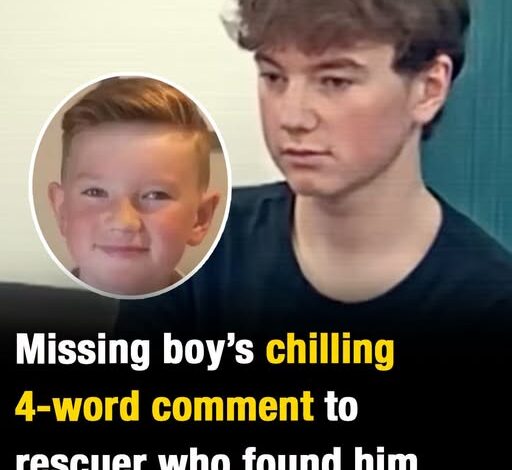
On a cold, rain-soaked night near Toulouse, Fabien Accidini almost kept driving.
The young man standing alone by the roadside looked like countless travelers he had seen before—a tall, blond backpacker stranded in the dark, carrying little more than a backpack and an exhausted expression. Offering him a ride felt like an ordinary act of kindness.
Instead, it became the moment a mystery that had haunted a family for six years finally began to unravel.
When the stranger climbed into the car, he introduced himself simply as “Zach.”
Fabien thought nothing of it.
The drive began with the usual conversation between strangers: where he was headed, how long he had been traveling, whether he needed food or somewhere to stay.
But as the miles passed, the young man’s story began to change.
There were long pauses.
Careful glances out the window.
Moments when it seemed he was deciding whether he could trust the person behind the wheel.
Finally, he took a breath.
“My name isn’t Zach,” he admitted quietly.
Fabien looked over.
“My name is Alex.”
Then came the words that transformed an ordinary car ride into an international story.
“I’m British.”
Another silence.
“I think I’ve been missing for years.”
Piece by piece, Alex Batty began telling the story he had carried for most of his childhood.
According to his account, he had been taken abroad by his mother years earlier and had never returned home. While the outside world searched for answers, he had been living a life that rarely stayed in one place for long, moving across different locations, disconnected from the routines most children take for granted.
Fabien listened without interrupting.
The more Alex spoke, the clearer it became that this was far more than a teenager trying to get home.
It was the end of a disappearance that had left loved ones wondering, day after day, whether he was safe, whether he was suffering, or even whether he was still alive.
Recognizing the seriousness of what he was hearing, Fabien handed Alex his mobile phone.
There was one person Alex wanted to call first.
His grandmother.
For six years she had lived with uncertainty, unable to know whether the grandson she loved would ever come home.
When the call connected, emotions overwhelmed them both.
Words struggled to keep pace with disbelief.
Questions collided with tears.
For the first time in years, she heard his voice—not through memories or old recordings, but in real time.
He was alive.
That single conversation brought an end to years of unanswered questions while opening the door to many more.
As Alex later described his childhood, it bore little resemblance to the one he might have expected had he remained in the United Kingdom.
Instead of classrooms and playgrounds, his life unfolded across changing landscapes and temporary homes. He spoke of staying in luxury properties for short periods before moving on to campsites, tents, and other makeshift accommodations. Stability was rare. Constant movement became normal.
Education was equally unconventional.
Alex has said he received very little formal schooling during those years. Rather than following a traditional curriculum, he grew up surrounded by alternative spiritual teachings and anti-establishment beliefs that shaped much of daily life. The routines most children experience—school bells, homework, classmates, sports, and birthday parties—were largely absent.
As time passed, the absence of ordinary life became increasingly difficult to ignore.
Watching other children his age living what seemed like normal lives left a deep impression on him.
He has recalled reaching a point where the emotional weight became overwhelming.
One day, standing before his mother, he broke down in tears.
He told her how desperately he wanted something different.
Not luxury.
Not adventure.
Not another journey.
He wanted normality.
He wanted the chance to build friendships, receive an education, and experience the everyday routines many people barely notice while growing up.
Eventually, he made the most difficult decision of his life.
He left.
The escape marked the beginning of another uncertain journey, one that ultimately led him to the roadside near Toulouse and to the stranger who stopped his car without realizing he was about to help solve one of Britain’s most publicized missing-person cases.
Returning to the United Kingdom did not instantly erase the years that had been lost.
There were practical challenges, emotional adjustments, and the complex task of rebuilding a life interrupted during childhood. Learning to navigate ordinary routines after years outside conventional society required patience, resilience, and support from the family who had never stopped hoping for his return.
Over time, Alex gradually built a new future.
He found stability.
He created a home.
Eventually, he became a father himself—a milestone that brought with it an entirely new understanding of family, responsibility, and the choices adults make for the children they love.
Despite everything he experienced, Alex’s feelings toward his mother have remained deeply complicated.
There is pain.
There is anger.
There are years that cannot be recovered.
Yet there is also love.
Rather than closing the door completely, he has spoken of reaching out with a message that reflected both the hurt he carries and the hope he has not entirely abandoned.
He expressed a wish that, someday, they might meet again—not to revisit old ideologies or arguments, and not under pressure from anyone else, but simply as a mother and son willing to face one another honestly.
Whether that reunion ever happens remains uncertain.
What is certain is that the young man who once disappeared into years of unanswered questions found the courage to reclaim his own future.
And it all began because one ordinary driver chose to stop on a rainy December night, believing he was simply helping a stranded traveler.
Sometimes history changes not through extraordinary plans or dramatic rescues, but through a simple act of kindness extended to a stranger standing alone by the side of the road.