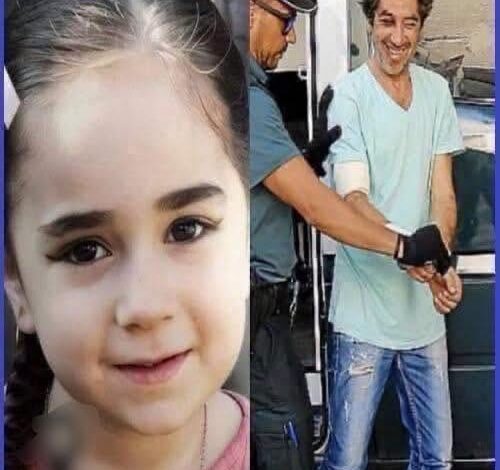
What should have been an ordinary afternoon ended in a tragedy that has shaken an entire country.
Perla Alison left home to run a simple errand—something countless children and teenagers do every day without a second thought. Her family expected her to return within minutes. Instead, the hours stretched into a desperate search filled with growing fear, unanswered questions, and the unbearable uncertainty that every family dreads.
When her body was later found inside an abandoned building near a metro station, the discovery did more than mark the scene of a horrific crime. It reignited a national conversation about the safety of women and girls in Mexico and the painful reality that too many families have endured similar nightmares.
For those who knew Perla, she was far more than a headline.
She was a daughter, a loved one, and a young person whose future was abruptly stolen. Yet as news of her death spread, her story came to represent something much larger—a reminder of the persistent violence that continues to affect women and girls across the country and the frustration many citizens feel over how these cases are investigated and resolved.
Authorities have opened a femicide investigation, a legal classification used in Mexico when the killing of a woman or girl may have been motivated by gender-based violence or involve circumstances defined under the country’s laws. The investigation is expected to examine every available piece of evidence while seeking to determine exactly what happened and who may be responsible.
For Perla’s family, however, legal procedures offer little comfort in the face of such devastating loss.
Like countless families before them, they are now forced to navigate grief while waiting for answers that cannot undo what has already happened. Every passing day without accountability deepens the emotional wounds left behind.
The case has also prompted an outpouring of public grief and solidarity.
Women’s rights organizations, feminist collectives, and civil society groups have organized demonstrations, vigils, and public memorials to honor Perla’s memory. Across streets and public squares, her name has appeared on banners, murals, and signs carried by people determined to ensure that her story is neither forgotten nor reduced to another statistic.
Their message extends beyond a single case.
For many demonstrators, Perla’s death reflects broader concerns about gender-based violence, the protection of women and girls, and the need for investigations that are timely, thorough, and transparent. They argue that public attention is essential—not only to seek justice for one victim but also to encourage lasting improvements that may help prevent future tragedies.
The emotion behind these demonstrations is fueled by years of accumulated frustration.
Many advocates believe families should never have to fight for their loved ones to receive serious attention or prompt investigative action. They call for institutions to respond with urgency from the very beginning of a disappearance, recognizing that the earliest hours can be critical.
While the legal process must ultimately determine responsibility based on evidence, public demonstrations have become a powerful way for communities to express both grief and resolve.
Candles, flowers, handwritten messages, and peaceful marches are reminders that behind every investigation is a human life that mattered deeply to those left behind.
Perla’s story has become one of those reminders.
Not because she should carry the weight of an entire national crisis, but because her death has touched people who see in her the daughters, sisters, classmates, neighbors, and friends they love. It has prompted difficult conversations about public safety, institutional accountability, and the collective responsibility to protect young people from violence.
As investigators continue their work, many are watching closely in the hope that the case will be handled with fairness, transparency, and diligence. Those calling for justice are not asking for assumptions or shortcuts; they are asking for a thorough investigation that follows the evidence wherever it leads and holds anyone found responsible fully accountable under the law.
For Perla’s family, no legal outcome can restore the future that was taken from her.
But a careful, transparent pursuit of justice can honor her memory and affirm that her life mattered.
In the end, the tragedy of Perla Alison is not defined solely by the place where she was found or the circumstances of her death. It is defined by the life that should have continued—the ordinary moments she should have experienced, the dreams she should have been free to pursue, and the simple expectation that she would return safely after leaving home.
That expectation should never be extraordinary.
It should be something every family can take for granted.
And until that becomes reality, many believe Perla’s name will continue to be spoken—not as a symbol to be forgotten with time, but as a call for justice, accountability, and a future in which every girl can leave home and come back safely.