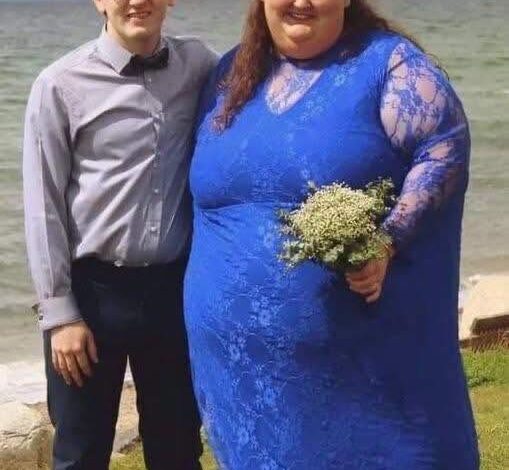
For most of her life, Amelia believed the safest way to survive was to become as invisible as possible.
She learned early that the world could be painfully unkind. Casual remarks about her appearance, whispered jokes she wasn’t meant to hear, and strangers’ lingering stares slowly shaped the way she saw herself. None of those moments seemed life-changing on their own, but together they formed a quiet chorus that convinced her she would never be enough.
Eventually, she stopped expecting acceptance.
She stopped volunteering answers in class.
She avoided cameras.
She mastered the art of blending into the background, hoping that if people noticed her less, they would have fewer opportunities to hurt her.
The loneliness that followed was difficult to explain.
It wasn’t simply about being alone. It was the exhausting feeling of believing that every room required you to apologize for taking up space.
Home became the only place where that burden disappeared.
Her parents never measured her worth by appearance. They offered something far more powerful than compliments—they gave her unwavering acceptance. Around the family dinner table, in ordinary conversations, and during quiet evenings together, Amelia experienced what it felt like to be loved without conditions.
Those moments became her foundation.
When the outside world felt overwhelming, she escaped somewhere no one judged her face before hearing her voice.
She escaped into video games.
Behind a screen, appearances faded into the background. People cared about teamwork, humor, creativity, and determination. Her avatar wasn’t a disguise so much as a doorway into conversations she struggled to begin in everyday life. Online, she could simply exist without constantly wondering how she was being evaluated.
For the first time, she felt seen for who she was rather than how she looked.
Then Sean entered her life.
Their connection didn’t arrive with dramatic declarations or cinematic romance. It grew through ordinary conversations that stretched late into the night, shared jokes that became inside references, and long discussions about fears, dreams, and the lives they hoped to build.
Sean noticed something Amelia had spent years trying to hide.
Not her appearance.
Her hesitation.
He saw the pauses before she spoke, the habit of dismissing compliments, the instinct to make herself smaller whenever attention turned toward her.
Instead of trying to “fix” her, he simply listened.
When Amelia finally shared the experiences that had shaped her self-doubt, Sean didn’t rush to offer perfect answers. He didn’t pretend the cruelty she’d endured hadn’t happened.
He believed her.
He reminded her, through countless ordinary moments rather than grand speeches, that another person’s opinion was never the measure of her value.
Slowly, almost imperceptibly, Amelia began changing.
Not because Sean wanted someone different.
Because his steady kindness gave her permission to stop seeing herself through the eyes of those who had hurt her.
She laughed more freely.
She stopped hiding from photographs quite so often.
She allowed herself to imagine a future that wasn’t defined by fear.
When Sean proposed, there were no elaborate surprises or extravagant displays.
Just two people who understood exactly what the moment meant.
His question carried something far deeper than a request to get married.
It carried a promise.
A promise that she would never again have to earn the right to be loved.
That she wouldn’t have to become prettier, quieter, thinner, or more confident before she deserved happiness.
She already deserved it.
Their wedding reflected that same spirit.
It was modest, intimate, and filled with genuine joy rather than spectacle. Friends and family gathered not to witness perfection, but to celebrate two people choosing one another exactly as they were.
After photos and videos from the ceremony were shared online, something unexpected happened.
The story spread.
Thousands of strangers found themselves in Amelia’s journey.
Some recognized the pain of growing up believing they could never meet society’s impossible beauty standards.
Others saw echoes of years spent hiding behind oversized clothes, avoiding mirrors, declining invitations, or convincing themselves they were somehow less worthy of love because they didn’t resemble the images celebrated on magazine covers and social media.
Many responded by sharing stories of their own.
People posted photographs they once would have deleted.
They wrote openly about bullying, insecurity, disability, scars, medical conditions, and the long road toward self-acceptance.
Others described finally ending relationships built on criticism and finding partners who valued kindness, loyalty, humor, and compassion far more than physical perfection.
Amelia and Sean never claimed to have all the answers.
They didn’t set out to start a movement.
Yet their relationship became a gentle reminder that genuine love looks very different from the polished ideals often presented online.
Real love doesn’t ask someone to erase the parts of themselves they’ve spent years learning to accept.
It doesn’t demand impossible standards before offering affection.
It doesn’t flourish because two people are flawless.
It grows because they choose honesty, patience, respect, and understanding—even on the difficult days.
In a culture that often encourages endless comparison, Amelia’s story quietly challenged a different idea.
That confidence isn’t born from becoming everyone’s definition of beautiful.
It’s born from recognizing that your worth was never dependent on meeting someone else’s expectations.
Today, Amelia and Sean continue living an ordinary life together.
They still laugh at the same jokes.
They still support one another through challenges.
They still choose kindness in countless small ways that rarely make headlines.
And perhaps that is the most meaningful part of their story.
Not that they proved fairy tales come true.
But that they showed something far more attainable.
That every person deserves relationships built on acceptance rather than judgment.
That compassion leaves deeper marks than cruelty ever can.
And that the most powerful kind of love doesn’t transform you into someone new—it gives you the courage to believe that the person you’ve always been was worthy of love all along.