My stepmother sold my house to ‘teach me respect”, and told me the new owners were moving in next week. But while she was still gloating, I was already remembering the private meeting with my late father’s lawyer—and the hidden arrangement that was about to turn her little victory into the worst mistake of her life.

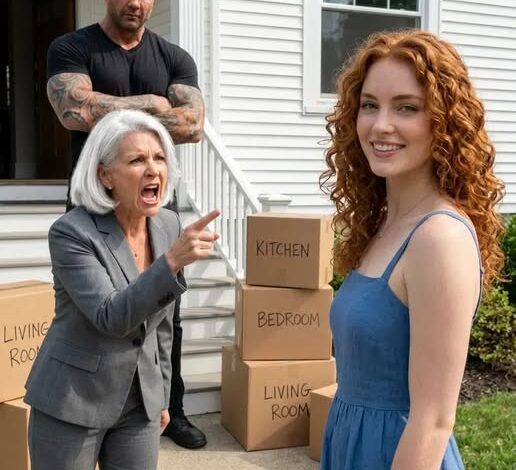
The phone call came on a quiet Tuesday morning, slicing cleanly through the fragile peace Harper Sterling had spent three exhausting months trying to rebuild.
She sat alone at the wide oak island in her father’s kitchen, one hand wrapped around a cup of black coffee while pale autumn sunlight stretched across the old hardwood floors in long golden strips. Outside the windows, the rose garden shimmered softly beneath early dew, and somewhere in the distance, a lawn mower hummed faintly through the neighborhood.
For the first time in weeks, the house had felt almost calm.
Then Eleanor called.
The moment Harper saw her stepmother’s name appear across the phone screen, the atmosphere inside the kitchen seemed to change. The warmth drained from the room. Her stomach tightened instinctively.
Nothing from Eleanor Ward ever arrived without intention.
Eleanor never called to comfort.
Never called to grieve.
Never called simply to ask how someone was surviving.
She called to control narratives.
To remind people she still believed herself the most important person in every room she entered.
Harper let the phone ring once more before answering.
“Hello, Eleanor.”
“I’ve sold the house.”
No greeting.
No hesitation.
No trace of decency.
Her voice carried the polished satisfaction Harper knew too well — the smooth, smug tone Eleanor used whenever she believed she had finally cornered someone completely.
For several seconds, Harper said nothing.
“My name is Harper Sterling,” she would later explain to investigators, “and the house she was talking about wasn’t just property.”
It was home.
A sprawling Victorian-craftsman estate sitting at the edge of town beneath towering maple trees and iron lanterns older than anyone living there. The house had wraparound porches, stained-glass windows on the staircase landing, carved banisters polished smooth by generations of hands, and an old back staircase Harper’s father always called “the soul of the place.”
She learned to read beside its fireplace.
Learned to bake in its kitchen.
Learned to survive storms hiding beneath its dining room table while her father laughed softly and told her the sky was only “moving furniture around upstairs.”
Every corner carried memory.
And according to Eleanor, she had just taken it away.
“The house?” Harper asked evenly. “You mean Dad’s house?”
“Don’t pretend to be clever,” Eleanor snapped. “The house you’ve been freeloading in since Arthur died. That arrangement is over. I found buyers from Connecticut. Cash offer. They’ll appreciate the property instead of clinging to all that outdated sentimental nonsense.”
Harper lifted her coffee slowly and let Eleanor continue talking.
Because while Eleanor celebrated victory, Harper’s mind drifted backward toward a meeting held three days after her father’s funeral.
A private meeting inside a downtown law office.
Eleanor knew nothing about it.
Nothing about the trust documents.
The signatures.
The hidden clauses.
The legal protections Arthur Sterling quietly built years before his death.
For five years, Eleanor underestimated Harper completely.
What she never realized was that Arthur had been underestimating Eleanor too.
“That’s interesting,” Harper said calmly. “And you’re certain everything is legal?”
Eleanor scoffed loudly.
“Of course it’s legal. I was his wife. The deed was in his name. You may have been his precious daughter, but I have rights. Maybe next time you’ll think twice before humiliating me in front of contractors.”
There it was.
The real reason behind all of this.
Three months earlier, shortly after Arthur’s funeral, Harper had stopped renovation crews Eleanor hired to “modernize” the house. Eleanor wanted to gut it completely:
rip out the original parquet flooring,
replace stained-glass windows,
remove carved woodwork,
paint every room sterile gray,
install chrome fixtures and harsh recessed lighting.
She wanted the house transformed into something sleek, expensive, and emotionally empty.
Arthur spent thirty years restoring that home carefully by hand.
He repaired molding himself.
Polished banisters through winter nights.
Cleaned stained glass piece by piece during snowstorms.
The house mattered to him because it carried history.
To Eleanor, it carried resale value.
Harper refused to let her erase it.
Eleanor never forgave the humiliation.
“Well,” Harper said softly, “I hope you got a good price.”
“Don’t concern yourself with numbers,” Eleanor replied coldly. “Just have your things gone by Friday. Leave the keys on the kitchen island. The new owners want demolition started immediately.”
“Thank you for letting me know,” Harper answered calmly. “Goodbye, Eleanor.”
Then she ended the call.
And laughed.
Not because anything felt funny.
Because she had just heard the sound of a trap snapping shut.
Eleanor always mistook silence for weakness.
She never understood some people become quiet because they are calculating carefully.
Harper immediately called Benjamin Vance.
Her father’s attorney answered on the second ring sounding almost amused already.
“Harper,” he said calmly. “I wondered how long she would wait.”
“She did it,” Harper said, staring out toward Arthur’s roses. “She actually signed papers selling the house.”
Benjamin exhaled slowly.
“How ambitious of her.”
“Can we stop it?”
“My dear,” he said gently, “there is nothing to stop. The sale was never legally possible.”
Harper closed her eyes briefly.
Relief mixed strangely with grief.
“Please contact the buyers immediately,” she said. “I don’t want innocent people losing money because of Eleanor.”
“Already underway,” Benjamin assured her. “Their attorneys are being informed now.”
After ending the call, Harper wandered slowly through the house.
Her fingers brushed walls Arthur painted himself.
Built-in shelves reinforced because he knew she bought too many books.
The old grandfather clock he repaired every winter despite claiming he hated mechanical work.
Every room still carried him.
But before she reached the top staircase landing, a violent knock echoed through the front door.
Too sharp to be friendly.
Too aggressive to be ordinary.
Harper walked downstairs carefully and opened the door to find a man in a dark suit holding a thick legal envelope.
“Harper Sterling?”
“Yes?”
“You’ve been served.”
Her stomach dropped instantly.
The man turned and walked away before she even finished opening the packet.
It wasn’t about the house sale.
Eleanor had filed an emergency petition accusing Harper of stealing estate funds and requested immediate freezing of her personal accounts pending investigation.
Harper stared down at the paperwork in disbelief.
This was no longer simply about property.
Eleanor intended to isolate her financially before court proceedings even began.
The war had escalated.
By afternoon, Harper sat inside Arthur’s study surrounded by leather-bound books, cedar shelves, and fading sunlight filtering through stained glass.
She tried focusing on paperwork while memories surfaced relentlessly.
Eleanor married Arthur five years earlier.
At first, she performed kindness flawlessly:
warm smiles,
soft laughter,
homemade desserts,
gentle concern.
But once the marriage settled, the performance changed.
She began criticizing Harper subtly.
Suggesting she move farther away.
Complaining Arthur spent “too much emotional energy” on his daughter.
Harper understood later what Eleanor truly wanted:
distance.
Isolation makes manipulation easier.
Arthur noticed more than he admitted publicly.
He wasn’t dramatic.
Didn’t confront recklessly.
Arthur Sterling believed in evidence.
In timing.
In preparation.
By three o’clock, Harper’s phone exploded with missed calls and messages.
What have you done?
Fix this immediately.
Call Benjamin.
You’re ruining everything.
She muted the notifications.
Hours later, while pruning dead roses in the garden, Harper heard tires crunch violently up the driveway.
Eleanor stormed from her silver Mercedes clutching legal papers in trembling hands.
Gone was the polished widow.
Now she looked furious.
Disheveled.
Panicked.
“You manipulative little witch!” Eleanor screamed. “You knew about this!”
Harper remained kneeling another moment trimming a dead bloom.
Silence infuriates people like Eleanor because it forces them to hear themselves clearly.
Finally Harper stood calmly.
“Knew about what?”
Eleanor shoved papers toward her violently.
“The trust! The transfer! You and Benjamin stole my inheritance!”
“No,” Harper answered quietly. “Dad arranged everything three years ago. I simply followed instructions.”
Something dangerous flickered across Eleanor’s face then.
Fear.
“Arthur would never do this to me,” she whispered. “He loved me.”
“Dad protected what mattered to him.”
“That’s a lie.”
“Is it?” Harper asked softly. “Or did he simply let you think you were smarter than him?”
Eleanor’s hands shook visibly.
“The buyers are suing me,” she hissed. “Do you understand what this does to my reputation?”
“Almost as much damage as trying to throw your grieving stepdaughter into the street.”
Then Eleanor changed.
Her expression darkened into something colder.
“You think Arthur was clever?” she asked quietly.
Harper’s stomach tightened instantly.
“You think he died naturally?”
The garden suddenly felt airless.
“What?”
Eleanor leaned closer, expensive perfume suffocating beneath autumn roses.
“He didn’t build a fortress,” she whispered. “He built his own tomb.”
Harper stared at her speechless.
“And if you don’t sign this house over by tomorrow,” Eleanor continued, “I’ll make sure everyone learns what Arthur was hiding.”
Then she walked away.
Harper rushed inside immediately and locked every door.
Her father died after eight months of rapid cardiovascular decline.
Doctors documented everything carefully.
Nothing seemed suspicious officially.
Yet Eleanor’s words shattered something fundamental.
You think he died naturally?
Harper called Benjamin immediately.
“He investigated her,” Benjamin admitted quietly after listening. “Arthur hired private investigators before he died.”
The room tilted around her.
“What?”
“Eleanor had two husbands before Arthur,” Benjamin continued. “Both died following rapid unexplained health decline. Both left her substantial assets.”
Harper’s blood ran cold.
“Are you saying she killed them?”
“I’m saying Arthur believed he was in danger.”
Then Benjamin paused.
“He also said he left you a map.”
A map.
Harper searched the study for hours afterward:
drawers,
bookshelves,
photographs,
ledgers.
Nothing.
Finally, exhausted, she sat before the fireplace where Arthur spent countless evenings reading quietly.
Then she noticed one brick near the hearth sat slightly uneven.
Her pulse quickened.
She pressed gently.
Click.
The brick shifted outward revealing a hidden compartment.
Inside sat a sealed envelope and silver USB drive.
The envelope bore Arthur’s handwriting.
My dearest Harper.
Her hands trembled opening it.
If you are reading this, Eleanor has likely tried taking the house. Benjamin will already know what to do.
Tears blurred the page instantly.
My illness is not natural, sweetheart.
She is poisoning me.
The letter slipped from Harper’s hands.
Her father knew.
He knew he was dying.
And stayed silent long enough to protect her first.
Then suddenly—
the front door unlocked downstairs.
Someone entered the house.
Panic surged violently through Harper’s chest.
She grabbed the USB drive, the letter, and the heavy brass fireplace poker nearby before locking herself inside the study.
With shaking hands, she plugged the drive into her laptop.
Folders appeared immediately.
Videos.
Financial records.
Emails.
Harper clicked one file dated four months earlier.
Black-and-white footage appeared from a hidden kitchen camera.
Arthur sat quietly reading at the island while Eleanor entered wearing a silk robe carrying tea.
She glanced over her shoulder carefully.
Then removed a small vial from her pocket.
And poured clear liquid into his cup.
Harper covered her mouth to stop herself screaming.
Arthur knew.
He drank the tea anyway.
Because he needed evidence before Eleanor destroyed Harper too.
The study door handle rattled suddenly.
“Harper?” Eleanor called sweetly from outside. “Open the door.”
Harper gripped the poker tightly.
“Leave.”
“You have something that belongs to me,” Eleanor replied.
Harper looked at the paused footage showing poison entering Arthur’s tea.
Then something inside her hardened completely.
She unlocked the door.
Eleanor stood smiling until she noticed the poker and USB drive.
“You were right,” Harper said quietly. “Dad did hide something in the masonry.”
She lifted the drive.
“It was you.”
For one brief second, Eleanor’s elegant mask vanished completely.
Only a trapped predator remained.
“What is that?”
“Video evidence,” Harper answered coldly. “Financial theft. Offshore accounts. Poisoning.”
Eleanor lunged toward her.
Harper stepped back instantly raising the poker.
“You murdered my father.”
“He was already dying!” Eleanor screamed suddenly. “I only sped things along!”
The confession echoed through the study.
Harper stared at her in horror.
“Benjamin already has copies,” she lied calmly. “The police are probably searching your condo already.”
Eleanor froze.
Fear overtook calculation instantly.
Then she ran.
Minutes later, her Mercedes disappeared violently into the night.
The following morning, sunlight poured through stained glass while Benjamin called with updates.
Eleanor attempted fleeing the country overnight.
Fraud freezes blocked her transfers.
Authorities issued warrants.
Her abandoned car was found near the state line.
She became a fugitive before sunset.
Healing afterward arrived slowly.
Not dramatically.
Harper restored the house piece by piece:
removing Eleanor’s gray paint,
repairing old fixtures,
pruning Arthur’s roses.
Neighbors returned quietly too.
People who remembered Arthur fondly.
One afternoon, Tom from the hardware store handed Harper brass hinges and smiled sadly.
“Your father always said you were the strongest thing he ever built.”
That was when Harper finally understood.
Arthur’s greatest inheritance was never money.
It was protection.
Preparation.
Decency.
Roots.
Years later, the house still stood beneath stained-glass light and creaking wood floors.
The hidden brick was sealed again.
The evidence remained locked safely away.
Eleanor vanished into international investigations and warrants.
But every evening at dusk, Harper touched the polished banister and listened carefully to the old house breathe around her.
No longer afraid.
Only steady.
“We’re okay, Dad,” she whispered one final time.
And for the first time since his death, the house sounded alive again.