My Wife Took Our Son and Daughter on a Trip, and They Never Came Back – 40 Years Later, I Found a Box Hidden Inside My Daughter’s Mattress That Made My Blood Run Cold

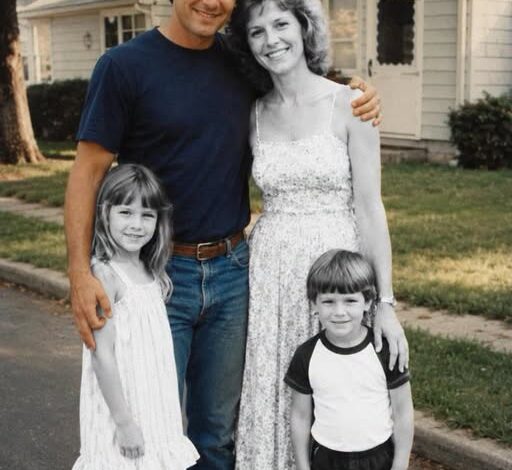
For forty years, I believed I knew exactly where my family had disappeared.
I believed they had vanished beneath dark water on a rain-soaked night, claimed by a river that never gave anything back. Every anniversary, I returned to the old bridge carrying fresh flowers and old regrets, speaking into the rushing current as though grief itself might someday answer.
It never did.
The silence became part of my routine.
I accepted it the way people accept permanent scars. Some wounds, I told myself, were never meant to heal. They simply became part of the person left behind.
Then, in the space of a single afternoon, everything I believed collapsed.
It began with a small wooden box tucked inside the attic of Clara’s house after her passing. Dust coated the lid, and the brass latch resisted when I tried to open it, as though it had spent decades protecting what lay inside.
Among yellowed photographs and faded keepsakes rested a sealed envelope.
My name was written across the front.
The handwriting trembled, but I recognized it immediately.
Clara.
As I unfolded the brittle paper, my hands shook so violently I could barely read the first line.
“If you’re reading this, I waited far too long to tell you the truth.”
Those words changed my life before I reached the bottom of the page.
For decades, I had mourned a tragedy that never happened.
My wife, Gwen, had not driven off the bridge.
The river had not claimed our children.
No terrible accident had taken them from me.
Instead, I had been living inside a lie so complete that it became more convincing than reality itself.
According to Clara’s letter, everything began with fear.
Fear of confrontation.
Fear of losing control.
Fear of admitting that a family was falling apart long before anyone else could see it.
In that fear, impossible decisions became imaginable.
Half-truths became convenient.
Silence became easier than honesty.
Before long, silence had hardened into deception.
Each person involved convinced themselves they were protecting someone else.
Gwen believed distance would spare the children from conflict.
Clara doubted herself until doubt became inaction.
And somewhere in the middle of it all, a frightened nine-year-old discovered pieces of a conversation she couldn’t understand.
The child found a letter.
She hid it.
Not out of cruelty.
Out of panic.
Children often believe they can stop terrible things simply by making them disappear.
She tucked it away where no one would find it, never imagining that one frightened decision would echo across four decades.
By the time anyone realized the truth had vanished, new stories had already taken its place.
My children were told I had abandoned them.
That I had chosen another life.
That I no longer wanted them.
Meanwhile, I stood beside a river every year believing they had died.
We were all grieving.
Just not the same loss.
The cruelest part wasn’t the separation.
It was that every one of us believed the others had stopped loving us.
How many birthdays passed with each side wondering if the other remembered?
How many holidays ended with someone staring at an empty chair, convincing themselves they no longer mattered?
Those questions haunted me more than anything Clara wrote.
Then came the knock at my front door.
I had imagined that moment a thousand different ways during the sleepless nights that followed reading the letter.
None of them prepared me for reality.
A woman stood quietly on my porch.
She didn’t speak immediately.
Neither did I.
There was something familiar about the way she held herself.
Then I noticed it.
Her right hand wrapped gently around her left elbow.
My daughter had done that whenever she was nervous.
At nine years old, she’d stand exactly that way before admitting she’d broken a plate or forgotten her homework.
Now, standing before me as a grown woman, she hadn’t even realized she still carried the same gesture.
“Aria?” I whispered.
Tears answered before words could.
When she finally stepped into my arms, forty years seemed to disappear and stretch endlessly at the same time.
I held the little girl I remembered.
She held the father she thought had abandoned her.
Neither of us knew how to bridge the decades between those two realities.
“I’m sorry,” she whispered.
The words broke my heart.
She should never have believed she needed to apologize.
Neither should I.
We spent hours talking.
Then days.
Then weeks.
There were photographs I had never seen.
Grandchildren I had never met.
Stories that should have been shared around dinner tables instead of discovered through tearful conversations between strangers who happened to share the same blood.
There were also painful truths neither of us could escape.
No revelation could restore the years we had lost.
I could not watch my children grow up.
They could not reclaim the father they needed during their hardest moments.
Some absences cannot be repaired.
They can only be acknowledged.
That realization hurt more than any lie ever could.
Yet something remarkable happened once the truth no longer had to compete with fiction.
The anger slowly gave way to understanding.
Not because anyone’s choices became acceptable.
They didn’t.
Fear still caused enormous harm.
Silence still stole decades from an entire family.
But once every secret stood in the open, we finally had something solid beneath our feet.
Reality.
Messy.
Painful.
Incomplete.
But real.
For the first time in forty years, none of us had to defend a story built on assumptions.
We could simply tell the truth.
Sometimes people ask whether I still visit the bridge.
I do.
But I don’t bring flowers anymore.
I don’t speak to the river.
I don’t search the water for ghosts that were never there.
Instead, I stand quietly for a few moments and think about how easily a single lie—repeated often enough—can become someone’s entire life.
Then I go home.
Home to children I thought I’d buried.
Home to grandchildren I never expected to know.
Home to conversations we should have had decades ago but are grateful to have at all.
We never recovered the years that were stolen from us.
Nothing can return birthdays, school plays, family holidays, or ordinary afternoons that history quietly erased.
But we gained something I once believed was impossible.
We stopped mourning people who were still alive.
And in place of the story that secrecy had written for us, we began building another—one held together not by fear or silence, but by honesty.
It arrived far too late to rewrite the past.
Yet it came just in time to remind us that while lost years can never be reclaimed, love still has the power to grow wherever the truth is finally allowed to take root.