National Park Service ranger dies after falling into crevasse on Mount McKinley during climbing patrol

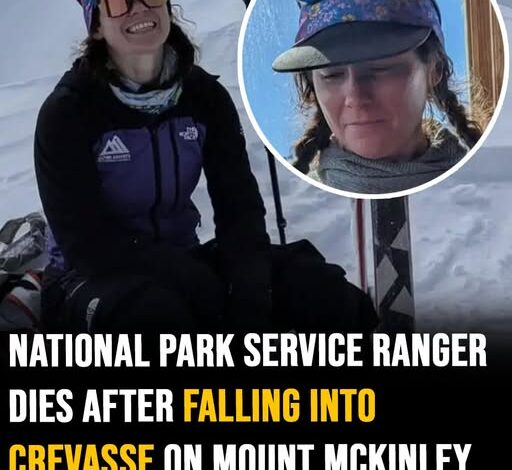
High on the frozen shoulders of Denali, where the air is thin enough to steal your breath and the weather can turn deadly in minutes, Robin Pendery spent her days protecting other people.
At 33 years old, she had chosen a life that most would never consider.
While others visited the mountain for adventure, challenge, or personal triumph, Robin came to serve. As a seasonal ranger stationed at Denali’s legendary 14,000-foot camp, she stood watch over one of the most unforgiving landscapes on Earth. Her responsibilities stretched far beyond routine patrols. She monitored climbing routes, responded to emergencies, advised mountaineers, and helped maintain order in a place where a single mistake could become a tragedy.
Every season, thousands of climbers arrived with dreams of standing atop North America’s highest peak.
Robin understood something many of them did not.
The mountain did not care about dreams.
Denali demanded respect.
And sometimes, even respect was not enough.
Those who worked there learned to live with that truth.
They learned to read changing weather like a language.
They learned to recognize danger hidden beneath beauty.
They learned that survival often depended on caution, preparation, and humility.
Robin embraced those lessons because she loved the mountain.
Not the romantic version seen in photographs.
The real one.
The harsh one.
The unpredictable one.
The one capable of inspiring awe and heartbreak in equal measure.
Friends and colleagues say she thrived in that environment. She understood the responsibility that came with the uniform and carried it quietly. The climbers she helped may not have known her story, but many trusted her guidance during some of the most difficult moments of their expeditions.
That trust mattered.
Because on Denali, strangers often place their lives in the hands of people like Robin.
Then, on Thursday afternoon, everything changed.
The mountain she had spent her days navigating revealed one of its oldest and most dangerous secrets.
A hidden crevasse.
Invisible beneath the snow.
Silent.
Waiting.
One moment, Robin was carrying out her duties.
The next, the ground beneath her gave way.
The fall happened with terrifying speed.
A dedicated ranger who had spent years helping others stay safe suddenly found herself caught in the very danger she worked so hard to protect people from.
The mountain offered no warning.
No second chance.
Only a sudden, devastating absence.
When word spread through camp, fellow rangers immediately mobilized.
These were people trained to respond under pressure.
People who understood rescue operations in some of the world’s most difficult conditions.
People who refused to give up easily.
They moved quickly.
They did everything they could.
But as the hours passed, hope slowly gave way to heartbreak.
The mission they wanted to be a rescue became a recovery.
For the men and women who worked alongside Robin, the loss was deeply personal.
The National Park Service often describes its teams as communities, but on mountains like Denali, the bonds run even deeper. Long days, harsh conditions, shared dangers, and mutual dependence create relationships that feel closer to family than coworkers.
That is why one phrase echoed repeatedly after her death.
The Denali family.
Simple words.
Yet they carried enormous weight.
Because everyone who works on the mountain understands the risks.
Every ranger.
Every guide.
Every climber.
Every volunteer.
They know the statistics.
They know the stories.
They know that nature can be indifferent to experience, preparation, and skill.
And still they return.
Robin’s death came during an especially painful period for the mountain community.
Just days earlier, three climbers from Latvia lost their lives on Denali, adding to the mountain’s long and sobering history. Since records began, more than 130 people have died on the peak.
Each loss becomes part of the mountain’s story.
Each name joins a list no one ever wants to see grow longer.
Yet the mountain remains.
And every year, people continue to answer its call.
That reality can seem difficult to understand from a distance.
Why keep climbing?
Why keep working there?
Why accept such risk?
Those who know Denali often struggle to explain it.
The mountain challenges people in ways few places can.
It strips away distractions.
Demands focus.
Rewards resilience.
Punishes arrogance.
And despite its dangers, it inspires a profound sense of purpose in those who spend time among its glaciers and ridges.
Robin understood that feeling.
It was part of what brought her back.
Part of what made her willing to spend long seasons in a remote wilderness where comfort was scarce but meaning was abundant.
She knew the risks.
Everyone on the mountain does.
That knowledge never disappears.
It simply becomes part of the job.
Part of the commitment.
Part of the choice.
And that may be what makes her story so powerful.
Not that tragedy occurred.
But that she served anyway.
Every season, rangers like Robin step into environments where danger is not hypothetical.
It is real.
Present.
Unavoidable.
Yet they continue showing up because they believe the work matters.
Because climbers need guidance.
Because emergencies require responders.
Because someone must stand watch when conditions become dangerous.
Robin was one of those people.
A protector in a place that often demands protecting.
A steady presence in an environment defined by uncertainty.
A ranger who understood both the beauty and the cost of the mountain she loved.
Today, colleagues mourn her.
Friends remember her.
The climbing community reflects on a life dedicated to service.
And somewhere above the glaciers, ice fields, and endless white horizons of Denali, the mountain remains unchanged—vast, beautiful, and indifferent.
But for those who knew Robin Pendery, the landscape will never feel quite the same.
Because one of the people who helped others find their way home is no longer there.
And her absence leaves a space far larger than any crevasse ever could.
Still, her legacy endures in every climber she assisted, every life she helped protect, and every act of service she performed beneath Alaska’s towering sky.
She knew the risks.
She understood the cost.
And she chose to serve anyway.
That choice is what people will remember.
And that is what makes her loss so deeply felt.