Princess Diana’s heartbreaking final words were revealed by firefighter from scene of the crash

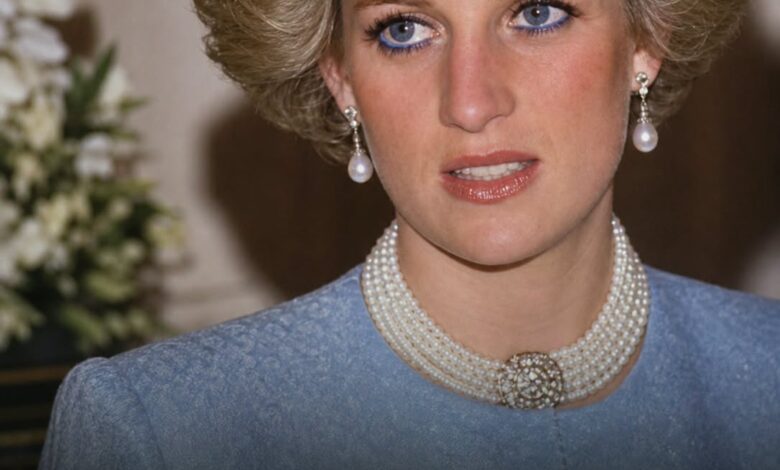
Xavier Gourmelon remembers the wreckage before he remembers the woman.
Twisted metal.
Broken glass.
Sirens ricocheting through a Paris tunnel.
A Mercedes crushed so violently that, at first glance, the scene seemed to offer almost no possibility of survival.
It was August 31, 1997, and Gourmelon, a firefighter, had arrived at the Pont de l’Alma tunnel expecting another catastrophic road accident. Cameras would soon surround the scene and the entire world would demand answers, but in those first frantic minutes, there were no icons or international headlines.
There were simply victims who needed help.
Two men in the car appeared beyond saving.
Then Gourmelon reached the woman in the back.
She was alive.
She was conscious enough to react, though clearly dazed and struggling to understand what had happened around her. There was nothing about the immediate encounter that announced royalty. In the darkness and confusion, she was simply an injured woman trapped inside a destroyed vehicle.
Then she spoke.
“Oh my God, what’s happened?”
The question would remain with Gourmelon for years.
It was painfully ordinary.
No grand final declaration. No awareness that millions of people would someday examine those moments. Just a frightened human being waking into chaos and asking the most natural question imaginable.
Gourmelon tried to reassure her.
Help was there.
They were working to get her out.
Then she lost consciousness.
Only later would he fully understand that the woman he had been trying to save was Diana, Princess of Wales—one of the most photographed and recognizable people on Earth.
But celebrity meant nothing inside that tunnel.
Her body did not know it was famous.
Trauma does not recognize titles.
The rescuers worked against the clock.
Diana’s visible injuries did not initially communicate the full severity of what was happening internally. That became one of the cruelest elements of the night. From the outside, there seemed to be reason for hope.
She did not look like someone who was necessarily dying.
Then her condition deteriorated.
Her heart stopped.
Emergency workers began resuscitation.
For a terrifying stretch of time, Diana hovered at the boundary between life and death while the people around her performed the procedures they had been trained to perform countless times before.
And then—
A pulse.
Her heart began beating again.
For the responders, that fragile return mattered enormously.
It meant there was still something to fight for.
Perhaps she could survive.
Perhaps the worst had already happened.
Perhaps this terrible night might end with a hospital recovery rather than another death.
That is the dangerous tenderness of emergency medicine: sometimes a tiny improvement becomes enormous because hope has nowhere else to go.
Diana was eventually transported to Pitié-Salpêtrière Hospital.
By then, news of the crash was beginning to spread.
The anonymous injured woman in the tunnel was no longer anonymous.
She was Diana.
Princess.
Mother.
Humanitarian.
Global celebrity.
The woman whose every haircut, dress, relationship, expression, and movement had been photographed and interpreted for years.
But inside the hospital, none of those identities could protect her.
Doctors discovered the devastating internal injuries that the crash scene had concealed.
Medical teams continued fighting.
Outside, information traveled faster than certainty. People knew there had been a crash. They knew Diana was injured. They waited for the next update with the desperate assumption that if she had reached a hospital alive, survival remained possible.
For a while, hope existed in that uncertainty.
Then, in the early hours of the morning, it disappeared.
At around 4 a.m., Diana was pronounced dead.
She was 36 years old.
The news seemed impossible partly because Diana had occupied such an enormous amount of public space.
She had been photographed constantly.
Discussed endlessly.
Admired, criticized, pursued, celebrated.
She had appeared so relentlessly present that absence felt almost incomprehensible.
And suddenly she was gone.
Two young boys had lost their mother.
A family had lost someone far more complicated and intimate than the public figure strangers believed they knew.
And millions of people who had never met Diana discovered that they could grieve someone they had only encountered through photographs and television screens.
Flowers accumulated.
Crowds gathered.
People cried openly.
The scale of mourning revealed something that years of tabloid coverage had often obscured.
Diana had become meaningful not merely because she was royal, but because people believed they had seen vulnerability in her.
She had spoken publicly about personal struggles at a time when royal life was expected to project composure.
She had touched people whom others feared touching.
She had used her visibility to draw attention toward humanitarian causes.
And she had appeared imperfect in a system built around the performance of perfection.
That made her feel human.
Perhaps that is why Gourmelon’s memory of her final conscious moments remains so powerful.
The world remembers the princess.
He encountered the person.
No tiara.
No palace.
No carefully staged photograph.
Just a frightened woman asking what had happened.
The contrast is almost unbearable.
For years, cameras had competed for images of Diana.
On the final night of her life, the world once again wanted photographs, information, access.
After her death, the circumstances of the crash generated investigations, accusations, theories, and arguments that would continue for decades.
But beneath all that noise was something painfully simple.
A mother had died.
Eventually, Diana was taken home to England.
She was laid to rest at Althorp, her family’s estate, on a secluded island in an ornamental lake.
There is something haunting about that final geography.
During life, privacy had often seemed almost impossible for her.
Photographers waited outside buildings.
Cars followed cars.
Ordinary movements became marketable images.
Her relationships became public property.
Even attempts at escape could attract more attention.
At Althorp, water surrounds the place where she rests.
Distance is built into the landscape.
Visitors can approach the lake, but the grave itself remains apart.
After a life lived beneath relentless observation, Diana finally received something she had struggled to possess while alive:
Separation.
Silence.
Privacy.
Yet the world has never completely stopped looking back toward that tunnel.
Part of the fascination comes from the brutal interruption of possibility.
Thirty-six is an age filled with unfinished sentences.
Diana’s sons still had years of childhood ahead.
Her humanitarian work was evolving.
Her relationship with royal life had changed dramatically.
She was beginning to construct an identity beyond the institution that had first made her internationally famous.
What would she have become at 40?
At 50?
At 60?
What causes would she have championed?
What kind of grandmother might she have been?
There can never be answers.
That is what sudden death steals in addition to a person.
It steals all the versions of them that might have existed.
For Gourmelon, however, the memory remained rooted not in speculation but in those first minutes.
The wreckage.
The woman.
The question.
The brief return of a heartbeat.
Hope.
Then history.
There were no millions of mourners inside the tunnel when he reached her.
No mountains of flowers.
No televised funeral.
No decades of documentaries attempting to understand what happened.
There was only an emergency worker kneeling beside an injured stranger and doing everything he could to keep her alive.
For a few moments, Diana was no longer one of the most famous women in the world.
She was simply someone who needed saving.
And the people around her tried.
Her heart returned once.
It was enough to make survival seem possible.
It was not enough to bring her home.
So Diana rests now on an island at Althorp, surrounded by the quiet she was so rarely granted in life.
The cameras cannot follow her there.
The crowds cannot reach her.
The questions remain with us.
And perhaps that is why Gourmelon’s memory still cuts through decades of mythology.
Before the princess became history, before the world began mourning, there was simply a frightened woman opening her eyes in a shattered car and asking:
What happened?
The world has been trying to answer ever since.