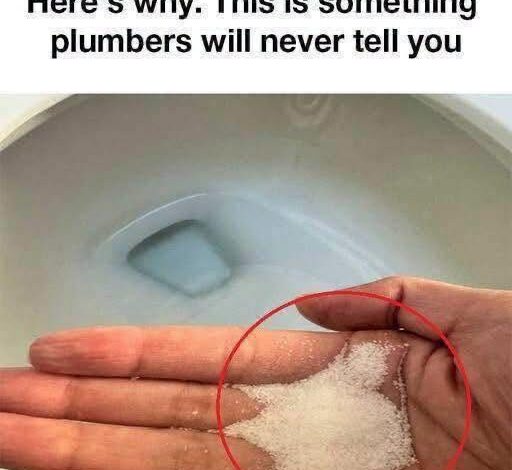
The most useful bathroom maintenance trick might already be sitting in the back of your pantry.
Not because it’s a miracle product.
Not because it can replace a plumber.
But because ordinary table salt can play a modest role in keeping a toilet cleaner and fresher when used with realistic expectations.
In a world filled with expensive cleaners, viral “life hacks,” and products that promise instant results, it’s easy to overlook simple household staples. Salt has long been used as a gentle cleaning aid in various parts of the home, and while it isn’t a cure-all for plumbing problems, it can be part of a routine that helps reduce odors and loosen some surface buildup.
The key is understanding what salt can—and cannot—do.
One of salt’s most useful qualities is its mild abrasive texture. When combined with a toilet brush, it can help scrub away light stains and residue clinging to the bowl without relying solely on harsh chemical cleaners. It isn’t abrasive enough to damage porcelain under normal use, but it can provide a little extra cleaning power during routine maintenance.
Salt can also help absorb some odors, making it a simple addition to regular bathroom cleaning. While it won’t eliminate the source of persistent smells caused by plumbing issues or hidden mold, it may help freshen the bowl between deeper cleanings.
Some people also use salt as part of an overnight soak.
Pouring a cup of salt into the toilet bowl and allowing it to sit for several hours—or overnight—may help loosen light mineral deposits or surface stains, especially when followed by a thorough scrub. In homes with hard water, however, heavy limescale usually requires cleaners specifically designed to dissolve mineral buildup, so it’s best to think of salt as a maintenance tool rather than a complete solution.
What salt cannot do is dissolve major clogs.
Despite claims that circulate online, pouring salt into a toilet will not magically break apart large blockages caused by excessive toilet paper, wipes, sanitary products, or foreign objects. If the toilet is backing up or draining very slowly, a plunger, a toilet auger, or professional plumbing assistance is often the appropriate solution.
Likewise, salt should never be viewed as a substitute for proper toilet care.
Only flush toilet paper and human waste. Products labeled as “flushable” can still contribute to plumbing problems, and frequent misuse of the toilet is far more likely to cause blockages than the absence of any cleaning trick.
The real value of salt lies in consistency.
A simple maintenance routine every few weeks can help keep the bowl looking cleaner while encouraging regular attention to your bathroom fixtures. Add the salt, let it sit if desired, scrub thoroughly with a toilet brush, and finish by flushing. Combined with routine cleaning and good flushing habits, this small step can help keep the toilet looking and smelling fresher over time.
It also offers an alternative for people who prefer to reduce their use of strong chemical cleaners for everyday maintenance. While disinfectants are still important when sanitation is the goal, not every routine cleaning session requires the harshest products available.
The biggest lesson isn’t really about salt.
It’s about preventative care.
Small, regular habits often prevent bigger problems from developing. Cleaning before stains become stubborn, addressing minor mineral deposits before they harden, and paying attention to how your plumbing is performing can all reduce the likelihood of more frustrating maintenance later.
No pantry ingredient can guarantee a clog-free toilet or eliminate every stain.
But sometimes the simplest household items still have a place in an effective cleaning routine—as long as they’re used with realistic expectations.
In the end, keeping your bathroom fresh doesn’t always require expensive specialty products or complicated hacks. A toilet brush, consistent cleaning, good plumbing habits, and an occasional helping of salt may be all you need to maintain a cleaner bowl and a more pleasant bathroom.
Sometimes the most practical solutions aren’t the most dramatic—they’re simply the ones you use consistently.