What makes the story fascinating isn’t the concert lineup.
It’s what the controversy reveals about modern public events.
A generation ago, a national anniversary celebration might have been discussed primarily in terms of fireworks, music, historical exhibits, and civic pride. Today, even before a single performer takes the stage, debates about politics, branding, identity, and public perception can become the headline.
The Freedom 250 celebration was originally envisioned as part of the broader commemoration marking 250 years since the founding of the United States. Like many large anniversary events, it was expected to blend entertainment, culture, and public gatherings into a national celebration stretching across multiple locations and audiences.
Yet as reports emerged about performers reconsidering their participation, public attention shifted away from the anniversary itself and toward the evolving conversation surrounding the event.
Some artists reportedly chose to distance themselves after learning more about how the celebration was being presented. Others remained connected to various stages of planning. As often happens with large-scale productions, uncertainty about lineups generated speculation long before any final program was officially announced.
That uncertainty created an opening for an entirely different conversation.
Rather than focusing on entertainment, discussions increasingly centered on symbolism.
What should a national celebration look like?
Who should represent it?
And can cultural events remain separate from politics in an era when nearly every public gathering carries some political meaning?
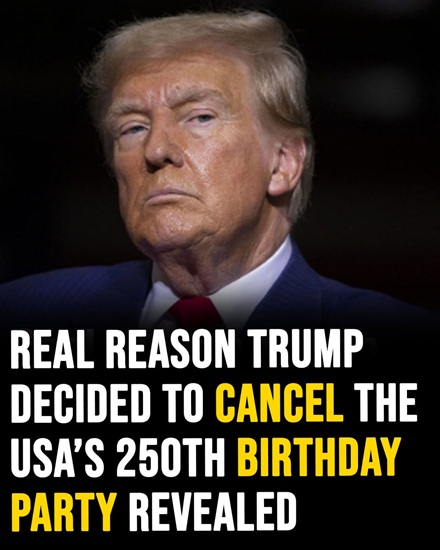
The debate intensified after Donald Trump publicly suggested that portions of the planned concert series could be replaced with a large rally-style event.
His remarks drew immediate attention because they reframed the celebration from a traditional entertainment format into something more closely associated with political mobilization and public messaging.
Supporters viewed the proposal as an energetic expression of patriotism and national confidence.
Critics saw it as further evidence of politics expanding into spaces traditionally intended to unite broader audiences.
Regardless of perspective, the reaction demonstrated how difficult it has become to separate cultural celebrations from political identity.
Even discussions about performers became part of a larger national conversation.
Why do artists participate in public events?
What responsibilities come with those appearances?
How should entertainers navigate events that become politically charged?
These questions have no simple answers.
Musicians, actors, and public figures frequently participate in national celebrations for reasons ranging from artistic opportunity to personal conviction. At the same time, they must consider audience expectations, professional reputations, and their own beliefs.
As a result, participation decisions often become stories in their own right.
The Freedom 250 discussion highlights how modern audiences increasingly view public events through multiple lenses simultaneously.
Some people focus on entertainment.
Others focus on politics.
Others focus on historical significance.
And many view all three as inseparable.
Meanwhile, the larger anniversary itself remains significant regardless of how any individual concert evolves.
Two hundred and fifty years is a milestone reached by very few nations.
It represents generations of change, conflict, achievement, debate, innovation, and growth.
Any effort to commemorate such a milestone carries enormous symbolic weight.
That weight helps explain why discussions surrounding the celebration have attracted so much attention.
People are not merely debating performers.
They are debating the story a country tells about itself.
The final structure of Freedom 250 may still change.
Additional performers may join.
Others may withdraw.
Concerts may be expanded, modified, or supplemented by different types of public gatherings.
Such adjustments are common in major events long before opening day.
What remains constant is the significance of the anniversary itself.
The conversations surrounding Freedom 250 reveal something larger than any single lineup announcement.
They reveal a country still negotiating how it understands its own history, how it expresses national identity, and how public celebrations function in an age when culture, entertainment, and politics increasingly overlap.
By the time the anniversary arrives, the final concerts, rallies, exhibitions, and ceremonies will likely look different from the earliest plans.
But perhaps that evolution is part of the story as well.
National celebrations are not only about remembering the past.
They also reflect the present.
And the ongoing debate surrounding Freedom 250 demonstrates that Americans remain deeply engaged in discussing what their shared history means, who gets to tell that story, and how it should be celebrated as the nation approaches one of its most significant milestones.