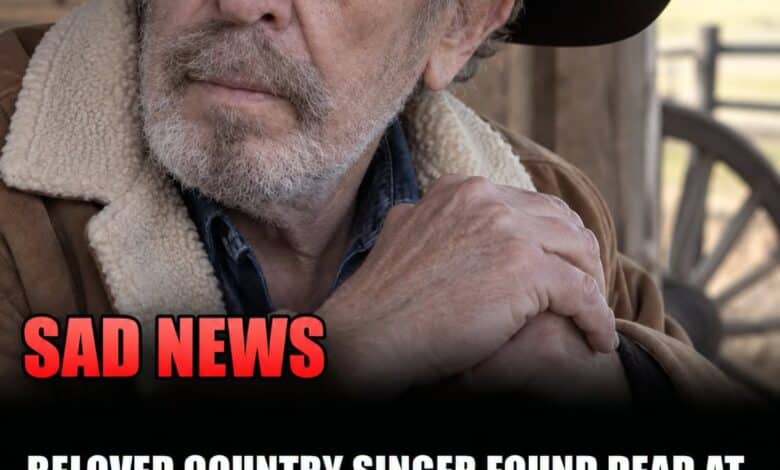
Kinky Friedman lived as though somebody had handed him a map of respectable adulthood and he had immediately used it to light a cigar.
Singer.
Songwriter.
Satirist.
Mystery novelist.
Columnist.
Political candidate.
Animal-rescue advocate.
Professional troublemaker.
Most people would have considered any one of those a career. Friedman treated them more like stops along a road he was curious enough to keep following.
That was part of his appeal.
His life didn’t resemble a carefully managed résumé designed to make sense in retrospect. It felt more like a Texas story told after midnight, when the chairs have been pulled closer together and nobody is particularly concerned about whether every detour advances the plot.
Born Richard Friedman in Chicago and raised in Texas, he developed the identity that would eventually make “Kinky” more recognizable than the name on his birth certificate.
Texas became more than geography.
It was material.
Language.
Attitude.
Contradiction.
A place he could love fiercely enough to mock without asking permission.
Friedman understood something important about belonging: affection doesn’t require reverence.
Sometimes the people who know a place best are the ones most qualified to make fun of it.
Music gave him one of his first great stages.
With Kinky Friedman and the Texas Jewboys—a band name that immediately announced subtlety would not be the project—he built a catalog around satire, country music, provocation, and humor sharp enough to make audiences wonder whether they were supposed to laugh.
Often, that uncertainty was the point.
Friedman wasn’t interested in becoming a perfectly polished Nashville product.
He liked characters.
Contradictions.
Uncomfortable jokes.
Subjects respectable people sometimes preferred to avoid.
He could be deliberately offensive, politically incorrect long before the phrase became a permanent feature of cultural arguments, and impossible to place neatly inside conventional categories.
Some listeners heard satire.
Others heard insult.
Sometimes the line between the two was intentionally uncomfortable.
That tension followed him throughout his public life.
Friedman understood that humor could entertain a room while simultaneously irritating it into thinking.
He wasn’t always trying to provide answers.
Sometimes he simply wanted to make the question impossible to ignore.
Then, because apparently one unconventional career wasn’t enough, he became a novelist.
For many performers, moving from music into fiction might have required a carefully orchestrated reinvention.
Friedman simply started writing.
His mystery novels featured a fictionalized version of himself—a cigar-smoking, wisecracking investigator navigating New York with the same mixture of irreverence and observation that characterized the real man.
It was an inspired trick.
He turned his own public persona into a literary character.
The boundary between Kinky Friedman the person and Kinky Friedman the creation became part of the entertainment.
The books allowed him to do what he had already been doing in music: wander through human absurdity, make jokes where polite society might hesitate, and slip serious observations between punch lines.
His voice was the continuity.
The medium almost didn’t matter.
Put him behind a microphone, on a page, in an interview, or eventually on a campaign trail, and the same sensibility emerged.
Then came politics.
Of course it did.
In 2006, Friedman ran for governor of Texas as an independent.
For almost anyone else, the transition from country satirist and mystery writer to gubernatorial candidate might have seemed absurd.
For Kinky Friedman, absurdity was practically a campaign credential.
His candidacy attracted attention partly because it was entertaining.
He had memorable slogans.
He had jokes.
He had celebrity.
He had no interest in sounding like a politician assembled by consultants.
But dismissing the campaign entirely as a stunt misses what made it interesting.
Friedman had opinions about Texas.
Real ones.
He cared about education, government, immigration, personal freedom, and the direction of the state he had spent much of his life observing.
Humor was his delivery system.
That didn’t necessarily make every proposal practical or every position profound.
But it made people listen.
Politics usually trains candidates to sand away their strangest edges.
Friedman seemed to sharpen his.
He didn’t win.
That almost feels secondary now.
Winning would have produced a very different story.
Instead, the campaign became another chapter in a life defined less by conventional achievement than by willingness to enter rooms where nobody expected him.
That willingness may be the most interesting part of his legacy.
Most people learn fairly early that society likes consistency.
Pick something.
Become it.
Stay understandable.
If you’re a musician, make music.
If you’re a writer, write.
If you’re serious about politics, behave seriously enough that people recognize the costume.
If you’re an entertainer, don’t expect to be treated as a thinker.
Friedman ignored those borders.
He seemed more interested in whether something fascinated him than whether it fit his existing brand.
That kind of curiosity carries risk.
When you refuse categories, you also refuse some of their protections.
People don’t always know what to do with you.
Was Kinky joking?
Was he serious?
Was the outrageous remark satire?
Was the campaign performance art?
Was the performer hiding the thinker, or was the thinker simply another performance?
Perhaps the mistake was assuming there had to be only one answer.
Human beings are allowed to be contradictory.
Friedman made a career out of demonstrating it.
The cigar and cowboy hat could make him look like a character somebody invented.
But behind the persona were loyalties that were deeply real.
One of the most revealing was his love of animals.
At his family’s Echo Hill Ranch in the Texas Hill Country, Friedman became closely associated with animal rescue, particularly through the Utopia Animal Rescue Ranch.
That work showed another dimension of the man whose public reputation often depended on irreverence.
The provocateur could also care deeply about abandoned animals.
The satirist could be sentimental.
The man who made a profession of not taking respectable society too seriously could take compassion very seriously indeed.
That contrast wasn’t hypocrisy.
It was humanity.
People who only knew the jokes could miss the tenderness.
People who only admired the tenderness could forget how intentionally abrasive he could be.
Both belonged to him.
That is why reducing Friedman to a list of accomplishments feels inadequate.
The songs matter.
The books matter.
The political campaigns matter.
The columns and performances matter.
But the more interesting inheritance may be permission.
Permission to change direction.
Permission to be curious after you’ve already become successful at something.
Permission to love your home without pretending it is flawless.
Permission to make people laugh while asking them to reconsider what they assume.
Permission, occasionally, to fail publicly because the attempt itself seemed worth making.
There is freedom in that.
Modern life encourages people to build identities almost like corporations.
Everything must align.
Every interest becomes a niche.
Every public statement becomes part of a brand.
Every career move requires an explanation.
Friedman’s life suggests another possibility.
Maybe a person doesn’t need to make perfect sense.
Maybe curiosity is enough reason to turn down another road.
A songwriter can become a novelist.
A novelist can run for governor.
A political candidate can return to writing.
A provocateur can spend enormous emotional energy helping animals.
A Texas patriot can spend decades making jokes about Texas.
The contradiction isn’t necessarily the problem.
Sometimes it’s the point.
Kinky Friedman died in 2024, but characters like him have a peculiar resistance to disappearing.
The voice remains in songs.
The jokes remain in books.
The campaign stories become Texas folklore.
Someone discovers one novel, follows it to an album, finds an old interview, learns about the governor’s race, then discovers the animal-rescue work and wonders how all of it could possibly belong to one person.
That’s exactly why it works.
His life was never supposed to fit neatly.
It was supposed to be lived.
For people encountering Kinky Friedman now, especially younger people entering a world obsessed with specialization and carefully constructed identities, that may be the most useful thing he left behind.
You don’t have to become only the first thing you’re good at.
You don’t have to remain understandable to people who aren’t walking your road.
You can take your work seriously without treating yourself solemnly.
You can belong somewhere without surrendering your right to criticize it.
And you can change direction simply because something new has caught your attention.
The road may look ridiculous from the outside.
Take it anyway.
Kinky Friedman spent a lifetime proving that a life doesn’t need to resemble a résumé to amount to something.
Sometimes it can look like a song, become a mystery novel, wander into a governor’s race, stop to rescue a dog, and somehow still make perfect sense by the time the story reaches the porch at midnight.