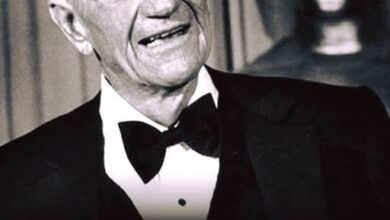
The news landed with stunning force. Lindsey Graham’s sudden death following a brief, unexpected illness sent shockwaves through Washington, leaving colleagues, allies, and longtime political rivals struggling to absorb the loss. At 71, the South Carolina senator remained deeply engaged in public life, far from slowing down. He was still leading the Senate Budget Committee, campaigning for a fifth term, and traveling abroad to advocate for American interests, including a recent visit to Kyiv where he reaffirmed his support for Ukraine during one of the most turbulent periods in its history. Few imagined that a career defined by relentless activity would come to such an abrupt end.
For decades, Graham occupied a unique place in American politics. Admired by some, criticized by others, and rarely ignored, he became one of the Republican Party’s most recognizable figures on national security and foreign policy. Whether debating military aid, sanctions, judicial appointments, or America’s role on the global stage, he consistently placed himself at the center of consequential discussions. His willingness to take firm positions made him both a trusted ally and a frequent lightning rod, but it also cemented his reputation as one of the Senate’s most influential voices.
The reaction to his passing reflected the extraordinary reach of that influence.
Tributes poured in from political leaders whose differences often extended across continents and ideologies. Former President Donald Trump remembered Graham as a loyal friend and steadfast supporter. Ukrainian President Volodymyr Zelenskyy honored his unwavering commitment to Ukraine’s defense, recalling the senator’s repeated visits and outspoken advocacy during the war. South Carolina Governor Henry McMaster praised Graham’s decades of service to his home state, while Israeli Prime Minister Benjamin Netanyahu recognized his longstanding support for Israel and his consistent focus on international security.
Although each tribute highlighted a different aspect of his career, they shared a common theme: Graham had become a figure whose impact reached well beyond the borders of South Carolina.
As the initial shock began to fade, attention inevitably turned toward the practical consequences of his absence.
Under South Carolina law, the responsibility for filling the vacant Senate seat now falls to the governor, who must appoint an interim successor to serve until voters can choose a permanent replacement in the next scheduled election cycle. Whoever accepts the appointment will immediately inherit one of the state’s highest-profile political positions, along with the immense challenge of following a senator whose influence extended far beyond his official title.
The appointment is only the beginning.
Republican leaders must also prepare for a highly competitive primary to select a long-term nominee. Graham spent years building relationships throughout the state and establishing himself as one of its most recognizable political figures. Replacing that experience, institutional knowledge, and national profile will not be a simple task. Ambitious candidates may quickly emerge, but none will step into an environment free of comparison. Every policy position, campaign speech, and legislative decision will inevitably be measured against the standard Graham spent decades creating.
Meanwhile, the effects extend well beyond South Carolina.
On Capitol Hill, lawmakers are adjusting to the sudden absence of one of the Senate’s most familiar voices on defense, military affairs, and foreign policy. Graham frequently shaped debates surrounding NATO, military spending, sanctions, and America’s response to global conflicts. At a time when wars, international tensions, and evolving security threats continue to dominate congressional agendas, losing such an experienced participant leaves a noticeable gap in ongoing policy discussions.
His colleagues now face the difficult task of moving forward without one of the chamber’s most outspoken advocates on issues he considered central to American leadership abroad.
For friends and longtime associates, however, politics has become secondary to personal loss.
Many remember not only the senator seen on television or standing behind a podium, but also the man behind the public image—the colleague known for his persistence, his sharp wit, his loyalty to close friends, and his willingness to engage in difficult conversations even with political opponents. Those personal memories now carry far greater significance than any legislative victory or campaign milestone.
His career was marked by complexity. He evolved politically over the years, forged unexpected alliances, and often challenged expectations, making him one of the more unpredictable figures in modern American politics. Yet even critics acknowledged that he remained deeply committed to public service and unafraid to take visible positions on controversial issues.
Now, those who worked alongside him are left reflecting on a legacy that will continue to influence the institutions and debates he helped shape.
As Washington looks ahead, the immediate questions concern appointments, elections, committee leadership, and legislative priorities. South Carolina will eventually elect another senator. Congressional committees will continue their work. New leaders will emerge, and political battles will move forward.
But some vacancies cannot be measured simply by who occupies an office next.
For Graham’s party, his colleagues, and the state he represented for so many years, the greater challenge lies in replacing the experience, relationships, and influence accumulated over decades of public life. The conversation has already shifted beyond the circumstances of his passing. Instead, attention is turning toward the future—and toward a question that may prove far more difficult to answer: who, if anyone, can truly fill the space left behind by one of the Republican Party’s most enduring and consequential political figures?