Noticed this tower of mud balls in the middle of my lawn this morning. It’s about 4 inches high with a hole in the center. What made this?

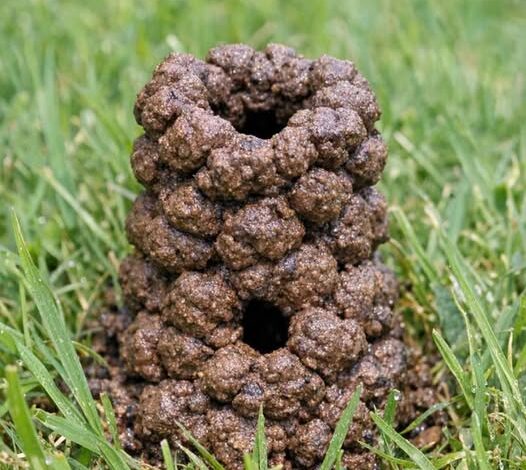
At first glance, they look like something out of a science fiction movie. Small towers of damp mud suddenly appear across the lawn, rising a few inches above the grass as though tiny builders had been working overnight. Many homeowners assume they’re made by insects, worms, or even snakes. Others worry they signal a serious problem lurking beneath the surface.
In reality, these unusual mud chimneys are the handiwork of one of nature’s most fascinating underground engineers: the terrestrial crayfish.
Unlike the crayfish most people associate with streams, ponds, or rivers, terrestrial crayfish spend much of their lives hidden beneath the ground. They are remarkably secretive creatures, emerging primarily at night while remaining almost invisible during the day. Long before most people wake up, these hardworking animals have already been busy excavating tunnels, carrying tiny pellets of mud to the surface one trip at a time and carefully stacking them into the chimney-like structures that catch our attention.
Those curious towers are far more than random piles of dirt.
Each one marks the entrance to a carefully constructed burrow that may extend several feet into the soil. Deep underground, the crayfish creates a cool, humid chamber where it can remain protected from predators, harsh weather, and drying conditions. The chimney itself serves an important purpose as well. It helps stabilize the entrance and improves airflow into the tunnel, allowing the burrow to maintain the moist environment these animals need to survive.
For the crayfish, it’s not simply a hole in the ground.
It’s a home.
Within these underground shelters, crayfish rest during the day, molt as they grow, and, in many species, care for their young. The burrow provides safety during periods of drought and temperature extremes while keeping the delicate gills moist enough for the animal to breathe. Every carefully placed ball of mud represents another load carried from deep below, evidence of hours of patient construction hidden beneath the surface.
Their choice of location is no accident.
If crayfish have settled in your yard, they are responding to conditions that suit their survival. Moist, compact soil, reliable groundwater, and plenty of decaying organic material create an ideal habitat. Lawns located near wetlands, streams, drainage areas, or places where the ground stays damp after rain are especially attractive. To the crayfish, your backyard isn’t simply grass—it’s a landscape filled with everything needed to build a secure underground refuge.
Although those chimneys may look unusual, they are rarely a sign that something is wrong.
In fact, a modest number of crayfish burrows often indicates that the soil is healthy and biologically active. These animals contribute quietly to the environment in ways many people never realize. As they dig, they loosen compacted earth, creating natural pathways that allow water to penetrate deeper into the ground. Their tunnels improve soil aeration, helping oxygen reach plant roots while reducing surface runoff during heavy rainfall.
The benefits don’t end there.
By constantly moving soil from underground to the surface, crayfish help recycle nutrients and contribute to the slow, ongoing process of maintaining healthy ecosystems. Their burrows also provide shelter for other small organisms, while the crayfish themselves become part of the food web, serving as prey for birds, mammals, reptiles, and other wildlife.
In many ways, they function as tiny environmental engineers, working unnoticed beneath our feet.
Of course, there are situations where their activity can become inconvenient.
If the number of burrows increases dramatically, the chimneys may create uneven patches that become tripping hazards or make mowing more difficult. Excessive burrowing in certain areas can also affect landscaping or recreational spaces, particularly where the soil remains saturated for long periods.
Fortunately, there are practical ways to manage the problem without causing unnecessary harm.
For homeowners bothered by individual chimneys, gently flattening the mud towers is usually enough to restore the lawn’s appearance. Improving drainage in persistently wet areas can make the habitat less attractive over time, encouraging crayfish to relocate naturally. Addressing standing water and reducing excessive soil moisture often provides a long-term solution while preserving the surrounding environment.
In situations where burrowing becomes extensive or creates significant property concerns, consulting a licensed pest or wildlife management professional may be appropriate. They can recommend strategies suited to the specific conditions without unnecessarily disrupting local ecosystems.
For most people, however, the best response may simply be appreciation rather than alarm.
Those small mud chimneys are reminders that your lawn is part of a much larger living world. Beneath the grass exists an entire community of organisms quietly shaping the landscape in ways that benefit plants, wildlife, and the health of the soil itself. While the crayfish may never announce their presence with anything more than a few carefully stacked towers of mud, their work helps sustain the natural balance that often goes unnoticed.
The next time you spot one of these curious structures rising from your yard, pause before knocking it down. Beneath that modest chimney lies a remarkable underground home built by an animal that has spent the night transforming the earth one handful of mud at a time. Sometimes the healthiest landscapes aren’t the ones that appear perfectly untouched—they’re the ones alive with quiet workers whose greatest accomplishments happen where few people ever think to look.