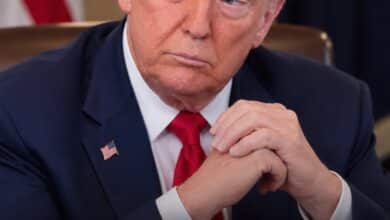
A single photograph rarely causes a diplomatic crisis.
But sometimes a photograph becomes the perfect symbol for tensions that have been building for months, even years beneath the surface.
That appears to be exactly what happened between Washington and Rome.
What began as a dispute over one image from the G7 summit has evolved into something far more revealing: a public display of distrust, wounded pride, and growing frustration between two governments that are supposed to be close allies.
At the center of the controversy stands Italian Prime Minister Giorgia Meloni.
When reports and commentary surrounding the photograph suggested that Italy had been placed in a position of weakness or dependence, Meloni responded with unusual force.
“Italy and I never beg.”
The statement was short.
Sharp.
And unmistakably personal.
To many observers, it sounded like far more than a rebuttal to an awkward photograph. It sounded like a defense of national dignity itself.
Because for Meloni, the issue was never really about the image.
It was about what the image seemed to imply.
No leader wants to appear subordinate on the world stage.
No nation wants to be portrayed as seeking approval from a stronger partner.
And in Italy, where questions of sovereignty, national pride, and political independence remain powerful themes, the suggestion that Rome was pleading with Washington struck a particularly sensitive nerve.
The reaction was swift because the frustration had not started with the photograph.
The photograph merely exposed it.
For months, tensions had reportedly been simmering beneath the public smiles and diplomatic handshakes. Differences over foreign policy, military strategy, and international priorities had already begun straining the relationship.
The dispute surrounding Iran became one of the clearest examples.
Italy’s reluctance to support aggressive military action revealed a significant divide between Rome and Washington. What might once have remained a private disagreement instead became another public reminder that the two governments were no longer moving in lockstep.
Strategic differences quickly became personal.
And personal disagreements often become political.
The controversy surrounding a key military facility in Sicily only deepened those divisions. What appeared on paper to be a security issue soon became entangled with broader questions of sovereignty and respect.
Who makes the decisions?
Who sets the agenda?
Who follows, and who leads?
Those questions lingered beneath the diplomatic language.
Then came additional disputes.
Arguments that might have seemed unrelated on their own began forming a larger pattern.
Political disagreements.
Military disagreements.
Symbolic disagreements.
Even debates involving moral authority and religious influence became woven into the growing narrative of mistrust.
Each incident added another layer.
Each disagreement chipped away at confidence.
Each public exchange made compromise more difficult.
By the time the photograph emerged, both sides appeared primed for confrontation.
That is why the response from Rome was so significant.
When Italian officials escalated their criticism and high-level diplomatic plans were disrupted, the dispute moved beyond media commentary and entered the realm of international relations.
It was no longer a question of public perception.
It had become a question of respect.
For Meloni, backing away too quickly carried political risks.
She has built much of her public image around strength, independence, and defending Italian interests. Appearing passive in the face of perceived humiliation could damage that image at home.
National leaders often find themselves balancing diplomacy abroad with political realities at home.
Meloni was no exception.
At the same time, the American side faced its own pressures.
Strong political brands are often built on confidence and certainty.
Public concessions can be difficult for leaders whose appeal depends heavily on projecting strength.
As a result, both sides appeared trapped by their own political incentives.
The more public the disagreement became, the harder it became for either side to retreat gracefully.
That dynamic transformed a relatively small controversy into something much larger.
Because the photograph was never the true source of the conflict.
It was merely the symbol.
The image condensed months of frustration into a single visual moment that people could debate, share, analyze, and interpret.
Supporters saw one story.
Critics saw another.
Commentators filled television panels discussing what the photograph revealed about power, influence, and alliance politics.
Yet beneath those debates lay a more important question.
Can alliances remain strong when trust begins to weaken?
History suggests that alliances are rarely threatened by one disagreement alone.
They are weakened gradually.
A dispute ignored.
A misunderstanding unresolved.
A perceived insult unanswered.
A strategic disagreement allowed to linger.
Over time, these moments accumulate.
The foundation remains standing, but small cracks begin to appear.
What makes the current situation particularly interesting is that the leaders involved are not natural ideological opposites.
In many ways, they share political instincts.
Both have emphasized nationalism.
Both have appealed to voters frustrated with traditional political establishments.
Both have built reputations around projecting strength and independence.
Yet shared ideology does not automatically create strong alliances.
Sometimes leaders who appear similar clash precisely because neither wants to accept a subordinate role.
The conflict becomes less about policy and more about hierarchy.
About influence.
About who leads and who follows.
That may be the deeper story hidden beneath the headlines.
Not a disagreement over one photograph.
Not even a disagreement over one policy.
But a broader struggle over status, respect, and the balance of power within an alliance.
The challenge for both governments is that they remain deeply connected.
The United States and Italy share military partnerships, economic ties, intelligence cooperation, and longstanding diplomatic relationships.
Neither side benefits from prolonged hostility.
Neither side can easily afford a complete breakdown in relations.
That reality creates a strange paradox.
They need each other.
Yet both appear increasingly frustrated with one another.
Such relationships can endure.
History is filled with examples of allies arguing fiercely while continuing to cooperate where necessary.
But endurance requires trust.
And trust becomes difficult to maintain when every disagreement becomes public theater.
The greatest danger may not be any single dispute.
It may be the accumulation of resentment.
The gradual transformation of partnership into suspicion.
The slow replacement of confidence with calculation.
If that process continues, even small disagreements can trigger outsized reactions because they tap into frustrations that already exist.
That is why the photograph matters.
Not because of what it showed.
But because of what people believed it represented.
A symbol of wounded pride.
A symbol of competing ambitions.
A symbol of an alliance being tested by politics, personality, and perception.
Whether the relationship ultimately recovers will depend on what happens after the headlines fade.
Photographs eventually disappear from the news cycle.
Diplomatic relationships remain.
The real question is whether Washington and Rome can rebuild the trust that allows allies to disagree without treating every disagreement as a challenge to their dignity.
Because in international politics, photographs rarely create crises.
They simply reveal the ones that were already there.