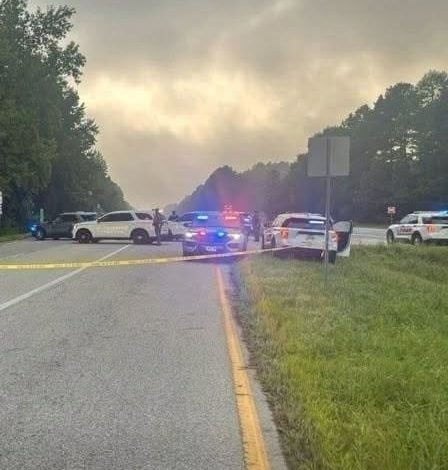
The moment police tape goes up and a neighborhood is suddenly sealed off, everyday life changes in an instant.
A familiar street becomes inaccessible. Traffic is redirected without explanation. Officers ask residents to remain indoors or avoid certain areas. Questions spread quickly through the community, often faster than answers.
Am I in danger?
What happened?
When will this be over?
In situations like these, the absence of immediate information can be frustrating. Yet what may feel like silence is often a necessary part of managing an unfolding emergency. Law enforcement and emergency responders frequently withhold details during active incidents—not to create confusion, but to protect public safety, safeguard investigations, and avoid releasing information before it has been confirmed.
Every decision made behind the barricades serves a purpose.
Closing roads limits unnecessary traffic and allows emergency vehicles to move freely. Restricting access helps keep bystanders out of potentially dangerous areas and preserves evidence that investigators may need later. Asking residents to shelter in place or avoid certain locations gives responders the space to assess evolving risks without additional people entering harm’s way.
These measures can be inconvenient.
But they are designed with one priority above all else:
Protecting lives.
Behind the scenes, police officers, firefighters, paramedics, and other emergency personnel are often working under extraordinary pressure. They must make rapid decisions based on incomplete information, coordinate with multiple agencies, communicate with one another, and continually reassess changing conditions.
At the same time, they know their actions are being watched closely by the public.
Every choice carries consequences.
Every minute matters.
Outside the restricted area, the community also plays an important role.
One of the most valuable ways to help during an emergency is by following official instructions, even when the reasons are not immediately clear. Avoiding closed areas, respecting barricades, and allowing emergency crews to work without interference can make operations safer and more efficient for everyone involved.
Information matters just as much.
During fast-moving incidents, rumors often spread rapidly through social media, neighborhood groups, and word of mouth. Unverified claims can create unnecessary fear, overwhelm emergency phone lines, and distract attention from reliable updates.
Whenever possible, rely on information from official sources, such as local law enforcement, emergency management agencies, or other authorized public officials. These updates may not answer every question immediately, but they are more likely to be accurate as the situation develops.
Patience can be difficult during moments of uncertainty.
Curiosity is natural.
Wanting answers is human.
But emergencies are rarely resolved more quickly by speculation. They are resolved through careful coordination, disciplined decision-making, and cooperation between responders and the communities they serve.
Eventually, the barricades come down.
Roads reopen.
Families return to their routines.
The neighborhood begins to feel familiar again.
When that happens, what people often remember most is not only the emergency itself, but how everyone responded to it. Communities are strengthened when neighbors remain calm, support one another, and choose verified information over rumor, patience over panic, and cooperation over confrontation.
In moments of uncertainty, those choices become more than acts of caution.
They become acts of solidarity.
And sometimes, they are among the most important contributions ordinary people can make while extraordinary people work to bring an emergency safely to an end.