What happened inside the enclosure did not end when the cameras stopped rolling.
Within hours, the footage had spread across social media, television broadcasts, and news websites, igniting a debate that reached far beyond the gates of Australia Zoo. A few tense seconds became the basis for thousands of opinions, with viewers interpreting the same moment in dramatically different ways.
For some, the incident raised difficult questions about the balance between wildlife conservation and public spectacle.
Critics argued that close encounters with powerful wild animals can appear unnecessarily dangerous, particularly when they are filmed for television or shared widely online. They questioned whether such moments risk encouraging entertainment over education and wondered whether conservation efforts should rely on dramatic encounters that could be misunderstood by audiences unfamiliar with professional wildlife management.
To those observers, the footage represented more than a single close call.
It became part of a broader conversation about where the line should be drawn when educating the public about dangerous animals.
Others saw something entirely different.
Supporters pointed to the outcome itself.
When the animal’s behavior changed, Robert Irwin immediately recognized the increased risk and called for the team to back away. The keepers responded to established safety procedures, the interaction ended without injury, and everyone left the enclosure safely.
From that perspective, the video demonstrated why experienced wildlife professionals spend years learning animal behavior, emergency protocols, and risk management. They argued that the incident illustrated the importance of training rather than the absence of it.
For those who work with wildlife, unpredictable moments are not unusual.
Even the most experienced handlers cannot control wild animals in the way someone might control a domesticated pet. Instead, their expertise lies in recognizing behavioral changes, respecting an animal’s instincts, and making rapid decisions when circumstances shift unexpectedly.
Supporters also noted that the public rarely sees the countless routine interactions that occur safely every day.
Years of careful animal care, conservation work, veterinary treatment, breeding programs, and educational outreach often receive little attention compared with a few dramatic seconds captured on video. As a result, a single frightening moment can sometimes overshadow decades of dedicated work protecting vulnerable species.
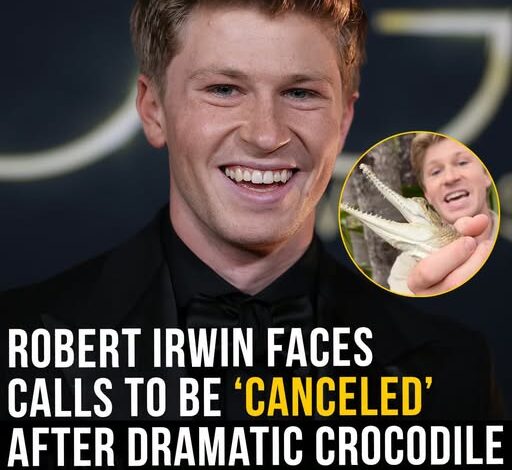
At the center of the discussion stands Robert Irwin himself.
At just 21 years old, he has grown up under extraordinary public scrutiny. From childhood, his life has been closely associated with the legacy of his father, Steve Irwin, whose passion for wildlife inspired millions around the world.
That legacy is both an honor and an enormous responsibility.
For many people, comparisons between father and son are inevitable.
Some see Robert continuing Steve Irwin’s lifelong mission of encouraging people to appreciate and protect wildlife. Others view his work through the lens of his father’s most controversial moments, questioning whether the same approach remains appropriate today.
Whatever one’s perspective, it is clear that Robert has inherited more than a famous surname.
He has inherited the challenge of carrying forward a conservation message in an era shaped by instant reactions, viral clips, and social media debates that often unfold before all the facts are known.
A brief video rarely captures the full context of a professional wildlife operation.
It cannot show the planning, safety briefings, emergency procedures, years of training, or experienced teams working behind the scenes. Nor can it fully explain the educational goals that often accompany public demonstrations involving dangerous animals.
That does not mean questions about safety are unwarranted.
On the contrary, thoughtful discussion about how wildlife is presented to the public is an important part of modern conservation. Responsible organizations continually review their practices, evaluate risks, and seek ways to protect both people and animals while educating visitors.
In the end, the incident has become about more than a single encounter with a powerful creature.
It has sparked a broader conversation about conservation, public perception, and the challenges faced by those who dedicate their lives to working with wildlife.
For some, the footage remains a cautionary example of how quickly a dangerous situation can develop.
For others, it stands as evidence that preparation, experience, and sound judgment prevented that danger from becoming a tragedy.
What nearly everyone can agree on is this: wild animals deserve respect, not complacency. Their unpredictability is precisely what makes them both magnificent and deserving of careful protection.
As Robert Irwin continues his work, he does so under the weight of a legacy that few people could fully understand—a legacy built not only on adventure, but on a lifelong commitment to helping people value the natural world.
Whether viewed through the eyes of supporters or critics, that mission remains at the heart of the conversation, reminding us that conservation is rarely simple, and that the most meaningful discussions often begin with a willingness to look beyond a few unforgettable seconds.