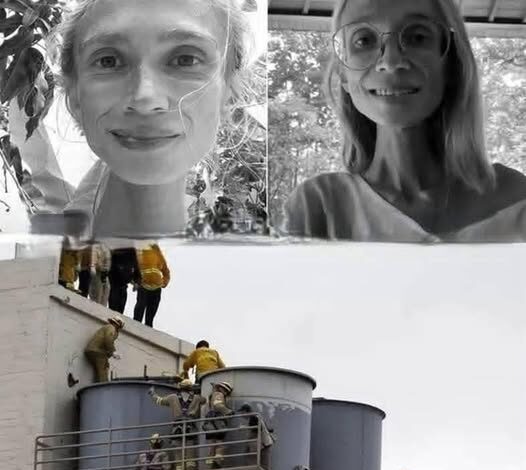
In her final weeks, the tragedy was not visible in the way people expect tragedy to look. There were no dramatic cries for help online, no public collapse, no obvious signal that her body was nearing catastrophic failure. On social media, she appeared disciplined, radiant, even inspiring — a woman documenting wellness routines, clean eating, detox plans, and carefully curated moments of “healing.” Followers praised her commitment. Strangers asked for advice. Friends watched her post glowing photos and assumed she had finally found control over her health and happiness.
But behind the filtered images and confident captions, her body was quietly beginning to shut down.
The contradiction is what haunts people now.
Because from the outside, she looked like a modern success story: someone rejecting processed food, prioritizing self-care, and taking ownership of her wellbeing in a world overflowing with stress and unhealthy habits. The language surrounding her choices sounded empowering. She spoke often about “resetting” her body, “cleansing” toxins, and finally listening to what her system supposedly needed after years of fatigue and emotional burnout.
At first, the changes seemed harmless enough.
She cut out sugar.
Then dairy.
Then gluten.
Then entire food groups one after another.
Soon every meal became governed by increasingly rigid rules. Certain oils were “poison.” Normal snacks became “inflammatory.” Ordinary hunger transformed into something suspicious that had to be controlled rather than trusted. Friends noticed she no longer enjoyed meals socially. Restaurants became stressful. Family gatherings turned tense because she arrived carrying supplements, powders, homemade drinks, and lists of ingredients she believed would damage her body.
Still, she insisted she had never felt “cleaner.”
That word appeared constantly in her conversations:
clean.
As though health had become not just physical, but moral.
And that is often how these spirals begin.
Not with vanity exactly.
Not even with obvious self-destruction.
But with the seductive promise of purity, certainty, and control inside a world where people increasingly feel frightened by their own bodies.
Online wellness culture amplified those fears constantly. Influencers spoke with absolute confidence about “toxins,” gut imbalances, hidden inflammation, parasites, hormonal disruption, and mysterious illnesses mainstream medicine supposedly ignored. Every symptom became evidence of deeper contamination:
fatigue,
bloating,
headaches,
brain fog,
anxiety.
The solution always sounded empowering:
detox harder,
restrict more,
cleanse deeper,
trust the process.
And when discomfort appeared, it was reframed not as danger, but progress.
That psychological trap proved devastating in her case.
As her health deteriorated, she reportedly interpreted worsening symptoms as proof the protocols were “working.” Weakness became detox. Dizziness became healing. Pain became evidence her body was “releasing toxins.” Even when fear surfaced privately, strangers online and self-proclaimed wellness coaches reassured her to continue pushing through.
“Your body is adjusting.”
“Healing isn’t linear.”
“The discomfort means it’s working.”
Those phrases echoed through message threads her family later discovered after her death.
By then, the damage had already become catastrophic.
Friends remember how thin she grew in the final months, though she insisted she was becoming “lighter” emotionally and spiritually as well as physically. Some noticed trembling in her hands. Others worried about how exhausted she looked walking short distances. But concern became difficult to express because wellness culture often frames skepticism itself as negativity.
Questioning dangerous behavior was interpreted as “fear-based thinking.”
Medical caution became “closed-mindedness.”
Professional expertise became “corrupt.”
That distrust isolated her further from people trying to help.
Eventually, even basic bodily signals lost meaning inside the logic she’d adopted. Hunger was weakness. Fatigue was detox. Fear was resistance. The body stopped being something to care for compassionately and became a battlefield requiring constant purification.
By the time she finally entered the hospital, her organs had endured more than they could sustain.
Doctors reportedly found severe malnutrition, dangerous imbalances, and systemic damage consistent with prolonged nutritional deprivation and physical stress. To medical professionals, the situation was horrifyingly familiar: a patient arriving too late because online misinformation had convinced them deterioration was actually healing.
For her family, the aftermath became another kind of nightmare entirely.
Grief mixed with confusion.
Confusion mixed with anger.
They searched through her browser history and private messages afterward trying desperately to understand how this happened. What they found stunned them: endless conversations with unqualified strangers speaking with absolute authority about metabolism, detoxification, fasting, supplements, and “natural healing.”
Some had no medical training whatsoever.
Others used vague credentials designed to sound legitimate online.
Yet their influence over her decisions had become enormous.
Experts discussing her case now often point toward orthorexia — an increasingly recognized eating disorder centered not around quantity of food necessarily, but obsession with purity, health optimization, and restrictive “clean eating.” Unlike more publicly understood eating disorders, orthorexia often hides behind social approval because the behaviors initially resemble discipline and wellness rather than illness.
That makes it especially dangerous.
Society frequently praises extreme self-control around food before recognizing when it mutates into fear and compulsion. Restriction becomes virtue. Obsession becomes “dedication.” The line between wellness and self-destruction blurs gradually enough that many people fail to notice until serious damage has already occurred.
And social media intensifies that risk dramatically.
Algorithms reward certainty, transformation stories, and emotional narratives far more effectively than nuance. Influencers offering rigid solutions often appear more convincing than cautious professionals acknowledging complexity. Simple answers spread faster than medically accurate uncertainty.
Drink this.
Avoid that.
Cleanse here.
Detox there.
The illusion of control becomes emotionally intoxicating.
Especially for people already struggling with anxiety, insecurity, trauma, or fear surrounding their health.
Because underneath many extreme wellness obsessions lies a profoundly human desire:
the hope that if someone follows the “right” rules perfectly enough, suffering can be prevented entirely.
But bodies are not machines responding predictably to internet trends.
And health is not purity.
Real health is often quieter and less glamorous than online culture portrays. It involves balance, evidence-based care, flexibility, nourishment, rest, emotional support, and relationships with professionals trained to recognize danger before catastrophe arrives.
Not punishment disguised as discipline.
What makes her story so heartbreaking is that she likely believed she was protecting herself until almost the very end. She wasn’t trying to die. She was trying desperately to feel safe inside her own body. The tragedy emerged because fear, misinformation, and false certainty slowly convinced her that harming herself was actually healing.
Now, in the silence after her death, her family lives with impossible questions:
When should someone have intervened more aggressively?
How many warning signs were missed because wellness culture normalized them?
How many others are quietly following similar paths right now while receiving praise instead of concern?
Her story lingers because it forces confrontation with uncomfortable truths about modern health culture itself.
That expertise matters.
That vulnerability can be manipulated.
That social media rewards performance more than truth.
And that people searching for healing are often most susceptible to dangerous certainty.
Most of all, her death leaves behind a plea disguised as a warning:
health is not something proven through suffering,
and real care must come from people trained to protect life —
not from strangers online selling control in the language of salvation.