What began as an ordinary lunch break quickly turned into a discovery she would not forget.
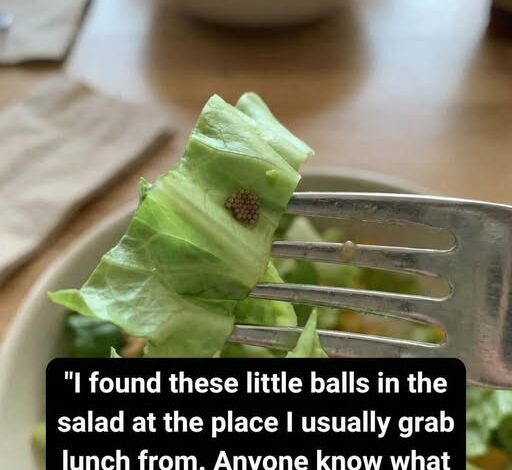
She was preparing a simple salad, adding greens to a bowl and sprinkling what she believed was quinoa over the top. At first, nothing seemed unusual. The tiny brown specks blended easily with the lettuce, looking like grains or seeds scattered across the leaves.
But something felt off.
The pieces seemed too neatly clustered, almost arranged in a pattern rather than randomly sprinkled. Instead of taking another bite, she paused and leaned closer. That moment of hesitation changed everything. What she had mistaken for a healthy topping was actually a cluster of tiny insect eggs attached to a lettuce leaf.
The discovery was unsettling, but food experts say incidents like this can happen with fresh produce, especially leafy greens grown outdoors. Vegetables come from natural environments where insects, soil, and other field residues are common. Even after harvesting, washing, and packaging, small traces from the growing process can sometimes remain.
Finding insect eggs on lettuce does not automatically mean the food is highly dangerous, especially if it has not been eaten. However, it does show that the produce was not cleaned thoroughly enough before serving or preparing. It is a reminder that fresh foods, even those that look ready to eat, should be handled carefully.
If something like this happens in a restaurant, the best response is to stop eating and calmly notify the staff. A responsible restaurant should take the concern seriously, remove the dish, offer a replacement or refund, and review its food preparation practices. These steps help protect not only the customer involved but also others who may be served from the same batch of ingredients.
If the situation is dismissed or handled poorly, diners may choose to contact local health authorities. Their role is to make sure food businesses follow proper safety and hygiene standards.
At home, prevention starts with careful preparation. Even produce labeled organic or pre-washed can still carry dirt, insects, or residue from the field. Leafy greens should be separated, rinsed thoroughly under running water, and inspected before being eaten. Taking a few extra minutes can make a meaningful difference.
Fresh produce is one of the healthiest parts of a meal, but it also comes directly from the natural world. Washing and checking it properly helps turn that connection into something safe, clean, and enjoyable. Sometimes, the smallest pause before taking a bite can be the most important one.