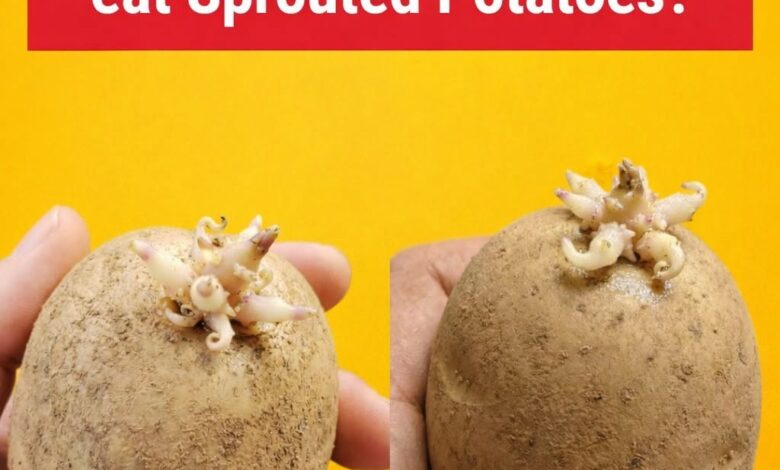
It can happen almost overnight—or at least it seems that way. You reach into the back of the pantry expecting to find an ordinary bag of potatoes, only to pull one out covered in pale, twisting shoots. Some sprouts are barely visible. Others have grown into long, strange tendrils that make the potato look more like a science experiment than something destined for dinner.
The immediate question is obvious: Can you still eat it, or should it go straight into the trash?
The answer depends on what the rest of the potato looks, feels, and smells like. Sprouting alone doesn’t necessarily mean a potato must be discarded, but it is a sign that the potato is changing—and that deserves a closer inspection before it reaches your plate.
Why Potatoes Suddenly Start Sprouting
A potato may look like an ordinary vegetable sitting quietly in your cupboard, but biologically, it is a living tuber capable of producing an entirely new plant.
Given enough time and the right conditions, it will try to do exactly that.
Warm temperatures, moisture, light, and prolonged storage can encourage potatoes to emerge from dormancy and begin producing shoots. That’s why the forgotten potatoes at the back of a cabinet can eventually develop those unmistakable white, pinkish, or purple sprouts.
The sprouts themselves aren’t the only consideration.
Potatoes naturally contain defensive compounds called glycoalkaloids, particularly solanine and chaconine. Concentrations can be higher in sprouts and green portions of the potato, and consuming excessive amounts of these compounds can cause illness.
That’s why a sprouting potato shouldn’t simply be cooked without first examining it.
Pay Particular Attention to Green Skin
One of the easiest warning signs to recognize is green coloring.
Potatoes can turn green after being exposed to light. The green pigment itself is chlorophyll and isn’t what makes the potato potentially harmful. However, greening can occur alongside increased concentrations of glycoalkaloids.
Think of green coloring as a warning signal rather than the toxin itself.
A tiny superficial green area is very different from a potato whose skin and underlying flesh have become extensively green.
When inspecting an older potato, check it under good lighting. Turn it over and look around the eyes, sprouts, and areas that may have been exposed to light.
The more extensive the greening and sprouting, the less worthwhile it becomes to try salvaging the potato.
When a Sprouted Potato May Still Be Usable
Imagine pulling out a potato with two or three tiny sprouts.
It’s still firm.
The skin looks normal.
There isn’t extensive green coloring.
It doesn’t smell strange.
In a situation like that, the potato may still be usable after careful preparation.
Remove the sprouts and their surrounding eyes, peel the potato, and cut away any green or damaged portions generously before cooking it.
The potato’s overall condition matters just as much as the sprouts.
Give it a gentle squeeze.
A fresh potato should feel reasonably firm and substantial. If it has retained that texture and only recently begun sprouting, that’s very different from discovering an old, heavily sprouted tuber that has become wrinkled and soft.
Know When to Throw It Away
Sometimes the inspection gives you a much simpler answer.
If the potato is heavily sprouted, extensively green, badly shriveled, rotten, moldy, or otherwise deteriorated, discarding it is the sensible choice.
An unusually bitter taste is another important warning sign. Don’t try to disguise bitterness with seasoning or continue eating a potato that tastes distinctly wrong.
Cooking also shouldn’t be treated as a magical reset button. Normal cooking does not reliably eliminate all glycoalkaloids from a badly affected potato.
When you’re standing over the cutting board trying to decide whether an extensively green, deteriorated potato is worth rescuing, remember what you’re actually saving: one potato.
When there is genuine doubt about its condition, throwing it away is a small price for avoiding an unnecessary food-safety risk.
Storage Can Prevent the Problem
The easiest sprouted potato to deal with is the one that never sprouts prematurely.
Potatoes generally keep best somewhere cool, dark, dry, and well ventilated.
Light encourages greening, while excessive warmth can encourage sprouting. Trapped moisture can also accelerate deterioration.
Instead of leaving potatoes sealed inside an airtight plastic bag, consider storing them in something that allows airflow, such as a paper bag, ventilated container, or suitable produce basket.
Keep them away from direct sunlight and heat sources.
It’s also helpful to check the potatoes periodically rather than forgetting about the entire bag for months. Remove any potato that begins rotting so deterioration doesn’t spread unnoticed through the rest.
Another common storage mistake is keeping potatoes directly beside onions. Although both may seem like natural pantry companions, separating them can help them maintain quality longer.
The Five-Second Potato Check
Before preparing an older or sprouted potato, stop and examine four things:
Sprouts: Are there only a few small ones, or has the potato developed extensive growth?
Color: Is the potato its normal color, or are there substantial green areas?
Texture: Does it still feel firm, or has it become soft, wrinkled, and shriveled?
Condition: Does it smell and look normal, without rot or mold?
A firm potato with minimal sprouting and no significant greening is very different from a soft, deeply green potato covered in long shoots.
That distinction is more useful than assuming every sprouted potato is either completely harmless or automatically poisonous.
And If It’s Too Sprouted to Eat?
There may still be something fascinating about that forgotten potato.
Those strange shoots are evidence that the tuber is attempting to become a plant. A suitable sprouted potato can sometimes be planted rather than eaten, provided local growing conditions and disease considerations make that appropriate.
Suddenly, the neglected object at the back of the pantry looks a little different.
What initially seemed like food going bad is also biology happening in real time.
So the next time you reach into a cupboard and discover potatoes covered in pale, curling sprouts, don’t panic—but don’t automatically toss them into the oven either.
Stop.
Look at the sprouts. Check for green coloring. Feel the potato. Examine its overall condition.
Sometimes a little careful trimming can save dinner.
Sometimes the trash or compost is the better destination.
And occasionally, that forgotten potato has made the decision for you.
It isn’t trying to become dinner anymore.
It’s trying to become another potato plant.