The ground stopped shaking.
The fear didn’t.
In the hours after the earthquake, families across parts of Southeast Asia stepped cautiously into streets and open spaces, looking back at buildings that had seemed perfectly ordinary only minutes earlier.
Suddenly, every wall looked suspicious.
Every crack mattered.
Every unexpected sound made people turn their heads.
In places such as Lashio, the first instinct for many residents was simple: get outside and stay there.
Families gathered in fields, courtyards, parking areas, and other open spaces while emergency workers began assessing what the shaking had left behind.
Parents kept children close.
Neighbors checked on older residents.
People called relatives again and again, hoping overloaded phone networks would eventually connect.
And beneath all of it was the same question:
Is it safe to go back inside?
That can be one of the most difficult questions after an earthquake.
A building may still be standing while hiding serious damage.
Columns can crack.
Masonry can loosen.
Staircases can shift.
Gas or electrical systems may be compromised.
Aftershocks can then test structures that have already been weakened.
So while the earthquake itself may last only seconds, its consequences can stretch through the night and far beyond.
Emergency shelters became temporary homes for people unwilling—or unable—to return indoors.
There was little luxury.
Thin mattresses.
Bottled water.
Basic food.
Crowded sleeping areas.
But after experiencing the terrifying sensation of the ground moving beneath them, even an uncomfortable place in an open or inspected area could offer something valuable:
A feeling of relative safety.
Rescue teams faced a different kind of uncertainty.
Their work wasn’t limited to dramatic scenes of collapsed buildings.
They also had to move through neighborhoods checking homes, schools, shops, roads, and public buildings for less obvious damage.
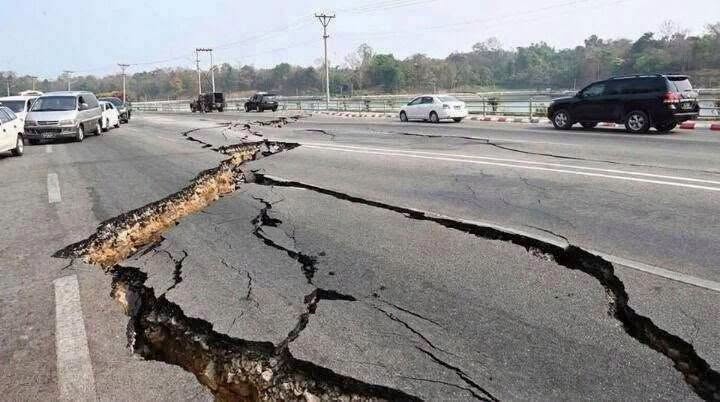
A crack isn’t always merely cosmetic.
A tilted wall isn’t something to dismiss.
A damaged building can remain dangerous long after photographs of the initial disaster disappear from the news.
Across affected areas of the wider region, the tremors also became an unexpected test of earthquake preparedness.
Some communities had practiced evacuations.
Some buildings had emergency procedures.
Some residents immediately knew to move away from windows and other falling hazards and, once the shaking ended and it was safe to do so, evacuate damaged structures.
Those preparations mattered.
Disaster drills can feel repetitive when nothing is happening.
Emergency supplies can sit untouched for years.
Building regulations can seem like expensive bureaucracy.
Then the ground moves.
Suddenly, preparation stops being theoretical.
But earthquakes also expose weaknesses with extraordinary speed.
Mobile networks can become overwhelmed as thousands of people try to contact family simultaneously.
Roads may become congested.
Hospitals can receive sudden surges of patients.
Rumors spread online before authorities have time to verify damage.
People desperate for information may share old photographs or unconfirmed warnings, adding confusion to an already frightening situation.
And then there are aftershocks.
After surviving the first earthquake, every vibration can feel like another disaster beginning.
A truck passing nearby.
A door slamming.
A bed shifting slightly.
For people who have experienced a powerful quake, the nervous system doesn’t immediately accept that the danger has passed.
Sleep becomes difficult.
Some people remain outdoors even when authorities believe their buildings are safe.
Others keep shoes, phones, medication, flashlights, and documents beside them in case they need to leave quickly.
That reaction isn’t surprising.
An earthquake attacks one of the assumptions people rarely think about:
The ground is supposed to stay still.
When that certainty disappears, even briefly, the world can feel different afterward.
Yet earthquakes reveal something else as well.
They reveal how quickly communities organize themselves.
A neighbor brings water.
Someone checks an elderly person’s apartment.
A shop owner opens a supply of blankets.
Parents watch several families’ children while others search for relatives.
Emergency workers enter places everyone else is trying to leave.
Doctors, engineers, firefighters, volunteers, utility crews, and ordinary residents become part of the same improvised response.
Those actions rarely receive the attention given to dramatic rescue footage.
But resilience is often built from small decisions.
Who checked the next house?
Who knew where the emergency shutoff was?
Who brought medication?
Who remembered the flashlight?
Who noticed the damaged column and stopped others from entering?
The most important lessons, however, begin before an earthquake ever happens.
Resilience isn’t something a city can manufacture in the hour after disaster strikes.
It is constructed slowly.
It exists in buildings designed and maintained to withstand shaking.
It exists in emergency plans that people actually understand.
It exists in schools that practice what to do.
It exists in hospitals with contingency plans.
It exists in communication systems capable of functioning under enormous pressure.
And it exists in households that know where they will meet if family members become separated.
No system can eliminate earthquake risk.
Even well-prepared communities can suffer devastating losses.
But preparation can influence what happens in the seconds, minutes, and hours afterward.
That’s why earthquakes should never be remembered only by magnitude.
A number can describe the energy released underground.
It cannot describe a mother waiting for her son’s phone call to connect.
It cannot measure a child trying to sleep in an emergency shelter.
It cannot capture the relief of discovering that a neighbor is safe.
And it cannot calculate the courage required of rescuers entering damaged streets while aftershocks remain possible.
Eventually, roads reopen.
Phone networks stabilize.
Engineers inspect buildings.
Families return home where it is safe to do so.
The mattresses disappear from temporary shelters.
The immediate emergency fades.
But the most useful question comes afterward:
What will be different before the next earthquake?
Because another tremor cannot be prevented by courage.
Resilience alone cannot reinforce a weak building.
Hope cannot replace emergency planning.
The safest communities are not necessarily those that believe disaster won’t happen.
They’re the ones that understand it might—and prepare while the ground is still quiet.
Long after the shaking ends, that may be the earthquake’s most important warning.
Safety isn’t built during the disaster.
It’s built before it.