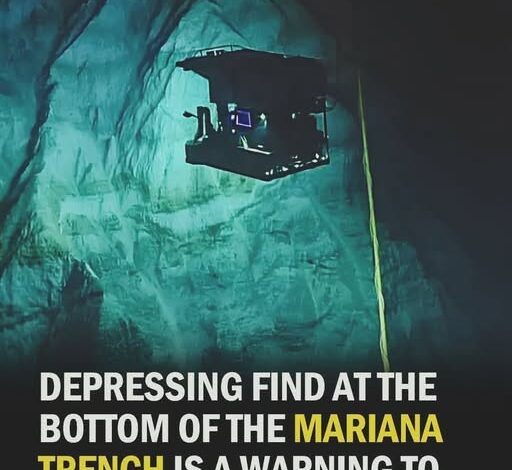
The Mariana Trench, the deepest known place on Earth, was once thought to be beyond the reach of human influence. Hidden in the western Pacific Ocean, this immense underwater canyon descends nearly 11 kilometers beneath the surface, where sunlight never penetrates and pressures are so extreme that few organisms can survive. For decades, scientists assumed that such a remote and hostile environment remained untouched by the everyday consequences of human activity.
That assumption has proven wrong.
As deep-sea exploration technology has improved, researchers have discovered something both surprising and troubling: human-made waste has reached even the deepest parts of the ocean. Plastic debris, discarded fishing equipment, packaging materials, and other forms of pollution have been documented on the seafloor of regions once considered among the most pristine places on the planet.
The discovery has become a powerful reminder that no corner of Earth exists in complete isolation from human influence.
Using advanced submersibles and remotely operated vehicles, oceanographers have explored the trench and found evidence of pollution scattered across the deep seabed. These findings are not isolated incidents but part of a broader pattern seen throughout the world’s oceans. Ocean currents transport debris across vast distances, carrying waste thousands of kilometers from its source before it eventually sinks into the deepest marine environments.
As a result, pollution generated in cities, towns, and coastal communities can ultimately reach locations that few humans will ever see.
Plastic remains one of the most persistent forms of marine pollution. Unlike natural materials that decompose relatively quickly, plastic breaks apart slowly over time, creating smaller fragments known as microplastics. These particles can remain in the environment for decades or even centuries. Scientists have detected them not only near the ocean surface but also in deep-sea sediments and within marine organisms living far below the waves.
Researchers continue to investigate the long-term consequences of this accumulation, particularly in deep-ocean ecosystems that remain poorly understood.
The presence of waste in the Mariana Trench highlights the global nature of the pollution problem. Much of the debris found in the ocean originates on land through littering, inadequate waste management systems, and runoff carried by rivers into the sea. Once plastic enters the marine environment, it becomes part of a complex network of currents, winds, and sinking processes that can transport it almost anywhere on the planet.
What begins as a discarded item in one region may eventually affect ecosystems on the opposite side of the world.
Deep-sea environments may appear barren, but they support diverse communities of highly specialized organisms adapted to extreme conditions. Many of these species rely on limited food resources and delicate ecological balances. The introduction of plastic waste can disrupt these systems in multiple ways, from altering habitats to introducing harmful chemicals.
Some marine animals mistake plastic particles for food, ingesting materials that provide no nutrition and may cause physical or chemical harm. Because many deep-sea species grow slowly and reproduce infrequently, environmental disturbances can have long-lasting effects.
Another major concern involves abandoned fishing equipment, often referred to as “ghost gear.” Lost nets, lines, and traps can continue capturing and injuring marine life long after they have been discarded. In the deep ocean, where cold temperatures and limited sunlight slow degradation, such equipment can remain intact for years, posing an ongoing threat to wildlife.
These discoveries have intensified calls from scientists and environmental organizations to address marine pollution at its source. Reducing plastic waste, improving recycling systems, developing sustainable alternatives, and strengthening waste-management infrastructure are widely viewed as essential steps toward limiting future contamination.
Because oceans connect every continent, meaningful progress also requires international cooperation. Pollution does not respect national borders, and actions taken in one part of the world can have consequences thousands of kilometers away.
Beyond its scientific significance, the discovery of human-made debris in the Mariana Trench carries a powerful symbolic message. It illustrates the deep interconnectedness between human society and the natural world. Decisions made in homes, businesses, industries, and governments can ultimately affect environments that seem impossibly distant from everyday life.
The findings have also reinforced the importance of continued ocean exploration. Much of the deep sea remains unexplored, and scientists believe there is still much to learn about how human activities influence these hidden ecosystems. Advances in underwater technology are providing unprecedented access to regions once considered unreachable, helping researchers better understand both the health of the oceans and the broader environmental challenges facing the planet.
Ultimately, the presence of plastic and other debris in the deepest ocean trench is more than a scientific curiosity. It is a warning about the far-reaching consequences of modern consumption and waste. The Mariana Trench stands as evidence that human influence extends farther than once imagined, reaching even the most remote environments on Earth.
The lesson is difficult but clear: no place on the planet is truly untouched. Protecting the oceans will require long-term commitment, responsible resource use, effective environmental policies, and a collective willingness to rethink how waste is produced and managed.
The deepest point in the ocean now reflects a reality that affects us all. What happens on the surface does not stay there. The health of the oceans, including the darkest depths of the Mariana Trench, is ultimately tied to the choices humanity makes every day.