The homeless old man went to the police station and asked them to take a shower, but the police officers completely transformed him!

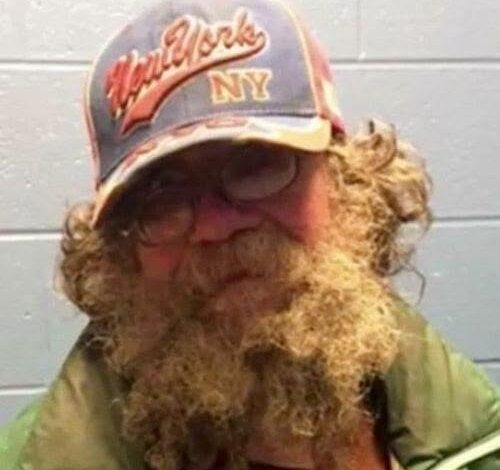
When Bobby walked into the police station, he wasn’t carrying evidence, filing a complaint, or surrendering for a crime. He had something much simpler—and, in many ways, far more heartbreaking—to ask for. The elderly homeless man quietly told the officers he only wanted a hot shower and a haircut.
It was a request born not of entitlement, but of desperation.
Years of hardship had left their mark. His clothes were worn, his hair was overgrown, and the exhaustion on his face spoke of nights spent outdoors and days spent trying to survive. Many people might have dismissed him or hurried him back outside. After all, a police station isn’t typically the place someone goes looking for a fresh start.
But Officer Aaron Page saw more than an unkempt appearance.
He saw a human being.
Rather than treating Bobby as a nuisance or sending him away, the officer paused long enough to listen. Sometimes compassion begins with nothing more than giving someone your full attention, and that simple moment changed the course of Bobby’s day.
Instead of directing him back to the streets, Officer Page welcomed him inside—not as a suspect, but as a guest.
His quiet act of kindness quickly inspired others.
Without being asked, fellow officers began finding ways to help. Someone located a pair of hair clippers. Another officer gathered clean clothes. Others made sure Bobby could take the hot shower he had been longing for.
The police station slowly transformed.
A bathroom became an improvised barbershop.
A locker room became a dressing room.
What started as one officer’s decision soon became a team effort, with everyone contributing whatever they could.
There were no television cameras.
No elaborate ceremony.
No expectation of praise.
Just a handful of people recognizing that sometimes serving the community means meeting someone’s most basic human needs.
As Bobby washed away the dirt and fatigue that had accumulated over countless difficult days, the transformation began to unfold. The warm water offered more than cleanliness—it offered relief. For a little while, the weight of life on the streets seemed to lift from his shoulders.
Then came the haircut.
Carefully, the officers trimmed away months of tangled hair and an overgrown beard. With every pass of the clippers, the man hidden beneath years of neglect slowly emerged.
The difference was remarkable.
His face became visible again.
His eyes seemed brighter.
His expression softened.
When he changed into fresh, clean clothes, the transformation felt almost unbelievable.
Finally, someone handed Bobby a mirror.
For a few quiet moments, he simply stared.
The reflection looking back at him wasn’t the tired man who had walked through the station doors earlier that day. It was someone who looked healthier, more confident, and somehow years younger.
Then something even more meaningful happened.
His posture changed.
His shoulders straightened.
His head lifted.
A gentle smile appeared across his face.
It wasn’t just that he looked different.
He felt different.
The haircut, the shower, and the clean clothes hadn’t solved the enormous challenges of homelessness. They hadn’t guaranteed housing, employment, or an easy future. But they had restored something that poverty and hardship so often take away long before material possessions are lost.
They restored dignity.
For people experiencing homelessness, daily life often involves being ignored, judged, or treated as though they are invisible. Small acts of respect—a conversation, a kind word, or simple assistance—can remind someone that they still matter, that they are still worthy of care and compassion.
That is exactly what happened inside that police station.
Officer Aaron Page didn’t perform a miracle.
He performed an act of humanity.
His fellow officers followed his example, proving that kindness can spread just as quickly as indifference when someone is willing to take the first step.
Their actions also challenged common assumptions about policing. While officers are often called upon to respond to emergencies, enforce laws, and protect public safety, they also encounter people facing addiction, mental illness, poverty, and homelessness. In those moments, empathy can become one of the most powerful tools they possess.
The image of Bobby smiling at his reflection resonated with countless people because it represented something larger than a makeover.
It showed the profound impact of being seen.
Being heard.
Being treated with respect.
Those are gifts that cost very little, yet they can leave a lasting impression on someone whose life has been defined by struggle.
In a busy city where countless people walked past Bobby without stopping, one officer chose to pause.
Others chose to help.
Together, they turned an ordinary day at a police station into a reminder that compassion doesn’t always arrive through grand gestures or dramatic rescues. Sometimes it begins with offering a shower to someone who has nowhere to wash, a haircut to someone who has been forgotten, and clean clothes to someone who desperately needs a fresh start.
Bobby left the station looking like a different man, but the greatest transformation couldn’t be measured by a mirror.
It was found in the confidence that returned to his smile, the dignity reflected in his posture, and the simple truth that, for one unforgettable day, a group of strangers reminded him that he was still seen, still valued, and still deserving of kindness.