Long before electric irons became a household staple, one ingenious invention brought the power of fire directly into the hands of laundresses and homemakers.
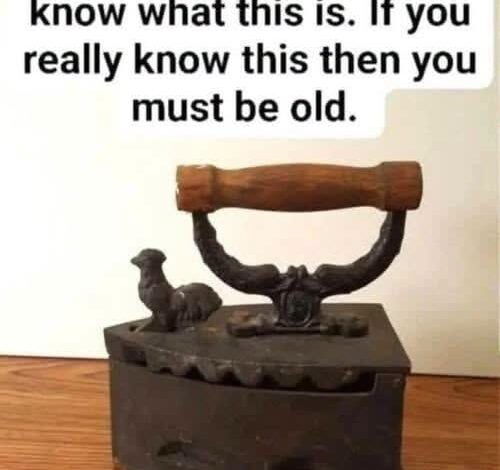
The charcoal box iron was both simple and remarkably effective. Cast almost entirely from heavy iron, it featured a hollow chamber designed to hold glowing charcoal or hot embers. Instead of relying on heat transferred from a stove, the iron carried its own heat source, allowing it to stay warm for much longer and reducing the need for constant reheating.
Its design reflected centuries of practical refinement.
A sturdy hinged lid opened to reveal the compartment where charcoal was placed. Many examples included decorative latches—sometimes shaped like birds, roosters, or other ornamental figures—that secured the lid while adding a touch of craftsmanship to an otherwise utilitarian tool. Small vents along the sides admitted just enough air to keep the coals smoldering, transforming the iron into a miniature furnace.
One thoughtful feature stood out above all.
The handle was usually made of wood.
Because wood is a poor conductor of heat, it allowed users to grip the iron comfortably while the cast-iron body reached temperatures high enough to press heavy fabrics. It was an elegant solution to a very practical problem, long before heat-resistant plastics existed.
Using a charcoal iron demanded both patience and skill.
The charcoal first had to be lit separately until it glowed with steady heat. Once placed inside the iron, the lid was secured, and the user often gave the iron a gentle wave through the air to encourage airflow and keep the embers burning. Throughout the day, the coals required occasional attention, with fresh charcoal added or ashes removed as needed.
Compared with the older solid cast-iron “sad irons,” the charcoal box iron represented a significant improvement.
Traditional sad irons had no internal heat source. They needed to be heated directly on a stove, and once they cooled, the user had to interrupt their work to return them to the fire. Many households kept several irons heating at once, rotating between them as each lost its warmth.
The charcoal box iron changed that routine.
Because it generated its own heat, users could often press clothing for longer periods without repeatedly walking back and forth to the stove. For laundresses handling mountains of linens, shirts, tablecloths, and garments, this innovation saved both time and effort.
The work itself, however, remained demanding.
Laundry rooms were often hot, humid spaces filled with steam, smoke, and the smell of burning charcoal. Heavy irons required considerable strength to lift and maneuver, and maintaining an even temperature required experience. Too little heat left wrinkles behind; too much risked scorching delicate fabrics.
Even so, the charcoal box iron became an indispensable household tool in many parts of the world, particularly in regions where electricity was unavailable or unreliable. In some communities, versions of these irons remained in everyday use well into the twentieth century.
Today, they occupy museums, antique collections, and family heirlooms, admired for both their craftsmanship and their historical significance.
Looking at one now, it’s easy to overlook the ingenuity it represents.
It bridged two eras of technology.
Part traditional hearth.
Part portable appliance.
It captured fire, controlled it, and placed it in service of one of the most ordinary yet essential household tasks.
The charcoal box iron reminds us that innovation doesn’t always arrive with computers or electricity. Sometimes it begins with a cast-iron box, a handful of glowing embers, and the determination to make everyday work just a little easier. Long before the convenience of modern appliances, this remarkable tool quietly paved the way for the effortless press of today’s electric iron, proving that even the simplest inventions can transform daily life.