It sounds like one of those clever vacation tricks everyone wishes they had known sooner.
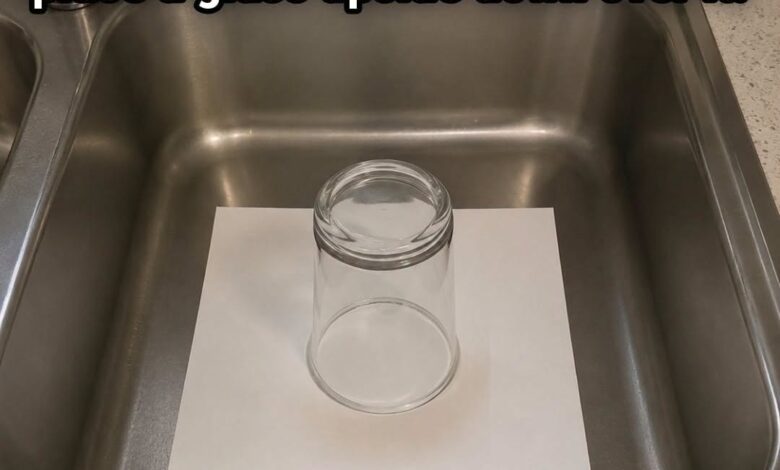
Before leaving home, place a sheet of paper over your sink drain, flip a drinking glass upside down on top of it, and supposedly you’ll come back to a fresh-smelling house free of sewer odors and unwanted bugs.
The idea has spread widely online because it looks simple, inexpensive, and surprisingly believable.
But does it actually work?
The answer is a little more complicated than the viral posts suggest.
The trick is based on a real plumbing principle, but the method itself is far less reliable than many people realize.
To understand why, it helps to know what is happening beneath your sink every single day.
Hidden below nearly every sink, bathtub, shower, and floor drain is a curved section of pipe called a P-trap. Most homeowners recognize the name, but fewer know why it exists.
Contrary to popular belief, its main purpose is not to catch dropped jewelry or collect hair.
Its job is to hold water.
That water forms a protective seal between your home’s plumbing and the larger sewer system connected to it. As long as the trap contains water, unpleasant sewer gases cannot easily travel back into your house. The same barrier also discourages insects and other small pests that sometimes move through sewer lines from entering through your drains.
It’s a remarkably simple design that quietly protects your home every day.
The problem begins when that water slowly disappears.
If a sink, shower, tub, or floor drain sits unused for a long enough period, the water inside the P-trap gradually evaporates. Once the trap dries out, the protective seal is gone.
At that point, foul odors may drift into the room, and in some cases insects can find an easier path indoors.
This is the real plumbing issue that inspired the viral travel hack.
The concern itself is completely legitimate.
Fortunately, most people never need to worry during a typical vacation.
A weekend getaway, a week-long trip, or even a two-week holiday usually isn’t enough time for a P-trap to dry out under normal conditions.
In many homes, the water seal lasts several weeks or even longer.
However, certain situations can speed up evaporation.
Homes in very hot or dry climates often lose water more quickly. Strong indoor airflow, constant ventilation, or air conditioning can gradually increase evaporation as well. Basement floor drains, guest bathrooms, laundry standpipes, and sinks that rarely get used are especially vulnerable because fresh water isn’t regularly replenished.
If you’re planning to be away for three weeks or longer—or you already have drains that sit unused most of the year—it makes sense to prepare them before you leave.
This is where the paper-and-glass trick enters the conversation.
The thinking behind it is straightforward.
If you cover the drain opening, you reduce airflow across the drain. Less airflow can slow evaporation while also creating some obstacle for odors or insects should the water seal eventually disappear.
On paper, the idea has merit.
The problem is the execution.
An upside-down drinking glass rarely creates an airtight seal against the surface of a sink. Unless the rim fits perfectly flat without gaps, air can still move underneath it.
The sheet of paper doesn’t improve matters much either.
Instead of creating a seal, it often absorbs moisture from the surrounding air, becomes damp, wrinkles, or tears. A slight bump against the sink can also shift the entire arrangement, leaving the drain exposed without anyone realizing it.
In other words, the viral setup often looks more effective than it actually is.
It may slow evaporation slightly under ideal conditions, but it shouldn’t be relied upon as your primary defense against odors or pests.
There are much better ways to prepare your plumbing before traveling.
The first—and most important—step is refreshing every P-trap in the house.
Before leaving, run water through every sink, bathtub, shower, utility sink, and laundry drain for about 10 to 20 seconds. Don’t forget basement floor drains if you have them, and flush every toilet once.
Doing this replenishes the water barrier that protects your home.
Next, seal the drain openings properly.
Most sinks already have built-in stoppers that can simply be closed.
If not, use a rubber drain plug or a sink stopper that fits snugly inside the opening. Silicone drain covers are another excellent option because they create a much better seal than an upside-down drinking glass and can be reused for future trips.
If nothing else is available, even plastic wrap secured tightly over the drain or painter’s tape can provide a temporary barrier that is more dependable than balancing glassware over the sink.
The goal is simple: reduce evaporation while blocking airflow into the drain.
For homeowners planning extended trips, experienced plumbers sometimes recommend one additional step.
After refilling the P-trap with water, pour roughly a tablespoon of mineral oil into the drain.
Because mineral oil floats on top of the water, it forms a thin layer that dramatically slows evaporation.
This is an old plumbing technique that many professionals still use for seasonal homes, vacation properties, and drains that remain unused for long periods.
It’s important, however, to use mineral oil, not cooking oils such as vegetable or olive oil. Cooking oils can become rancid over time and may contribute to buildup inside plumbing systems.
While preparing your drains, it’s also worth taking a few additional precautions before leaving town.
Empty trash cans to reduce lingering odors.
Clean the garbage disposal so food particles don’t sit inside while you’re away.
If you’re traveling during winter in a cold climate, make sure exposed pipes are properly insulated against freezing temperatures.
Some homeowners also choose to shut off the main water supply before leaving for an extended vacation. While not always necessary, doing so can provide extra peace of mind by reducing the risk of leaks or burst pipes while the house is empty.
In the end, the viral hack illustrates something common on social media.
Many popular home tips start with a genuine principle but simplify the solution until it loses much of its effectiveness.
The concern about P-traps drying out is absolutely real.
The upside-down glass simply isn’t the most dependable answer.
With a few minutes of preparation—running fresh water into every drain, sealing openings properly, and, for longer absences, adding a small amount of mineral oil—you can protect your plumbing far more effectively than any balancing act involving paper and a drinking glass.
Sometimes the simplest solutions really are the best.
They just happen to be the ones plumbers have quietly trusted for decades, long before viral travel hacks began making the rounds online.