THE STATE CALLED HER LICENSE PLATE INAPPROPRIATE AFTER 15 YEARS, BUT THIS MOM FOUGHT BACK AND WON

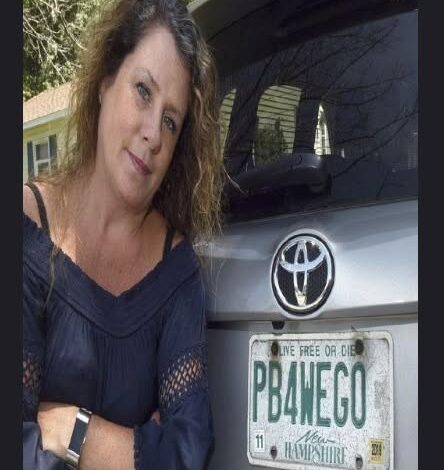
What started as a harmless joke on a license plate turned into a battle over common sense, freedom, and a phrase every parent knows by heart.
For more than fifteen years, Wendy Auger drove through the streets of Rochester, New Hampshire, with a personalized license plate that rarely failed to make people smile. The plate read “PB4WEGO,” a simple abbreviation for a familiar parental reminder: “Pee before we go.”
Anyone who has ever taken a road trip with children understood the joke instantly. It was the kind of phrase spoken in countless households before long drives, vacations, and even quick trips to the grocery store. For Wendy, a mother of four, it wasn’t just a funny plate—it was part of her family’s identity.
Over the years, the plate sparked laughs, friendly conversations, and waves from strangers who appreciated the humor. No complaints were filed. No controversy emerged. The message remained on her vehicle for over a decade without issue.
Then one day, everything changed.
A letter from the New Hampshire Division of Motor Vehicles arrived in Wendy’s mailbox. At first, she assumed it was routine paperwork. Instead, she found a demand that left her speechless.
The DMV informed her that her personalized plate had been deemed inappropriate and would have to be surrendered immediately.
According to the agency, the phrase violated state regulations because it referenced what officials classified as “sexual or excretory acts or functions.” After fifteen years on the road, the state had suddenly decided that a common parenting phrase was offensive.
Wendy couldn’t believe what she was reading.
The same plate that had generated smiles for years was now apparently considered unsuitable for public display.
Even more surprising was where the controversy was happening. New Hampshire proudly displays the famous motto “Live Free or Die,” a phrase deeply tied to the state’s identity. To Wendy, the contradiction was impossible to ignore.
“If I have to take it off the plate, then I’m not going to be able to live free,” she remarked.
Wendy wasn’t a political activist looking for a fight. She worked as a paralegal and described herself as an ordinary citizen. But this felt different. The decision seemed disconnected from reality.
The phrase wasn’t vulgar. It wasn’t insulting. It wasn’t directed at anyone. It was simply practical advice that parents had been giving their children for generations.
Yet the DMV wasn’t backing down.
The letter gave her just ten days to surrender the plates.
Many people would have quietly complied and moved on. Wendy chose a different path.
Instead of giving in, she shared the recall notice online. She posted photos of the plate along with the DMV’s explanation and asked others what they thought.
The reaction was immediate.
Within hours, people across social media began sharing her story. Thousands of comments poured in from individuals who found the state’s decision baffling. Many called the plate funny, harmless, and completely innocent.
Others joked that the reminder was actually useful.
Parents chimed in with stories of hearing the exact same phrase growing up. Travelers admitted they wished more people followed the advice before long road trips. Some even argued that the plate provided a public service.
As shares multiplied, the story spread far beyond New Hampshire.
National news outlets picked up the unusual dispute. Television networks covered the controversy. What had started as a local bureaucratic decision transformed into a nationwide conversation about government overreach and common sense.
The more attention the case received, the more difficult it became for officials to defend the ruling.
People weren’t seeing an offensive message.
They were seeing a mom being told that a childhood bathroom reminder somehow violated public decency.
As public support grew, the story eventually reached New Hampshire Governor Chris Sununu.
Unlike the DMV officials who reviewed the plate, the governor immediately recognized the humor behind it.
The situation struck him as a classic example of bureaucracy taking a rule too far.
Rather than letting the issue drag on, he stepped in personally.
Soon, Wendy received a message that changed everything.
“Hey Wendy, it’s Chris Sununu,” the governor said. “Just want to let you know we took care of that issue… sorry for that little bureaucratic holdup.”
With those words, the battle was effectively over.
The governor acknowledged that common sense should have prevailed from the beginning and officially reversed the DMV’s decision. Wendy would be allowed to keep her beloved plate.
After weeks of uncertainty, frustration, and unexpected national attention, she had won.
The victory wasn’t just about seven letters on a piece of metal.
For Wendy, it represented something larger.
It was proof that ordinary people could push back when a decision didn’t make sense. It was a reminder that rules should be applied with judgment, not blindly enforced without context. Most importantly, it showed that sometimes a little humor deserves protection instead of punishment.
On August 28, Wendy returned to social media one final time to update the thousands of supporters who had followed her journey.
“This Sassy Momma Has Her Plates!” she wrote proudly.
The announcement was met with celebration from people across the country who had rallied behind her cause.
What began as an attempt to remove a harmless joke had ended with an embarrassing reversal and a victory for common sense.
Today, Wendy’s “PB4WEGO” plate remains exactly where it belongs—on the road.
Drivers continue to spot it, smile, and instantly understand the message behind it. Children still hear the same reminder before family trips. Parents still repeat the phrase that inspired the plate in the first place.
And thanks to one determined mother who refused to quietly surrender, a simple joke survived a bureaucratic challenge that never should have happened.
Sometimes the biggest debates begin with the smallest things.
In this case, it started with seven letters, a family joke, and one mom who wasn’t about to let common sense take a back seat.