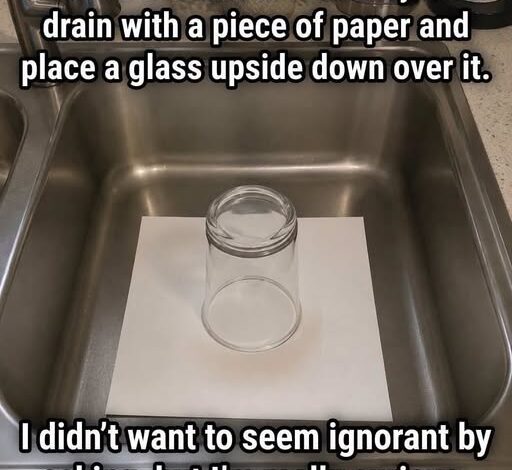
A simple household hack has been making the rounds online, promising to protect your home while you’re away. The idea is straightforward: place a sheet of paper over a sink drain, weigh it down with an upside-down glass, and supposedly you’ll block unpleasant sewer odors and prevent insects from entering through your plumbing.
At first glance, it seems clever.
After all, no one wants to return from vacation to a house filled with foul smells or discover unwanted pests emerging from forgotten drains. Those concerns are perfectly reasonable, and the plumbing principles behind them are based on something very real.
But while the viral trick contains a grain of truth, it isn’t the most reliable solution.
The real heroes of your plumbing system are the P-traps—the curved sections of pipe beneath sinks, tubs, and many floor drains. These traps are designed to hold a small amount of water at all times. That water creates a seal that blocks sewer gases from entering your home and helps prevent insects that live in sewer systems from traveling up through the pipes.
As long as the trap contains water, it’s doing exactly what it was designed to do.
Problems arise when that water evaporates.
This is most likely to happen in drains that are rarely used, such as guest bathrooms, basement floor drains, utility sinks, or vacation homes that sit empty for extended periods. Once the water seal disappears, sewer odors can enter the house, and in some situations, insects may find an easier path indoors.
That’s why people are looking for ways to protect their homes before leaving for days or weeks.
The paper-and-glass method attempts to create a temporary barrier over the drain opening. While it may slightly reduce airflow at the surface, it doesn’t create an airtight seal. A sheet of paper can shift, absorb moisture, or tear, and a drinking glass isn’t designed to form a secure barrier against gases or insects.
In other words, it may provide peace of mind—but not dependable protection.
Fortunately, the most effective solutions are surprisingly simple.
Before leaving home, walk through the house and run water in every sink, bathtub, shower, and utility sink for at least several seconds. Don’t forget places that are easy to overlook, such as basement floor drains, laundry standpipes, or guest bathrooms that aren’t used regularly.
It’s also a good idea to flush every toilet, since toilets rely on water seals as well.
If you’re planning to be away for an extended period—particularly several weeks or longer—you can take a few additional precautions.
Placing a proper rubber or silicone drain stopper over sink and tub drains provides a much more reliable seal than paper and glass. Some homeowners also use tightly secured plastic wrap over infrequently used drains, sealed carefully around the edges if appropriate for the fixture.
Another helpful trick recommended by many plumbing professionals is adding a small amount of mineral oil—often about a tablespoon for a sink drain and more for larger floor drains—after running fresh water. The oil floats on top of the water in the trap and helps slow evaporation, allowing the protective water seal to last significantly longer.
This approach can be especially useful for vacation properties or homes that may remain vacant for extended periods.
Of course, plumbing maintenance goes beyond drain protection alone.
Before traveling, it’s wise to check for leaking faucets, ensure appliances are functioning properly, and, if you’ll be away for a long time, consider shutting off the home’s main water supply if practical and appropriate for your plumbing system. These steps can help reduce the risk of water damage while you’re gone.
The popularity of the viral hack highlights something important.
People aren’t really searching for paper-and-glass tricks.
They’re looking for simple ways to protect their homes and avoid unpleasant surprises when they return.
That’s a sensible goal.
The good news is that you don’t need elaborate internet hacks to achieve it.
A few minutes spent refreshing the water in your plumbing traps, covering drains with proper stoppers if needed, and slowing evaporation with mineral oil can provide far more reliable protection than balancing a glass on a piece of paper.
Sometimes the best home maintenance advice isn’t flashy enough to go viral.
It doesn’t produce dramatic before-and-after videos or promise miraculous results in thirty seconds.
Instead, it relies on understanding how your home actually works.
By taking these straightforward preventive measures before you leave, you can help keep sewer odors where they belong, reduce the chance of pests finding a way inside, and return home to a house that smells just as fresh as the day you locked the door.
In the end, the most effective solutions are often the least exciting.
They’re quiet, practical, and almost invisible.
And unlike many internet trends, they continue working long after the viral videos have disappeared from everyone’s feed.