They Promised Peaceful Green Burials. What Federal Agents Found Inside This Colorado Funeral Home Shocked the World!

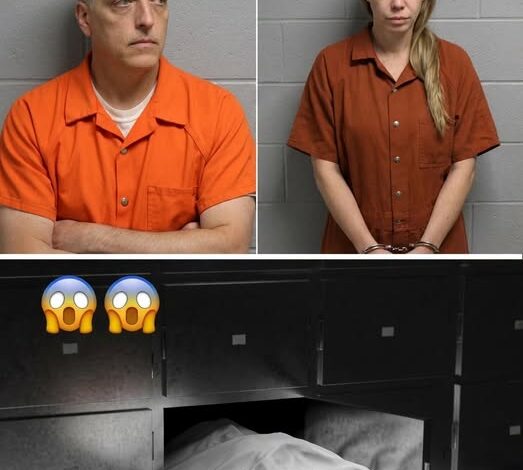
The families thought they were paying for dignity.
That was the promise.
A gentle goodbye.
A respectful return to the earth.
An environmentally conscious alternative to the machinery and formality of a traditional funeral.
For grieving families, the language surrounding Return to Nature Funeral Home sounded almost comforting. Jon and Carie Hallford presented themselves as people who understood that death did not need to be cold, clinical, or impersonal.
They offered “green” options.
Natural choices.
Compassion.
And families trusted them with something that could never be replaced.
The bodies of the people they loved.
That trust would become the most horrifying part of the story.
Because behind the language of dignity was something entirely different.
According to prosecutors and investigators, bodies entrusted to the Hallfords were not receiving the respectful treatment families believed they had purchased.
They were accumulating.
One after another.
Inside a building.
Days became weeks.
Weeks became months.
Eventually, 191 bodies would be discovered.
Not resting peacefully in the earth.
Not handled according to the promises made to their families.
Abandoned amid conditions so disturbing that even experienced investigators would struggle with what they encountered.
The dead had become inventory in a business that had stopped honoring its most basic obligation.
And for a long time, their families knew nothing.
That is almost impossible to comprehend.
Imagine handing over your mother’s body.
Or your husband’s.
Your sister’s.
Your father’s.
You stand across from someone whose profession exists because people at their most vulnerable need another human being to handle what comes next.
You sign documents you can barely read through tears.
You provide clothing.
Perhaps you discuss a favorite song.
You choose an urn.
You ask when the remains will be ready.
Then eventually, someone places a container in your hands.
You take it home.
Maybe you put it on a mantel.
Maybe you hold it against your chest.
Maybe your family gathers around it and cries.
Maybe you speak to it when nobody else is there.
You believe the person you loved is inside.
Then one day, investigators tell you:
They may not be.
For some families connected to the Hallford case, that became reality.
The containers they had received did not necessarily contain the cremated remains of their relatives.
Reports and court proceedings described families receiving substitute material instead.
The object around which they had built part of their mourning suddenly became evidence of deception.
That isn’t ordinary fraud.
Money can sometimes be repaid.
A fraudulent charge can be reversed.
A stolen object can occasionally be recovered.
But grief has timing.
Ritual has timing.
There is a moment when a family believes it is saying goodbye.
If that moment is built on deception, nobody can simply recreate it later and pretend nothing was lost.
A funeral is not merely a transaction.
It is one of civilization’s oldest promises.
We care for the dead because they can no longer care for themselves.
And we trust certain people to perform that responsibility on our behalf.
The Hallfords occupied that position of trust.
That’s why the allegations surrounding their finances struck families with particular force.
While bodies remained improperly stored, prosecutors said money connected to the business and pandemic-relief programs was being used for personal expenses.
Luxury purchases.
Travel.
Cosmetic procedures.
Online shopping.
The details seemed grotesque when placed beside the conditions investigators eventually found.
Every unnecessary purchase invited the same question:
How could someone spend money on themselves while families were paying them to care for their dead?
But fraud rarely announces itself with obvious villainy.
It survives because the outside continues looking normal enough.
Emails are answered.
Documents are signed.
Explanations are offered.
Someone says there has been a delay.
Someone apologizes.
Someone promises to call tomorrow.
Families want to believe these explanations because the alternative is unthinkable.
Nobody wants to suspect the funeral director.
The entire relationship depends on not having to.
That is why oversight matters.
Trust is necessary.
But trust without verification can create opportunities for catastrophic abuse.
Eventually, the building itself began revealing what paperwork had concealed.
There was an odor.
People noticed.
Questions followed.
And once authorities entered the property, the story changed forever.
The number alone was staggering.
It is easy for large numbers to become abstract.
So don’t think of 191 bodies.
Think of one.
One mother.
One grandfather.
One spouse.
One sibling.
One friend.
One person whose family believed somebody was taking care of them.
Then repeat that betrayal 191 times.
Each body belonged to an individual life.
Each had a history before becoming part of a criminal investigation.
Somebody knew their laugh.
Somebody had their phone number saved.
Somebody remembered what they ordered at restaurants.
Somebody expected to receive their ashes.
Investigators now faced an extraordinary challenge.
Identification.
After prolonged improper storage, visual recognition could be difficult or impossible.
Forensic teams had to do the slow work that should never have been necessary.
DNA.
Dental information.
Medical records.
Personal belongings.
Jewelry.
Any surviving detail capable of returning a name to a body.
Families waited again.
They had already waited once for the funeral home.
Now they waited for investigators.
That second wait carried a different kind of horror.
Is my loved one among them?
Were the ashes I received real?
What condition are the remains in?
Will they be identifiable?
Can we finally bury them?
Questions that should have been settled months earlier reopened all at once.
For some families, mourning itself had to begin again.
Psychologists sometimes describe grief as a process, but “process” sounds cleaner than reality.
Grief is not a straight road.
It is repetition.
Memory.
Anger.
Numbness.
Acceptance one morning and disbelief again that night.
Ritual helps give that chaos structure.
A funeral says:
This happened.
This person lived.
This person died.
We are here together.
Now imagine discovering that the ritual itself had been corrupted.
The urn you touched wasn’t what you believed.
The burial you thought occurred may not have occurred.
The professionals you thanked were allegedly lying to you.
The grief doesn’t merely return.
Reality itself becomes unstable.
That’s why courtroom accountability, while necessary, can only accomplish so much.
Guilty pleas matter.
Sentences matter.
Restitution matters.
The legal system can establish facts and impose consequences.
It can say publicly:
This was wrong.
That declaration is important.
But no judge can give a family back the original goodbye.
No prison sentence can restore the moment someone thought they were scattering their father’s ashes.
No restitution check can erase the memory of being told that a mother’s remains had been sitting neglected while her family believed she had been respectfully cared for.
Justice can punish.
It cannot rewind.
That is the cruel limit of accountability.
Yet something else emerged from the case.
Scrutiny.
Colorado was forced to examine how its funeral industry was regulated and how such a catastrophic failure could continue for so long.
That question reaches beyond the Hallfords.
Whenever an institution fails spectacularly, focusing only on the individuals responsible can become too convenient.
Yes, individual choices matter.
But systems also need to answer:
What inspections existed?
What licensing requirements applied?
Who was checking?
What warning signs were missed?
How quickly could complaints trigger intervention?
Could someone operate while conditions deteriorated beyond recognition?
And most importantly:
What has to change so another family never receives a false goodbye?
Those questions helped drive major changes in Colorado’s funeral-industry oversight.
Regulation can sound bureaucratic until you understand what it protects.
Licensing.
Inspections.
Educational standards.
Enforcement.
Record keeping.
None of those words carry the emotional weight of a funeral.
That’s precisely why they matter.
Good regulation is often invisible when it works.
You don’t think about the inspector when you hand over your father’s remains.
You shouldn’t have to.
You shouldn’t need to become a forensic accountant while planning your mother’s funeral.
You shouldn’t have to research whether the building storing your loved one meets basic standards.
Grieving families are uniquely vulnerable because grief consumes attention.
Ordinary tasks become difficult.
Forms become overwhelming.
Decisions that would normally take days are made in hours.
Funeral professionals therefore hold extraordinary power.
They meet people at a moment when skepticism is emotionally expensive.
A compassionate society doesn’t respond by telling grieving families to become more suspicious.
It creates systems worthy of their trust.
That may be the most important legacy to extract from what happened.
Not:
Trust nobody.
But:
Trust must have safeguards.
Compassion and accountability are not opposites.
A funeral director can be compassionate and regulated.
A family can be treated gently while records remain precise.
A business can promise dignity while still being inspected to ensure dignity is actually being delivered.
Professionalism is not an insult to trust.
It is how trust becomes sustainable.
The families affected by Return to Nature deserved that protection before the scandal.
They did not receive enough of it.
Now reforms may protect people who will never know their names.
There is something painfully unfair about that.
The people most harmed by a broken system often become the reason the system finally improves.
They pay the price.
Others inherit the protection.
That does not make their suffering worthwhile.
Nothing does.
But it means society has an obligation not to waste what their suffering revealed.
Years from now, someone in Colorado will lose a parent.
They will walk into a funeral home exhausted and heartbroken.
They may never have heard of Jon and Carie Hallford.
They may never know about the building where 191 bodies were found.
They may never know about the families who discovered that what they had been given was not what they believed.
But stronger rules may be operating quietly around them.
A license verified.
An inspection completed.
Records checked.
Standards enforced.
A problem detected earlier because somebody now has the authority and responsibility to look.
That is how reform works at its best.
Invisible protection built from visible failure.
Still, regulations alone cannot answer the emotional question left behind.
Who guards the guardians?
Part of the answer is government oversight.
Part is professional standards.
Part is transparency.
Part is whistleblowers and employees willing to speak when something is wrong.
Part is a culture that refuses to treat the care of the dead as merely another commercial transaction.
Because funeral work is business.
But it is never only business.
You are handling someone’s person.
Someone’s history.
Someone’s last physical presence in this world.
There is no more powerless client than the dead.
And there are few customers more vulnerable than the grieving.
That combination demands extraordinary responsibility.
The Hallford case became infamous because that responsibility was allegedly violated on an almost unimaginable scale.
But behind the scale are individual families.
Some will carry anger for the rest of their lives.
Some may never again look at an urn without remembering the moment they learned theirs contained something other than what they believed.
Some eventually received identified remains and had to organize another farewell.
Imagine that ceremony.
The second goodbye.
This time knowing.
This time certain.
Perhaps there were flowers.
Perhaps someone read a prayer.
Perhaps nobody knew what to say.
How do you apologize to the dead for something you didn’t do?
How do you bury someone twice?
Maybe you simply stand there.
Say their name.
And restore what deception tried to take.
Their individuality.
Their humanity.
Their place in the family.
That may be the most important act remaining.
The number 191 belongs in court records.
The people themselves belong somewhere larger.
They were not evidence.
They were not inventory.
They were not a scandal.
They were human beings.
And the families who trusted others to care for them were not foolish.
Trusting a funeral home should not require courage.
It should be ordinary.
That is what makes this case so disturbing.
It corrupted something society depends upon precisely because we rarely think about it until our worst days.
When someone dies, we hand them over.
We sign.
We pay.
We trust.
Then we go home and begin learning how to live without them.
Those families deserved to do exactly that.
Instead, many were forced back into the nightmare.
Courtrooms may eventually close the criminal cases.
Sentences will be imposed.
Headlines will move on.
The building will become just another location people pass without knowing what happened there.
But the central obligation must remain.
Remember what failed.
Enforce what changed.
Inspect what once went unchecked.
Treat funeral care not as an industry people should simply trust, but as a sacred responsibility society has a duty to supervise.
Because dignity for the dead should never depend entirely on the goodness of the person holding the key to the door.
The dead cannot complain.
The grieving should not have to investigate.
And when someone promises to guard the people we love after they are gone, there must always be someone making sure that promise is kept.