By sunrise, officials already had words for what happened.
“Tragic accident.”
“Human error.”
“Dangerous weather.”
Words clean enough for television.
Words short enough for headlines.
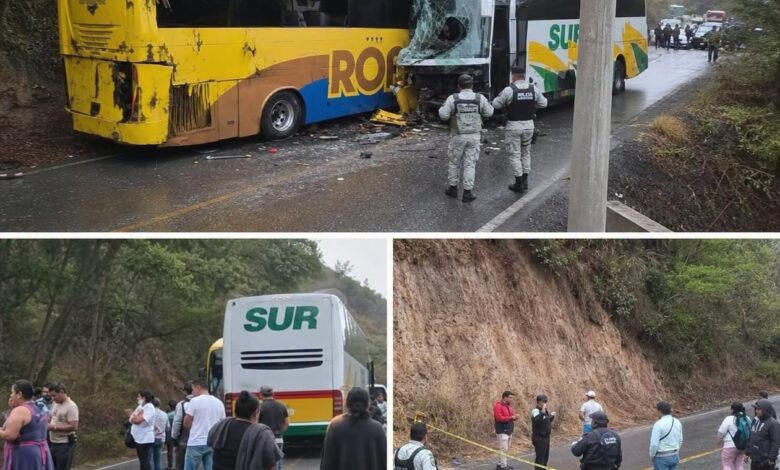
Words that could explain how a bus left a mountain road, plunged into a ravine, and turned an ordinary journey into a scene rescuers would carry in their memories for the rest of their lives.
But for the families waiting for answers, the word accident felt painfully inadequate.
Twenty-three people were gone.
Twenty-three families were about to hear knocks at doors, receive telephone calls, identify belongings, and confront the impossible reality that someone who had boarded a bus expecting to arrive somewhere would never arrive at all.
The bus had been transportation.
Then, in seconds, it became wreckage.
Metal twisted against rock.
Windows shattered.
Seats tore loose.
Luggage scattered down the slope.
Phones continued ringing inside bags whose owners could no longer answer them.
Rescuers descended into the ravine knowing that every minute mattered.
Some survivors cried for help.
Others were trapped.
Some were frighteningly silent.
Above them, emergency vehicles gathered along the road as flashing lights illuminated a landscape that had been ordinary only hours earlier.
By morning, photographs began circulating.
Then came the questions.
Was the driver going too fast?
Had visibility deteriorated?
Was the road wet?
Did the brakes fail?
Was the vehicle properly maintained?
How long had the driver been working?
Were guardrails adequate?
Had there been previous crashes on the same stretch?
Had anyone warned that the route was dangerous?
And perhaps most importantly:
Could this have been prevented?
That is the question hidden inside nearly every transportation disaster.
Because “accident” describes an outcome.
It does not necessarily explain a cause.
Sometimes terrible events genuinely result from unpredictable circumstances.
Machines can fail despite proper maintenance.
Weather can change rapidly.
A driver can make one catastrophic mistake despite years of responsible work.
No investigation should begin by deciding guilt before evidence is collected.
But neither should the word accident become a convenient curtain pulled across uncomfortable questions.
If brakes were defective, investigators need to know why.
If maintenance was skipped, they need to determine who knew.
If the driver was exhausted, they need to examine schedules and working conditions.
If the road itself contributed to the crash, authorities must ask whether known hazards had been addressed.
And if previous warnings existed, somebody needs to explain what happened to them.
Those questions matter because the passengers weren’t statistics when they boarded.
They were people going somewhere.
Someone may have been traveling home after work.
Someone may have been visiting family.
Someone might have been carrying medicine in a bag beneath the seat.
Someone had promised to call when they arrived.
Someone had children waiting.
Someone was probably asleep against the window moments before everything changed.
Most passengers don’t inspect maintenance records before climbing onto a bus.
They don’t crawl beneath the vehicle and examine brake lines.
They don’t ask how many consecutive hours the driver has worked.
They don’t measure tire tread.
They buy a ticket.
Then they trust.
That trust creates an enormous responsibility.
Public and commercial transportation systems exist partly because ordinary passengers cannot personally verify every mechanical and operational detail.
They rely on operators.
Mechanics.
Companies.
Regulators.
Inspectors.
Road authorities.
Drivers.
Each becomes one link in a chain designed to get a stranger home safely.
When one link fails, the others are supposed to catch it.
A tired driver should be protected by working-hour rules.
A dangerous vehicle should be caught during inspection.
Worn brakes should be replaced during maintenance.
A hazardous road should have barriers, warnings, repairs, or speed controls appropriate to the danger.
No safety system is perfect.
But catastrophe becomes especially difficult to accept when several protections fail at once.
That is why investigators must resist the temptation to find the easiest explanation.
“Driver error” can sometimes be accurate.
It can also be incomplete.
Imagine a driver who makes a mistake after working far longer than is safe.
The immediate action belongs to the driver.
But does the responsibility end there?
What if the company created schedules that made adequate rest practically impossible?
What if drivers feared losing work if they complained?
What if everyone knew the system depended on exhausted employees pushing through one more route?
The same principle applies to maintenance.
Suppose a mechanical component fails.
Was the failure unforeseeable?
Or had warning signs appeared?
Was a repair recommended?
Was it delayed?
Was the vehicle allowed to continue carrying passengers because taking it out of service would cost money?
Those distinctions separate tragedy from negligence.
And negligence from potentially criminal conduct.
The families deserve those distinctions.
They deserve more than condolences.
More than flowers.
More than officials standing before microphones promising a “thorough investigation.”
They deserve evidence.
Maintenance logs.
Inspection records.
Driver schedules.
Weather information.
Road assessments.
Witness statements.
Vehicle data where available.
A reconstruction of the final moments based on facts rather than rumors.
Because grief creates a vacuum, and speculation rushes to fill it.
Within hours of a major crash, people begin constructing explanations.
The driver was speeding.
The brakes failed.
The road was cursed.
The company was corrupt.
Officials ignored warnings.
Some claims may eventually prove true.
Others may be completely wrong.
For the sake of both victims and those being accused, investigators have to establish what actually happened.
Accountability built on rumor is not accountability.
But accountability delayed until public attention disappears isn’t enough either.
That has happened too often after disasters.
At first, everyone watches.
Television crews arrive.
Politicians visit hospitals.
Officials promise reforms.
Photographs of victims appear beside candles.
The country mourns.
Then another story takes over.
Weeks pass.
Investigations become technical.
Court proceedings move slowly.
Families keep asking questions long after cameras stop showing up.
Eventually, another bus travels the same road.
Another driver takes another night shift.
Another passenger buys the cheapest ticket because it is the only one they can afford.
Life resumes.
Until something happens again.
That cycle is what makes preventable transportation deaths particularly infuriating.
The tragedy isn’t only the crash.
It’s the possibility that somebody saw the conditions forming beforehand.
A mechanic who complained.
A driver who reported a problem.
Residents who demanded a barrier.
Passengers who noticed reckless operation.
Previous crashes that should have triggered changes.
Inspection reports that identified deficiencies.
Safety rarely collapses in one dramatic instant.
Sometimes it erodes quietly.
A repair gets postponed.
Then another.
A driver works an extra shift.
Nothing happens.
A tire stays in service a little longer.
Nothing happens.
A dangerous curve remains unchanged.
Thousands of vehicles pass safely.
Eventually, surviving the risk becomes evidence that people mistakenly use to justify continuing it.
“We’ve always done it this way.”
Until the night when luck runs out.
Then everyone asks how such a thing could happen.
The better question is whether people had been getting away with the conditions that made it possible.
Still, there is a danger in assuming every bus crash must involve corruption or deliberate neglect.
Sometimes investigators discover a heartbreaking combination of ordinary factors.
Rain.
Poor visibility.
A momentary lapse.
An unexpected obstruction.
A mechanical failure nobody reasonably could have predicted.
Twenty-three deaths do not automatically prove twenty-three counts of wrongdoing.
Facts must come first.
But that principle works in both directions.
Authorities should not label a disaster unavoidable before examining whether decisions made days, months, or years earlier contributed to it.
The families need the truth even if that truth is complicated.
Especially if it is complicated.
Meanwhile, practical questions begin almost immediately.
Where are the survivors?
Which hospital received them?
Who has been identified?
Whose belongings were recovered?
Where should relatives go?
The administrative language of mass tragedy can feel brutally cold.
Names become entries.
Bodies become numbers.
Personal effects become evidence.
A building that hosted basketball games or community events may become a temporary place for identification, grieving families, or emergency operations.
The familiar becomes unbearable.
Outside, people wait.
Some refuse to believe what they have been told.
A mother keeps calling her son’s phone.
A husband tells himself his wife may have been taken to another hospital.
Children listen to adults whisper.
Relatives travel through the night.
Hope survives longer than logic because sometimes hope is the only thing keeping a person upright.
Then confirmation arrives.
There is no language adequate for that moment.
Officials may say “fatality.”
A family hears a name.
The difference between those two things is everything.
Public conversations about disasters often become abstract very quickly.
Road safety.
Infrastructure.
Regulation.
Corporate responsibility.
Enforcement.
All are essential.
But behind every policy debate is a chair that will remain empty.
A toothbrush nobody knows when to throw away.
Clothes still hanging in a wardrobe.
A message left unread.
Dinner plans that will never happen.
The consequences don’t end when wreckage is removed from the ravine.
They move into houses.
Twenty-three separate homes can become twenty-three separate worlds divided into before and after.
That is why prevention matters so much.
Not because every risk can be eliminated.
It cannot.
Transportation will always involve some danger.
But society has spent generations learning how to reduce that danger.
Better brakes.
Seat belts.
Guardrails.
Vehicle inspections.
Driver training.
Rest requirements.
Road engineering.
Speed enforcement.
Emergency response.
Each improvement exists because somebody, somewhere, once died in a way people decided should not happen again.
Safety regulations are often written in grief.
The tragedy is when those lessons are forgotten, weakened, ignored, or treated as expenses rather than protections.
A worn brake pad is cheaper not to replace today.
A driver can earn or generate more by taking another shift.
A road repair can be postponed another budget cycle.
A guardrail can wait.
Every individual decision may look small on paper.
But safety is cumulative.
So is neglect.
Eventually, those small decisions can meet on one dark curve.
Then the cost is measured differently.
Not in maintenance budgets.
In lives.
This is also why passengers with fewer transportation choices can be particularly vulnerable.
Someone with money may decide a route feels unsafe and choose another option.
They can rent a car.
Book a flight.
Take a different service.
Stay overnight.
Many people cannot.
They take the bus because the bus is what they can afford.
Because it runs when they need it.
Because their job starts tomorrow.
Because their family is waiting.
Because there is no realistic alternative.
That dependence makes strong safety oversight more important, not less.
People should not need wealth to expect functioning brakes and a rested driver.
Safety cannot be a luxury upgrade.
It has to be the minimum.
In the days after the crash, there will inevitably be demands for action.
Inspect every bus.
Audit the company.
Repair the road.
Change the law.
Increase penalties.
Install barriers.
Limit shifts.
Some proposals may be useful.
Others may be emotional responses that do little to address the actual cause.
The investigation should guide reform.
If the problem was mechanical, fix the system that allowed unsafe equipment into service.
If fatigue contributed, examine working conditions.
If road design played a role, address the road.
If regulations existed but weren’t enforced, adding more regulations on paper may accomplish little without improving enforcement.
And if the crash truly resulted from an unforeseeable event despite reasonable precautions, say that too.
Families deserve truth, not a villain manufactured to satisfy public anger.
But they also deserve something beyond truth.
They deserve memory translated into prevention.
A memorial is important.
So are candles.
So are names read aloud.
But the strongest memorial to people killed in a preventable crash is a future passenger reaching home because somebody finally fixed what failed.
Months from now, the flowers will disappear.
The bus will be removed.
Rain will wash the road.
Traffic will return.
Drivers unfamiliar with the tragedy may pass the curve without knowing what happened below them.
The families will know.
They will always know.
For them, the investigation isn’t an exercise in public policy.
It’s the last unanswered chapter of someone’s life.
They need to know whether their husband, daughter, mother, brother, friend, or child died because of one terrible moment—or because a chain of preventable decisions had been waiting for the right night to become fatal.
Until that question is answered, officials should be careful with the word accident.
It is too easy.
Too final.
It can make something sound inevitable before anyone has proved that it was.
Call it a crash.
Call it a disaster.
Call it a tragedy.
Then investigate.
Follow the maintenance records.
Examine the vehicle.
Study the road.
Reconstruct the driver’s schedule.
Listen to survivors.
Review previous complaints.
Find out what was known and when.
And if evidence shows that people ignored dangers because correcting them was inconvenient or expensive, then use the appropriate word for that too.
Negligence.
Because there is an enormous moral difference between tragedy nobody could reasonably prevent and tragedy people repeatedly chose not to prevent.
Twenty-three families now live inside that difference.
Tomorrow, buses will run again.
People will climb aboard carrying backpacks, shopping bags, work clothes, presents, and phones full of messages.
They will choose seats.
Lean against windows.
Fall asleep.
They will trust a driver they don’t know, a company they’ve never inspected, mechanics they’ve never met, and roads they had no role in building.
That trust should mean something.
They should not need to wonder whether a repair was postponed to save money.
They should not need to ask whether their driver has slept.
They should not need to calculate whether a guardrail can withstand impact.
They bought a ticket.
Their responsibility should end there.
The responsibility of everyone operating the system begins there.
And after twenty-three people failed to reach their destination, the question hanging over that mountain road cannot be answered with condolences alone.
If this was truly unavoidable, prove it.
If it wasn’t, fix what allowed it to happen.
Because the most dangerous phrase after a preventable disaster isn’t “we don’t know yet.”
That is honest.
The dangerous phrase is:
“It was just an accident.”
Sometimes it was.
And sometimes that word is simply what we call negligence before anyone has been forced to answer for it.